
- About TCB
- Sewing Machines for TCB
- TCB Crews Introduction
- News / Daily
- Shop / Stockists
- Repair & Hem
- Recruit
- Contact


2026/07/04
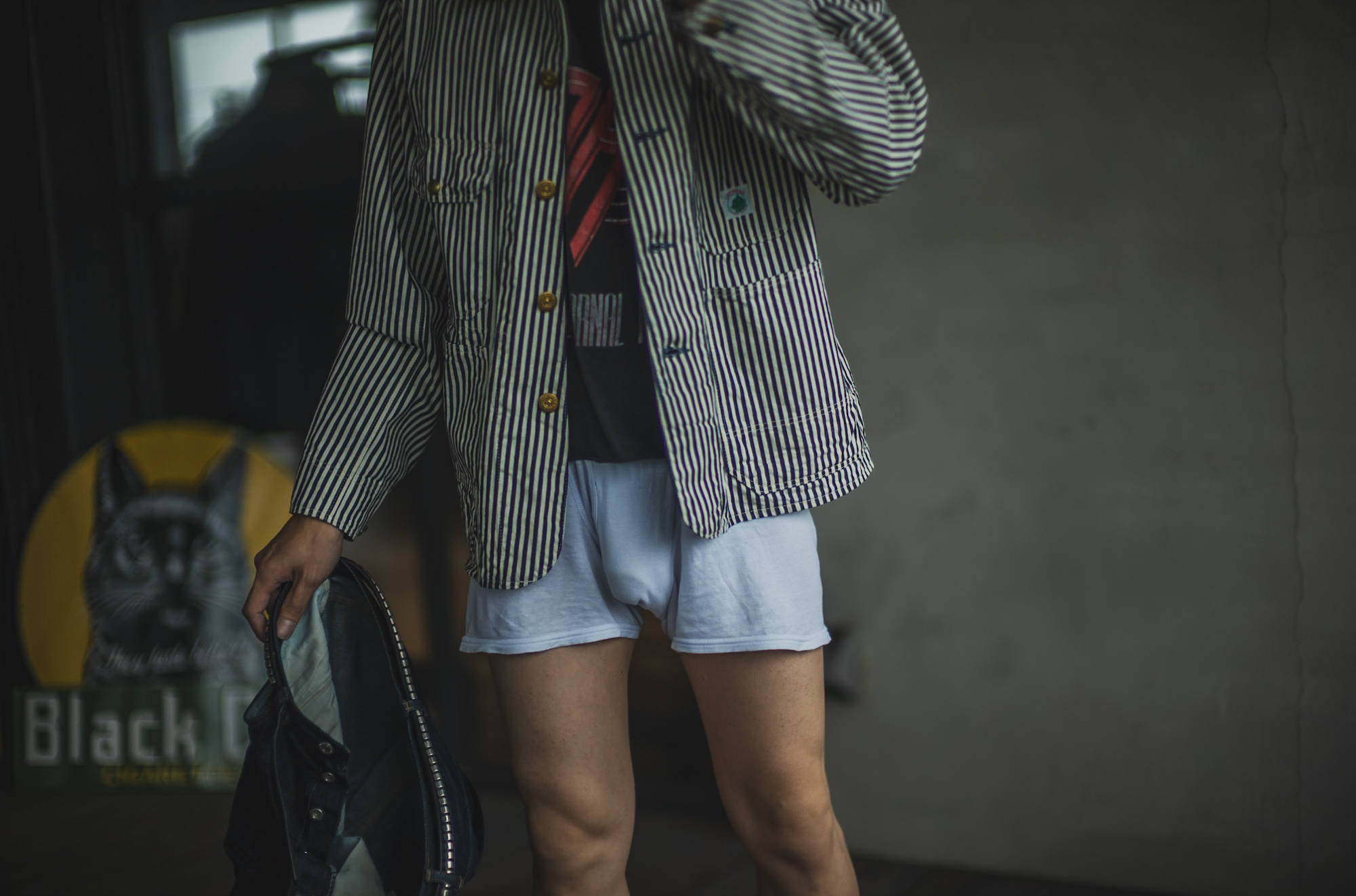
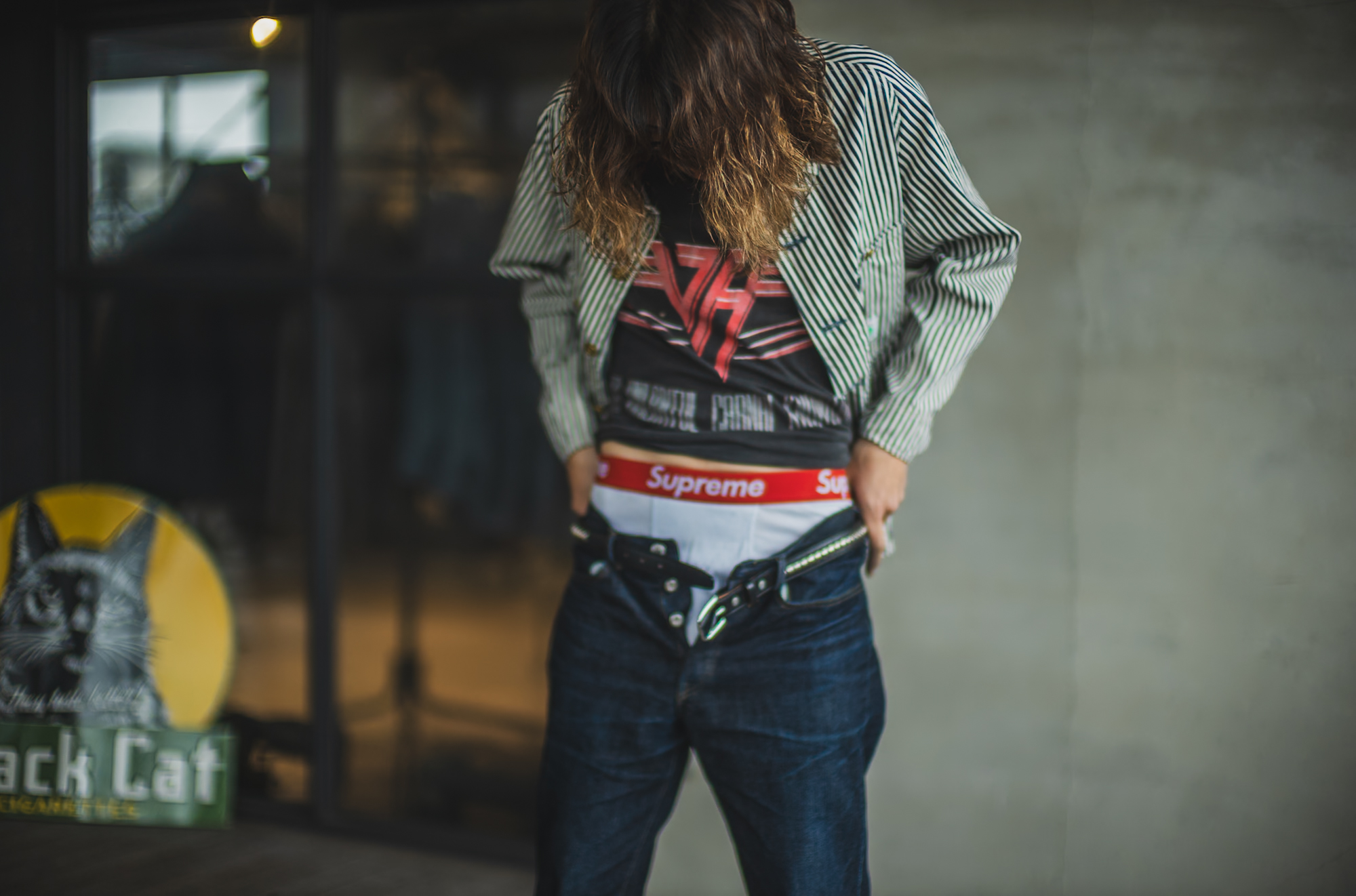
いつも白い下着を愛用しているスタッフがいます。
休憩中、ふとその話になり、
「白い下着を穿いて、夕方まで綺麗に保てる自信がない」
と、みんなで妙に盛り上がりました。
私自身も先日、カモフラージュのつもりでチェック柄の下着を買ったのですが、まさかのプリントチェック。
裏側は真っ白という、なかなかのカウンターパンチを受けました。
やはり現代の私たちも、無意識のうちに柄で汚れを目立たせないという物に助けられてる。
汚れが目立ちにくいもの。
気を遣わずに穿けるもの。
日常の中で、少し安心できるもの。
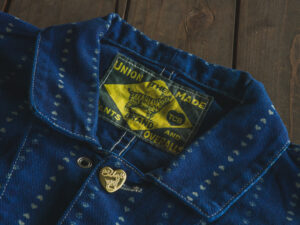
そう考えると、ワークウェアにヒッコリーストライプが使われてきた理由も、妙に納得できます。
もちろん、ただ汚れを隠すためだけではないと思います。
でも、働く中で付いてしまう汚れや擦れを、少しだけ受け止めてくれる柄。
デニムとはまた違う意味で、日々の作業に寄り添ってきた生地なのだと思います。
皆様も、様々なシーンを想定して下着を選ぶように、 カバーオールもデニム以外を選んでみると、意外と面白いかもしれません。
There is a staff member who always wears white underwear.
During a break, the topic somehow came up, and we all found ourselves strangely excited, saying,
“I don’t think I’d have the confidence to wear white underwear and keep it clean until the end of the day.”
As for myself, I recently bought a pair of checked underwear, thinking it would work as a kind of camouflage.
But it turned out to be a printed check pattern, and the inside was completely white.
A pretty solid counterpunch.
Even today, I think we are unconsciously helped by patterns that make stains less noticeable.
Something that does not show dirt easily.
Something you can wear without worrying too much.
Something that gives you a little sense of ease in everyday life.
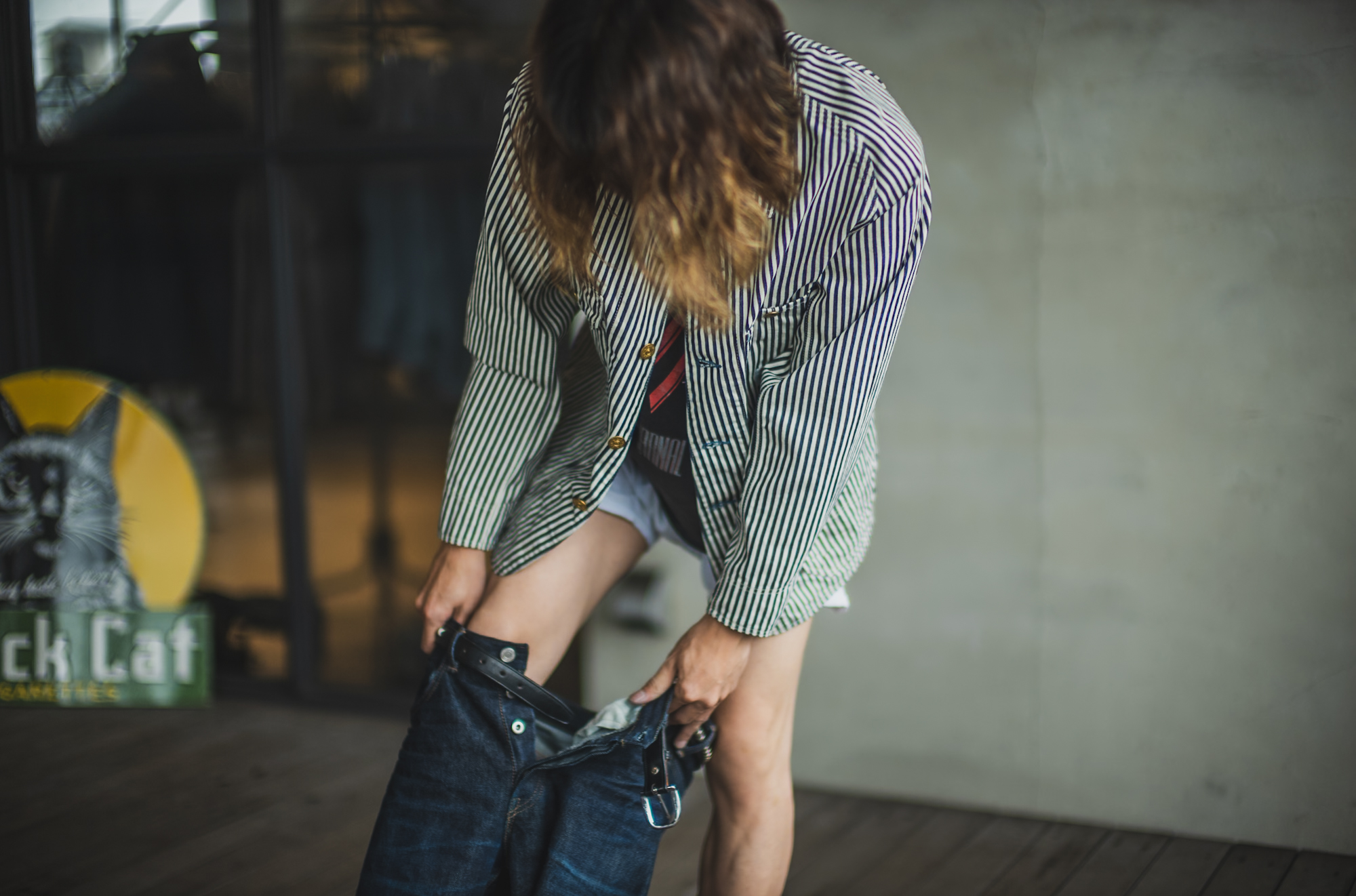
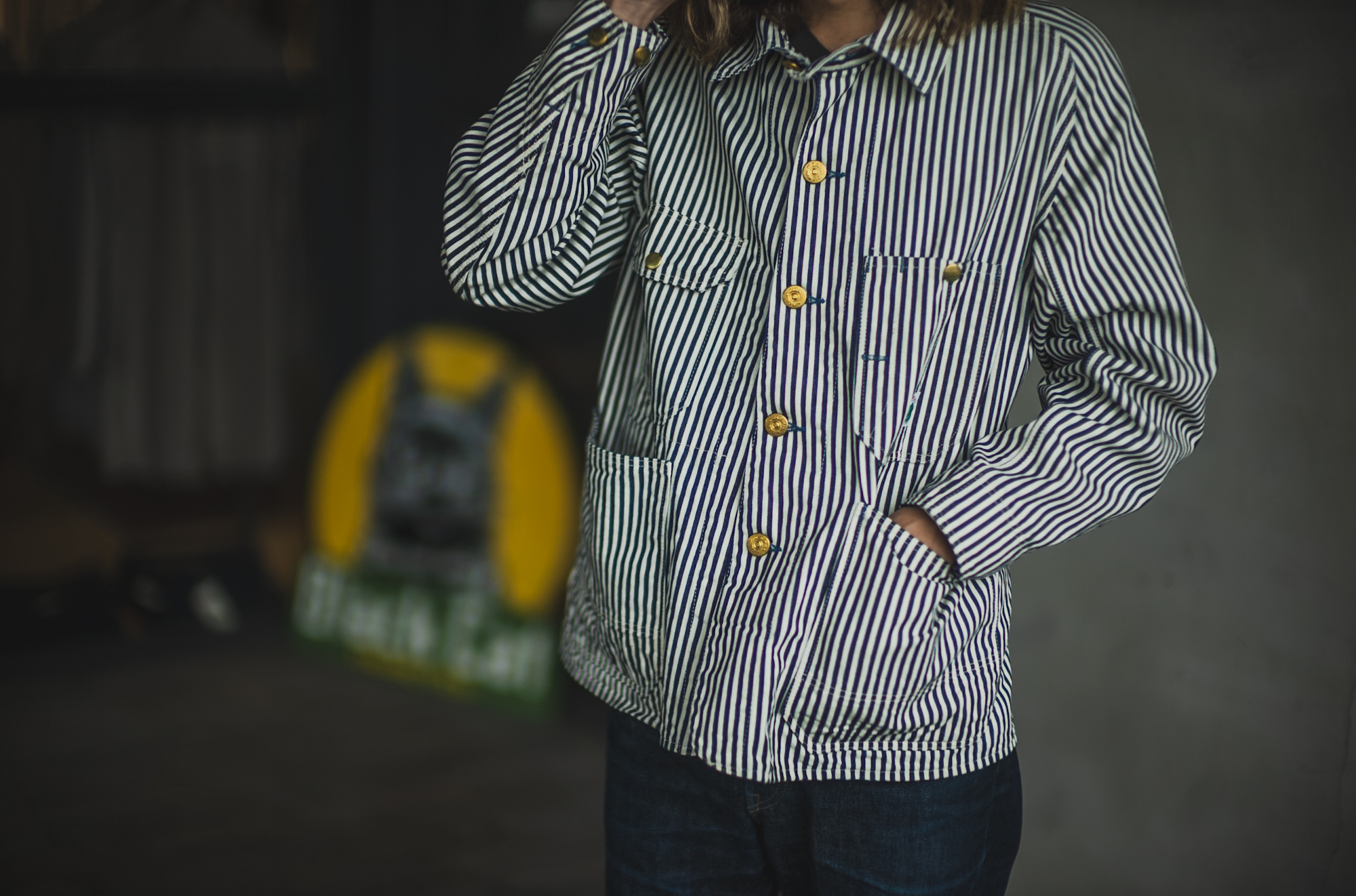
When you think about it that way, it suddenly makes sense why hickory stripes have been used in workwear.
Of course, I don’t think it was only about hiding stains.
But it is a pattern that gently accepts the dirt and wear that come with working.
In a different way from denim, I think it is a fabric that has stayed close to people’s everyday work.
Just as we choose our underwear while imagining different situations,
choosing a coverall in something other than denim might be surprisingly interesting too.









 Categolies
 Tag
Tag Archive