

- About TCB
- Sewing Machines for TCB
- TCB Crews Introduction
- News / Daily
- Shop / Stockists
- Repair & Hem
- Recruit
- Contact


2026/07/26
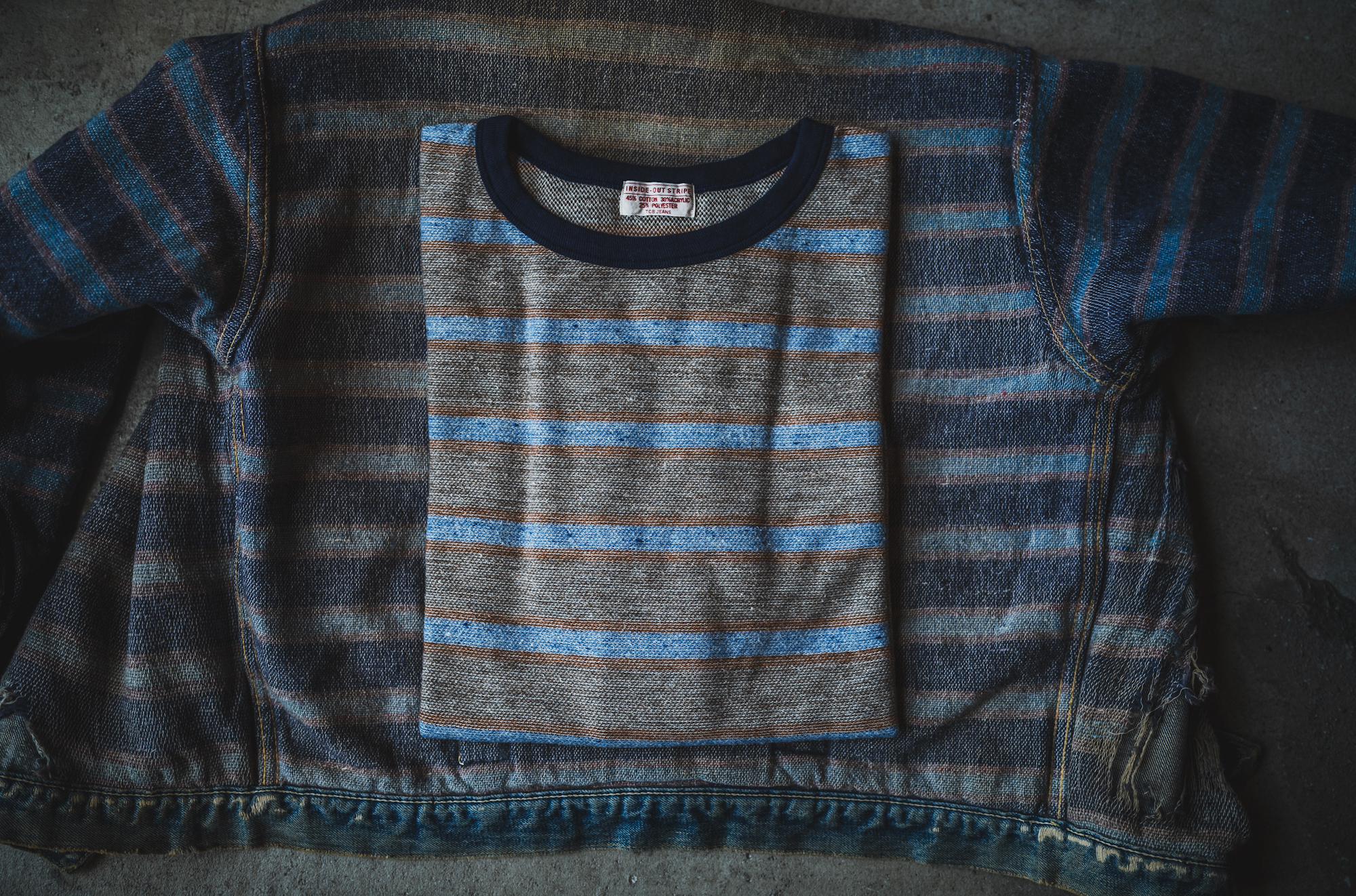
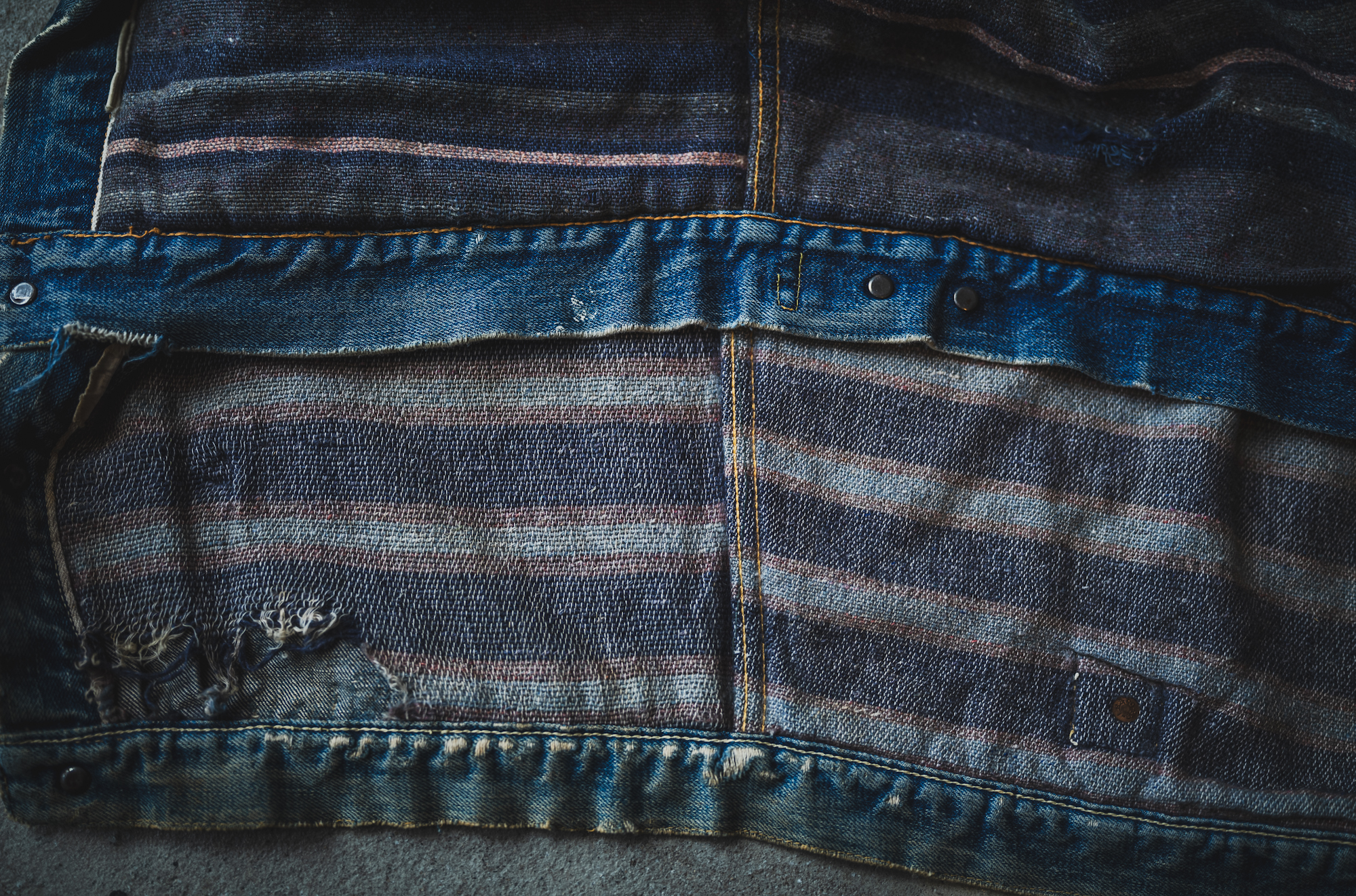
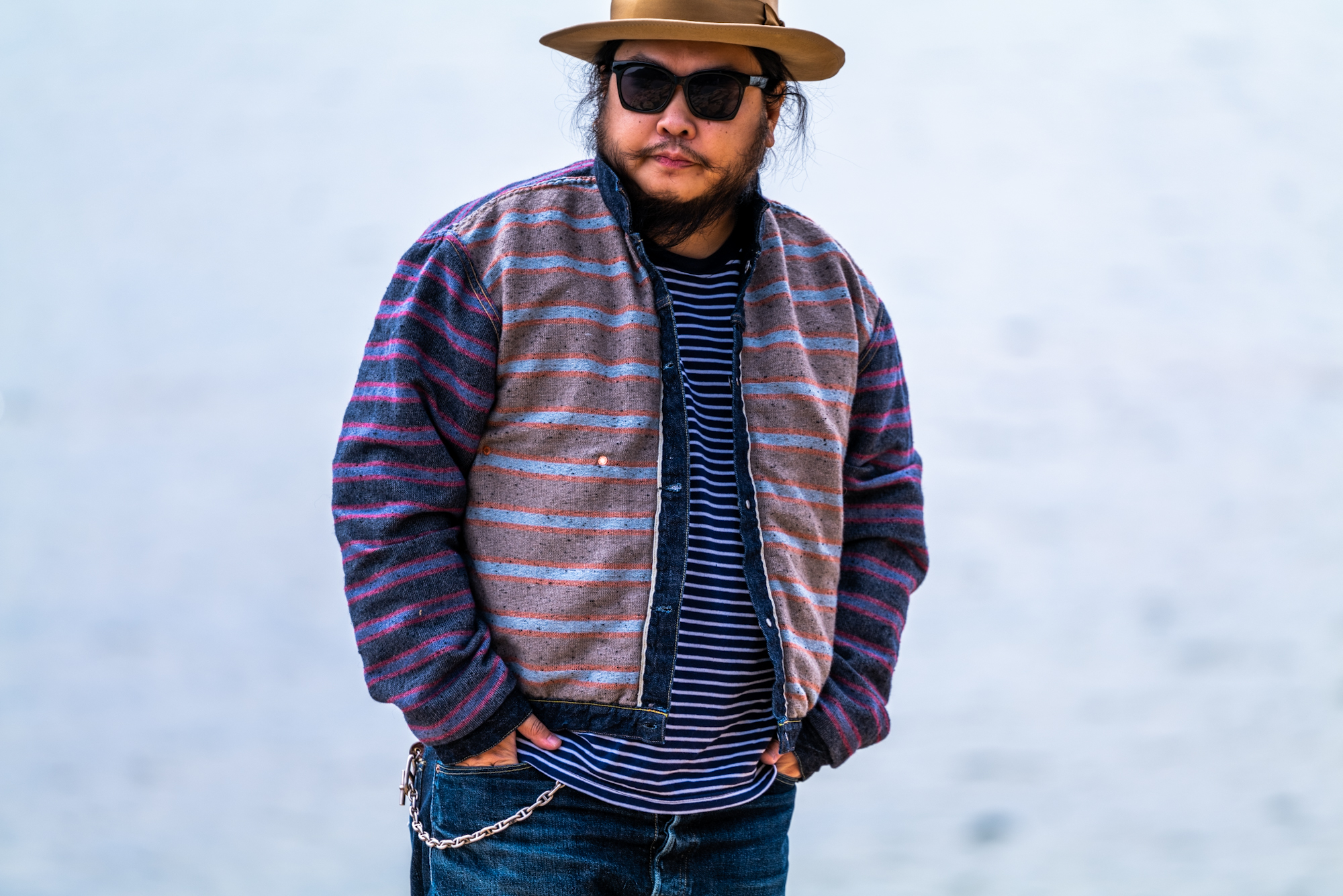
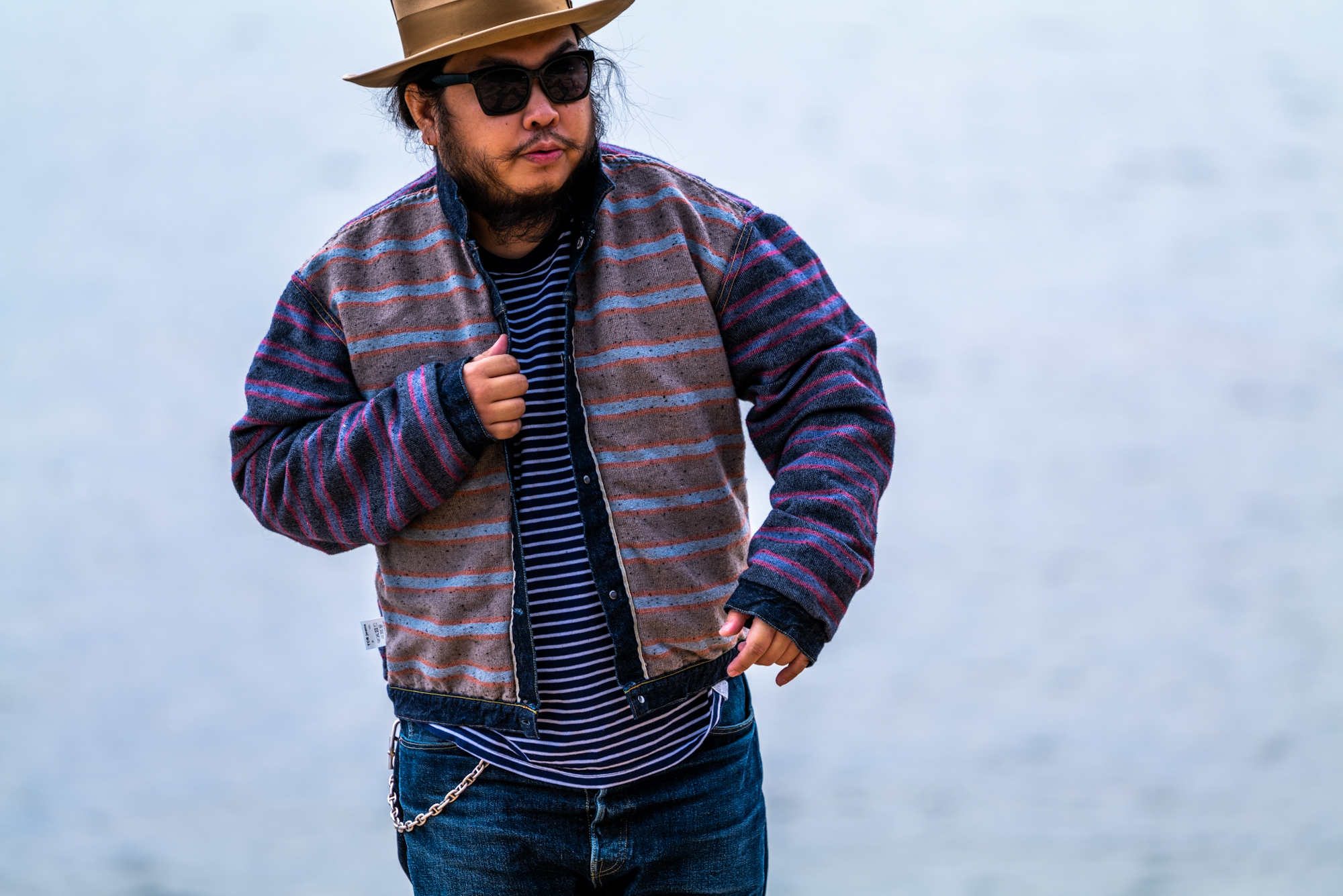
「この柄を、裏地だけにしておくのは勿体ない」
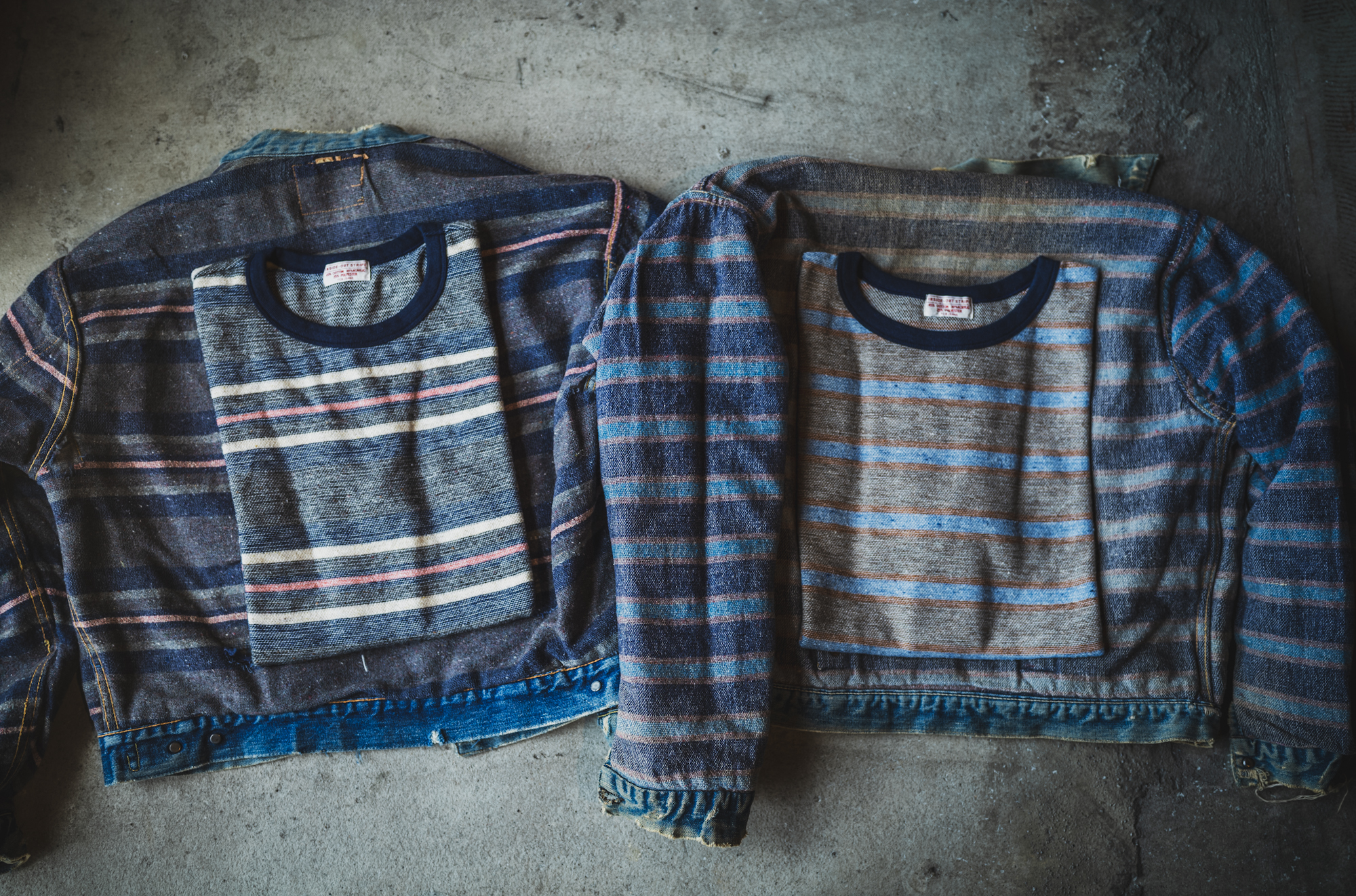
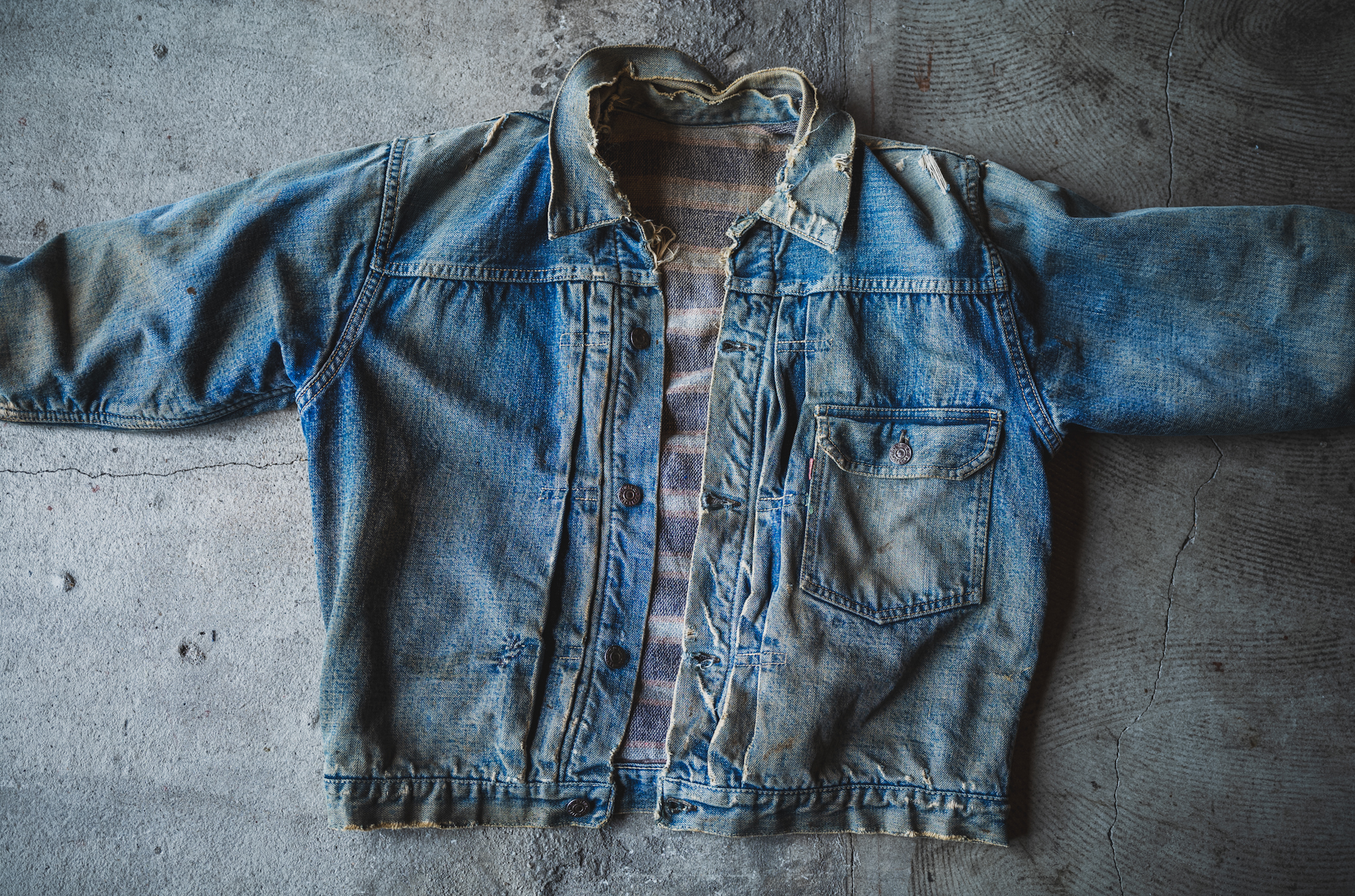
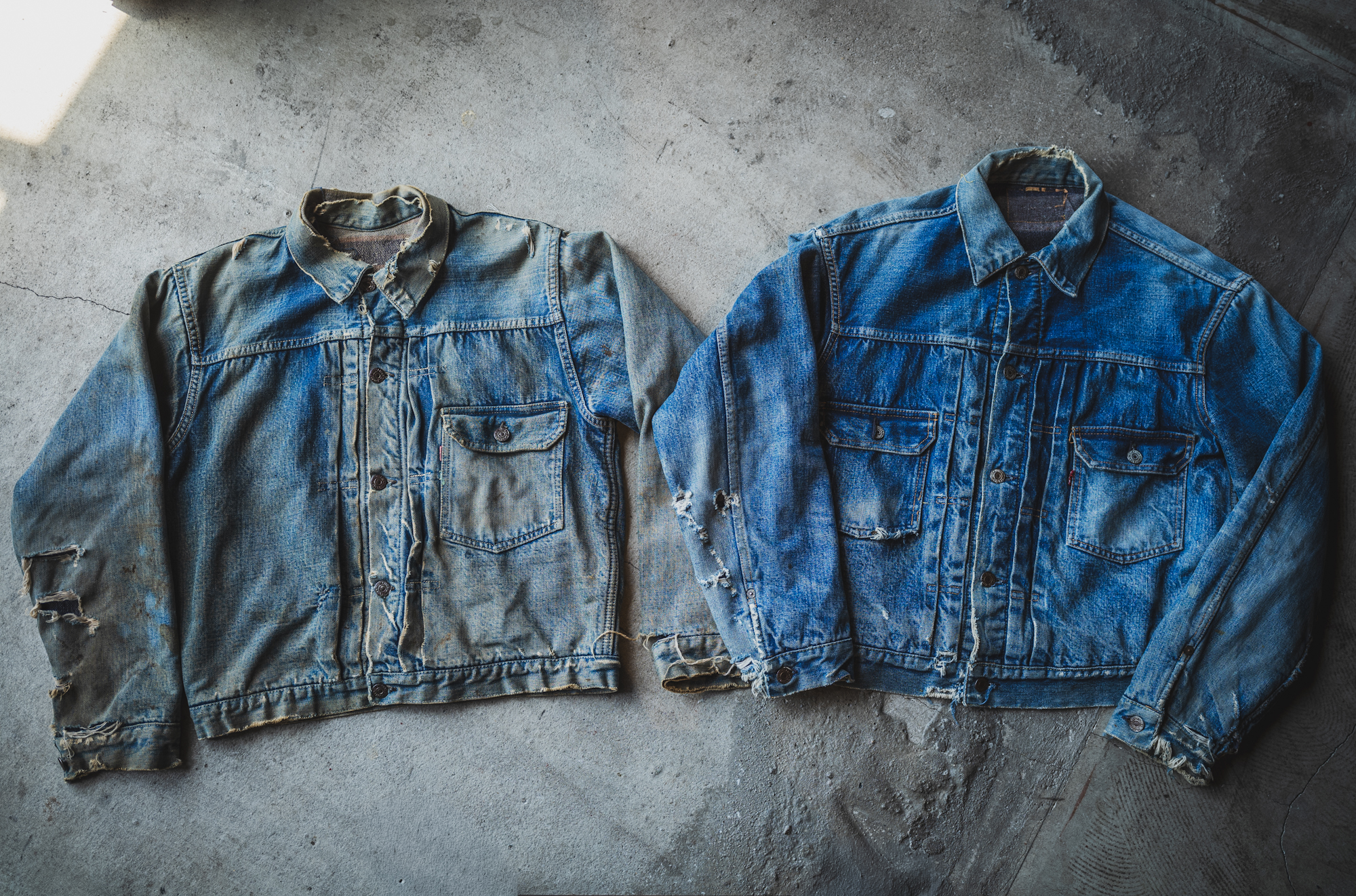
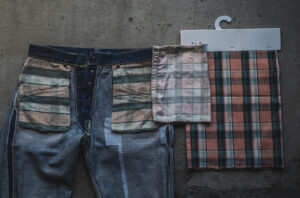
そう思ったのは、ヴィンテージの519XXと517XXを参考に、ライニング付きのジャケットを作った時でした。
1990年代初頭。
まだ少年だった頃に観たドラマで、ライニング付きのカバーオールを裏返して着ているシーンがありました。
あれは衝撃的でした。
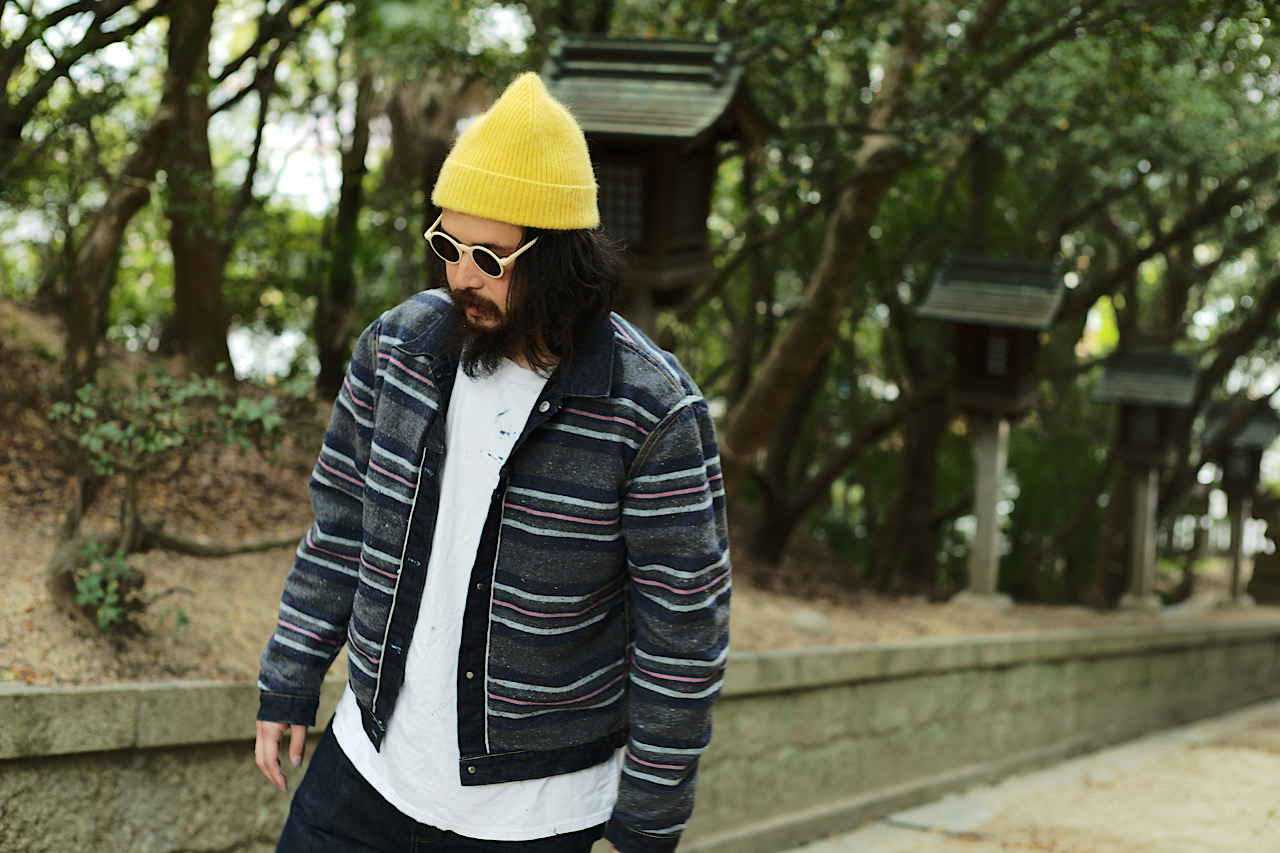
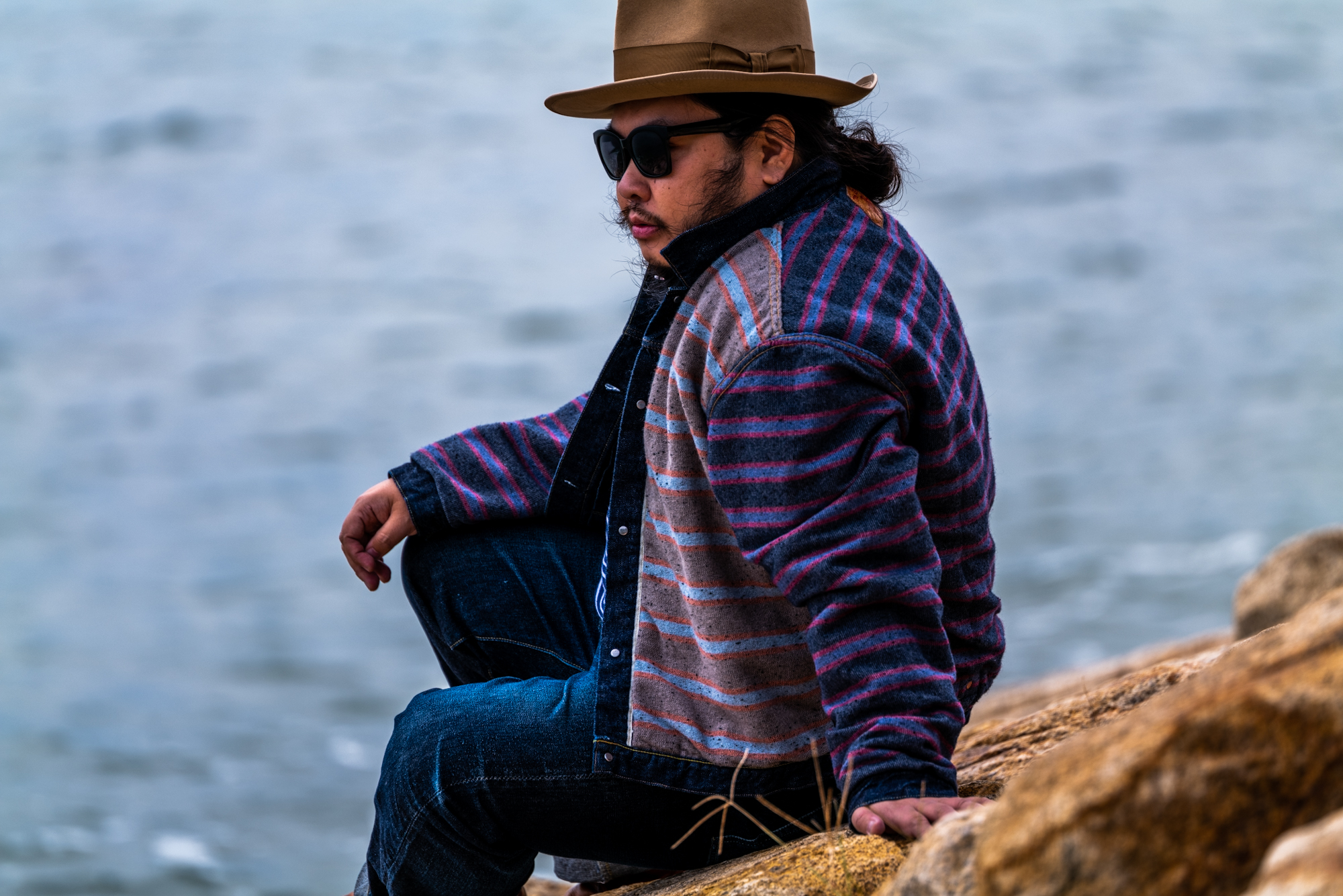
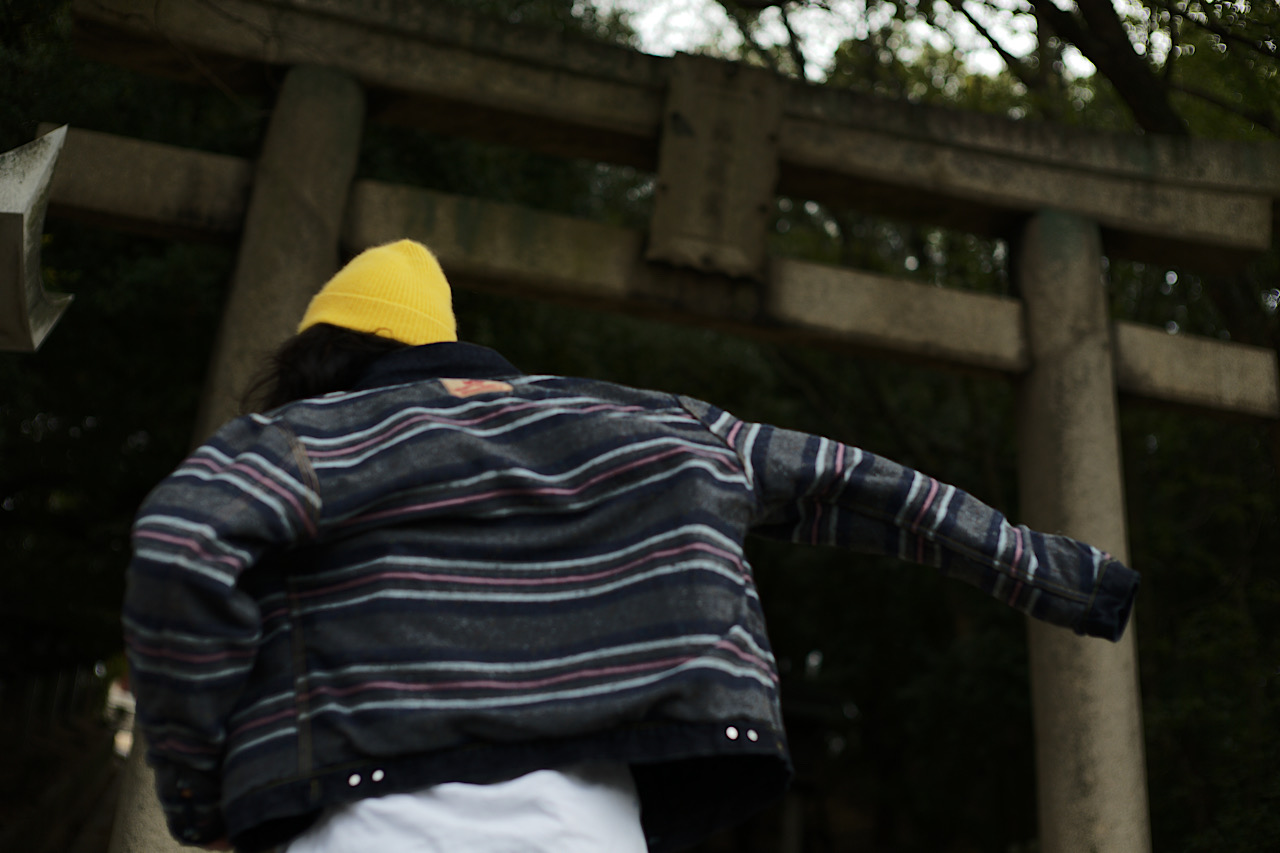
その記憶もあって、私自身もGジャンを裏返し、Inside Outで着て楽しんでいました。
ただ、実際にやってみると格好良い反面、デイリーに着るには少し難しい。
「このブランケット柄を、もっと普通に表へ出せないだろうか」
そんなことを考えていたのですが、調べてみると、あのジャケットを作ってから早くも5年が経っていました。
そして最近、もうひとつの話がこの企画につながりました。
ここ数年、Gジャンとジーンズをセットアップで着ていると、雑誌の取材などでよく聞かれます。
「デニムを上下で着る時の秘訣はありますか?」
正直、特別なことは何も気にしていません。
というより、
「何も気にしたくない結果が、デニムのセットアップなんだ」
というのが本当の答えです。
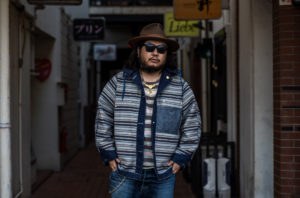
ただ、あえてひとつ挙げるなら、私はよくボーダーTを合わせています。
上下ともデニムだと、全体がどうしてもワントーンになる。
さらに着込んでいくと、ジャケットとジーンズの色落ちにも少しずつ差が生まれてきます。
その間にボーダーが入ることで、上下の青を程よく中和してくれる。
もちろん、最初からそんな立派な計算があったわけではありません。
私はボーダーTが好きで、デニムも好き。
ただ好きなもの同士を合わせていたら、何となく相性が良かった。
それを後から言葉にすると、そういう説明になっただけです。
そんな私は、年間360日くらいをボーダーTで過ごしています。
だからオリジナルのボーダーTを作りたいと考えた時、真っ先に思い出したのが、5年前に裏地へ閉じ込めたあのブランケットでした。
Gジャンのインナーとしてはもちろん、真夏に泣く泣くGジャンを脱いだ日にも、気持ちはデニム上下のまま。
「心はDenim上下だぜ!」
そんな気持ちを込めて作ったTシャツです。
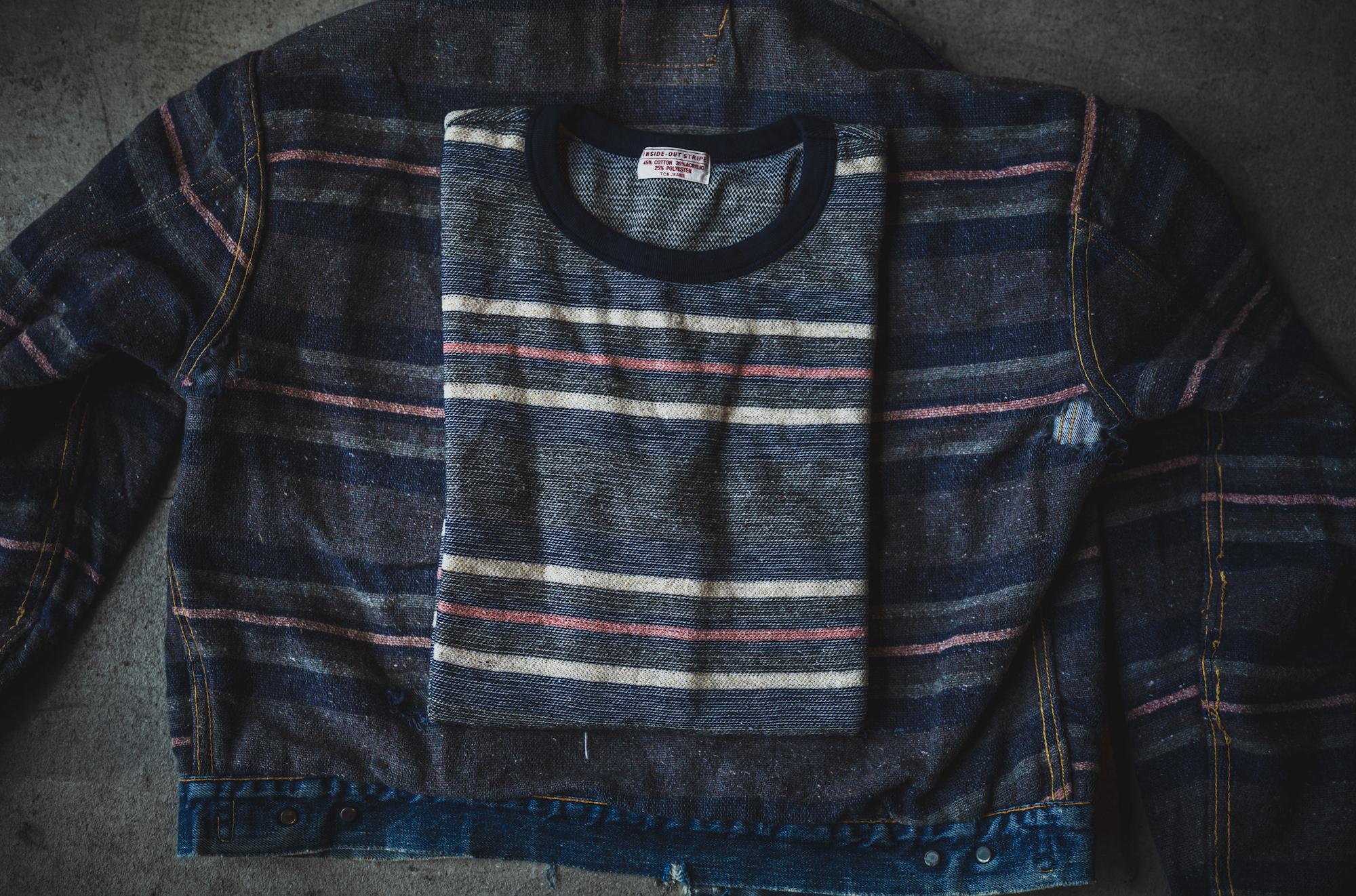
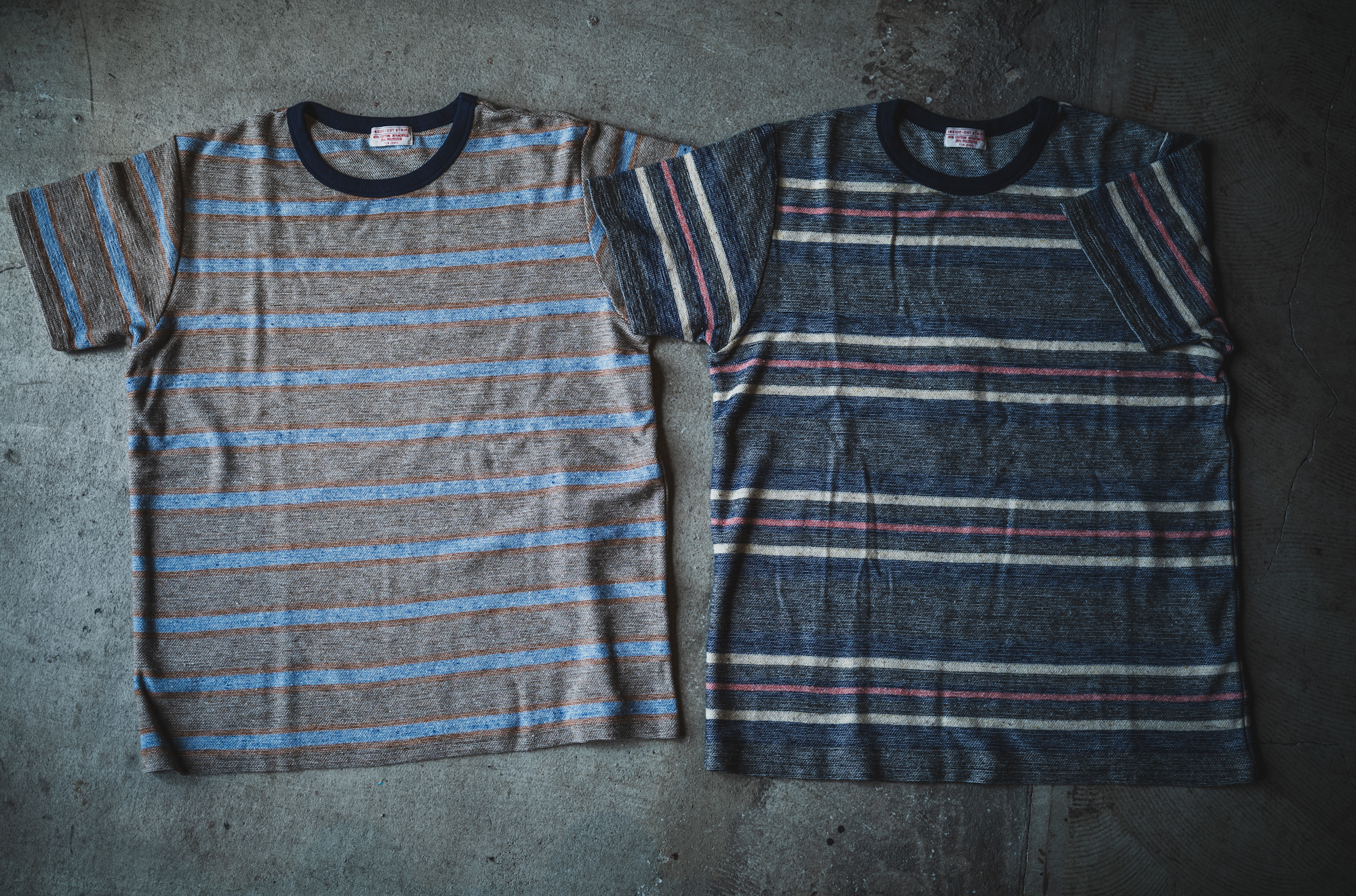
このTシャツの一番の特徴は、生地の編み方にあります。
企画を始めた当初は、一般的なボーダーTの色使いだけで、ブランケット柄を表現しようと考えていました。
ところが、それでは柄がどうしても平面的になってしまう。
良くも悪くも、ジャイアンが着ていそうな、少し漫画的なボーダーに見えてしまい、ヴィンテージのブランケットが持つ糸の凹凸や奥行きが出ません。
どうしたものかと生地屋さんへ相談したところ、提案していただいたのが「インレー編み」でした。
インレー編みとは、土台となる編み地のループの間へ、別の糸を横方向に挿入していく編み方です。
表現したい色や太さの糸をインレーとして走らせることで、単に柄を再現するだけではなく、元ネタとなったヴィンテージブランケットのような、糸の浮きや立体感まで表現することができました。
少しセーターのようにも見える、独特な表情。
シンプルに言ってしまえば、
「ブランケットをTシャツにした」
そんな生地になっています。
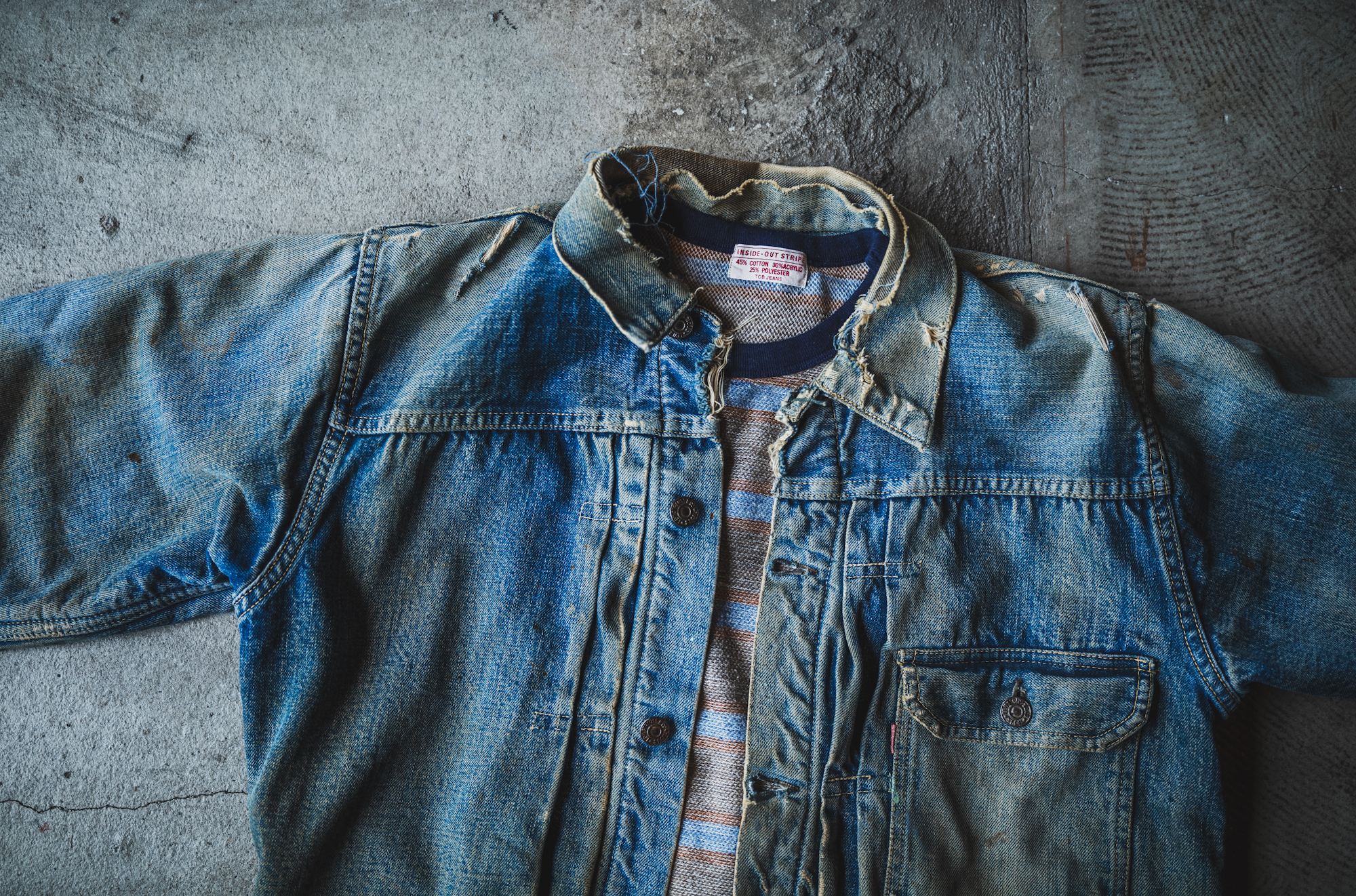
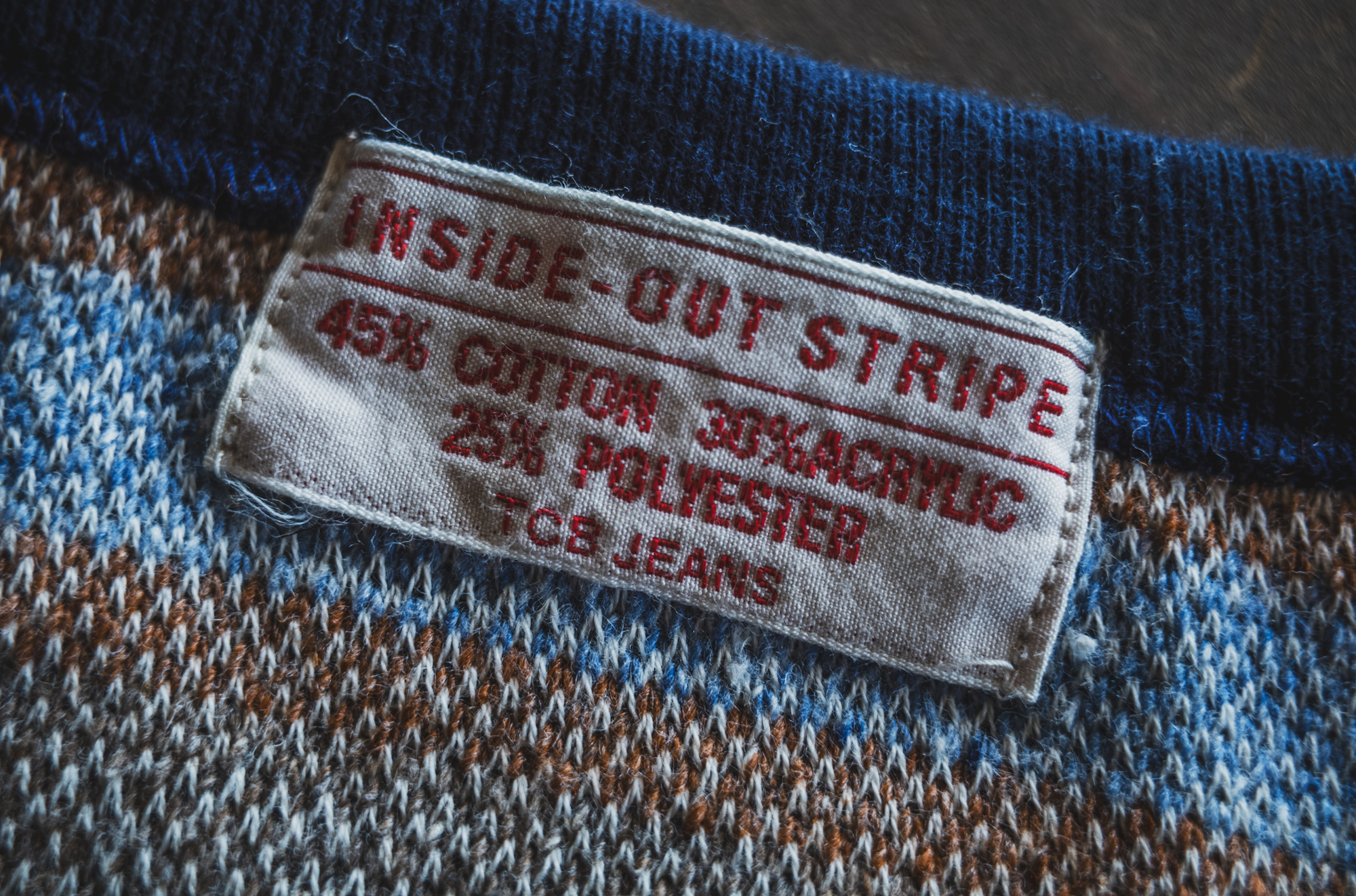
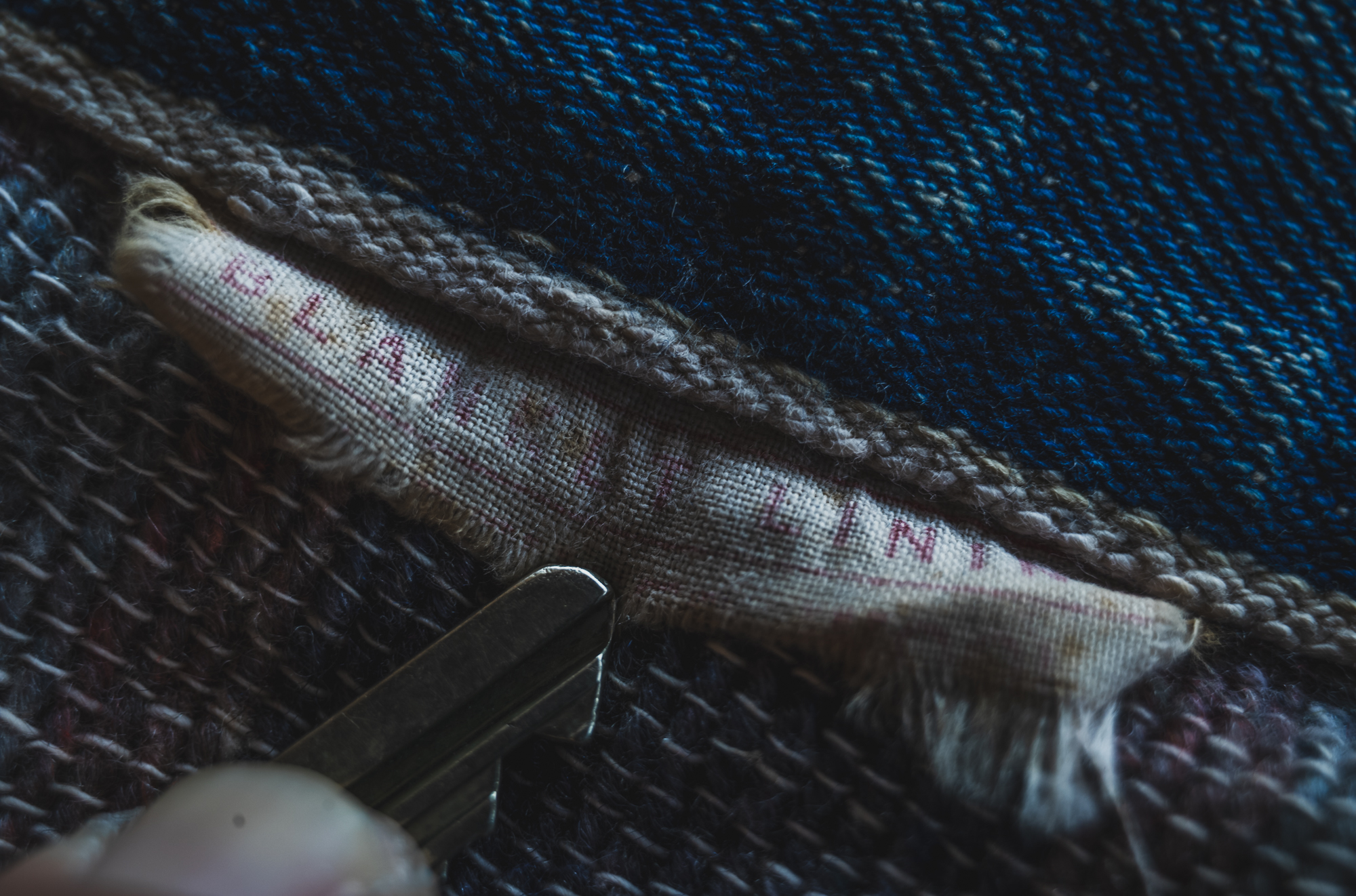
タグも、元ネタと見比べていただくとクスッとしてもらえるようなフォントで製作しました。
そこに記した名前は、
「INSIDE-OUT STRIPE」
これまで裏地に隠れていたストライプを、今度は表にして着てほしい。
そんな意味を込めています。
5年前は、Gジャンを裏返して着ました。
今回は、裏返さずに着られるINSIDE-OUTです。
The stripe that was once hidden inside, brought out.
“This pattern is far too good to keep hidden as a lining.”
That was what I thought when we made lined jackets based on vintage 519XX and 517XX models.
Back in the early 1990s, when I was still a boy, I watched a TV drama in which someone wore a lined coverall turned inside out.
I was blown away.
That scene stayed with me, and years later I began turning my own denim jackets inside out and wearing them that way.
As cool as it looked, however, it was not the easiest thing to wear every day.
“Could I bring this blanket stripe out into the open in a more wearable way?”
That thought remained in the back of my mind. Before I knew it, five years had passed since we made those jackets.
More recently, another part of the story fell into place.
Over the past few years, whenever I have worn a denim jacket with jeans, I have often been asked the same question during magazine interviews:
“Do you have any tips for wearing denim on top and bottom?”
Honestly, I do not pay much attention to it.
Or perhaps the real answer is:
“Denim-on-denim is what I end up wearing precisely because I don’t want to think about it.”
But if I had to name one thing, it would be that I often wear a striped T-shirt between the two.
When you wear denim on top and bottom, the entire outfit naturally becomes one continuous tone.
As the pieces are worn in, the jacket and jeans also begin to fade at different rates.
Putting a striped T-shirt between them helps soften and balance those different shades of blue.
Of course, this was never the result of some carefully calculated styling theory.
I like striped T-shirts, and I like denim.
I simply put two things I love together and discovered that they worked.
The explanation came afterwards.
I spend roughly 360 days of the year wearing striped T-shirts.
So when I began thinking about making an original striped T-shirt, the first thing that came to mind was the blanket we had hidden inside a jacket five years earlier.
It could, of course, be worn under a denim jacket.
But even on the hottest summer days, when I reluctantly have to take off my jacket, I still wanted to feel as though I were wearing denim on top and bottom.
“Double denim at heart!”
That is the spirit behind this T-shirt.
The most remarkable thing about it is the way the fabric is knitted.
When we first began developing it, we planned to reproduce the blanket pattern simply through the colors of a conventional striped T-shirt.
The result, however, looked too flat.
For better or worse, it began to resemble something Gian from Doraemon might wear—a slightly cartoonish stripe without the texture or depth of a vintage blanket.
Unsure of how to solve this, we spoke with our fabric supplier, who suggested using an inlay knitting technique.
Inlay knitting is a method in which additional yarns are laid horizontally through the loops of a base knitted fabric.
By using yarns in the colors and thicknesses we wanted as the inlay, we were able to reproduce not only the pattern, but also the raised texture and depth of the original vintage blanket.
The result has a distinctive surface that almost resembles a sweater.
Put simply:
“We turned a blanket into a T-shirt.”
That is the fabric we created.
We also made the label in a typeface that should bring a small smile to anyone who compares it with the vintage original.
The name printed on it is:
“INSIDE-OUT STRIPE.”
A stripe that had always been hidden away as a lining is now meant to be worn on the outside.
Five years ago, we turned a denim jacket inside out.
This time, it is INSIDE-OUT without having to turn anything inside out.



 Categolies
 Tag
Tag Archive