
- About TCB
- Sewing Machines for TCB
- TCB Crews Introduction
- News / Daily
- Shop / Stockists
- Repair & Hem
- Recruit
- Contact


2026/10/10
何年か前、3rdのVintageを元に作ったCordsの生地。
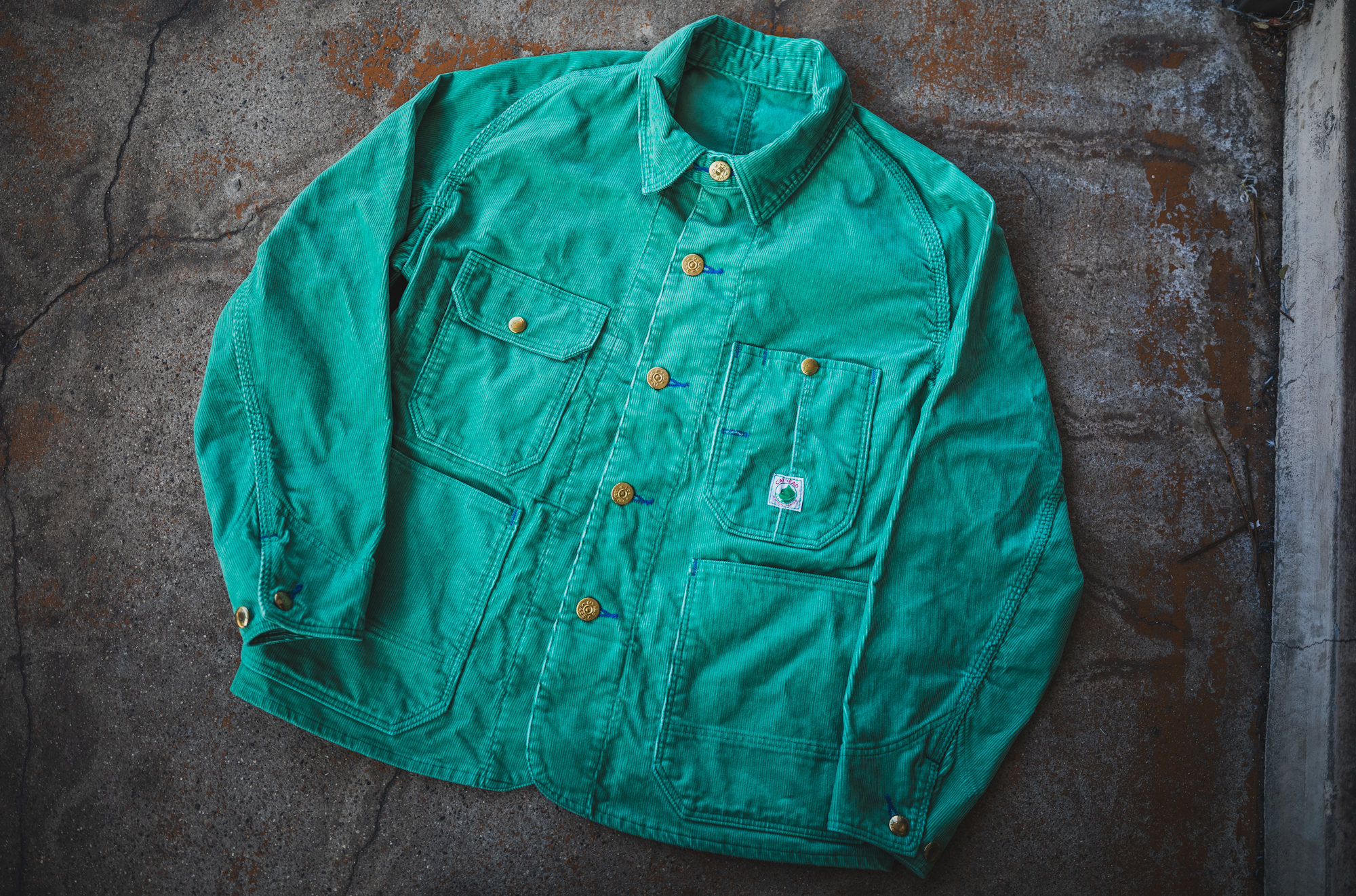
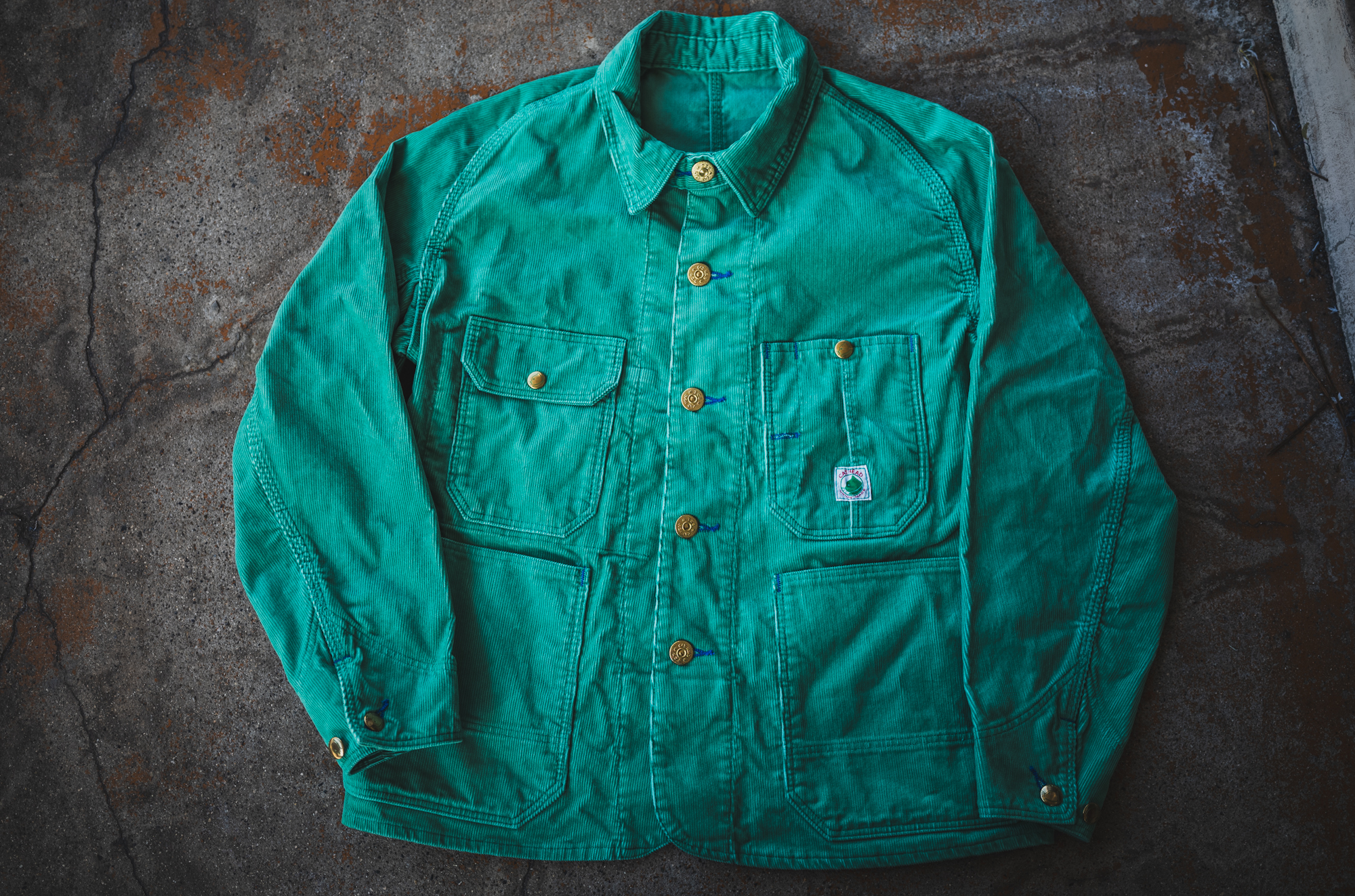
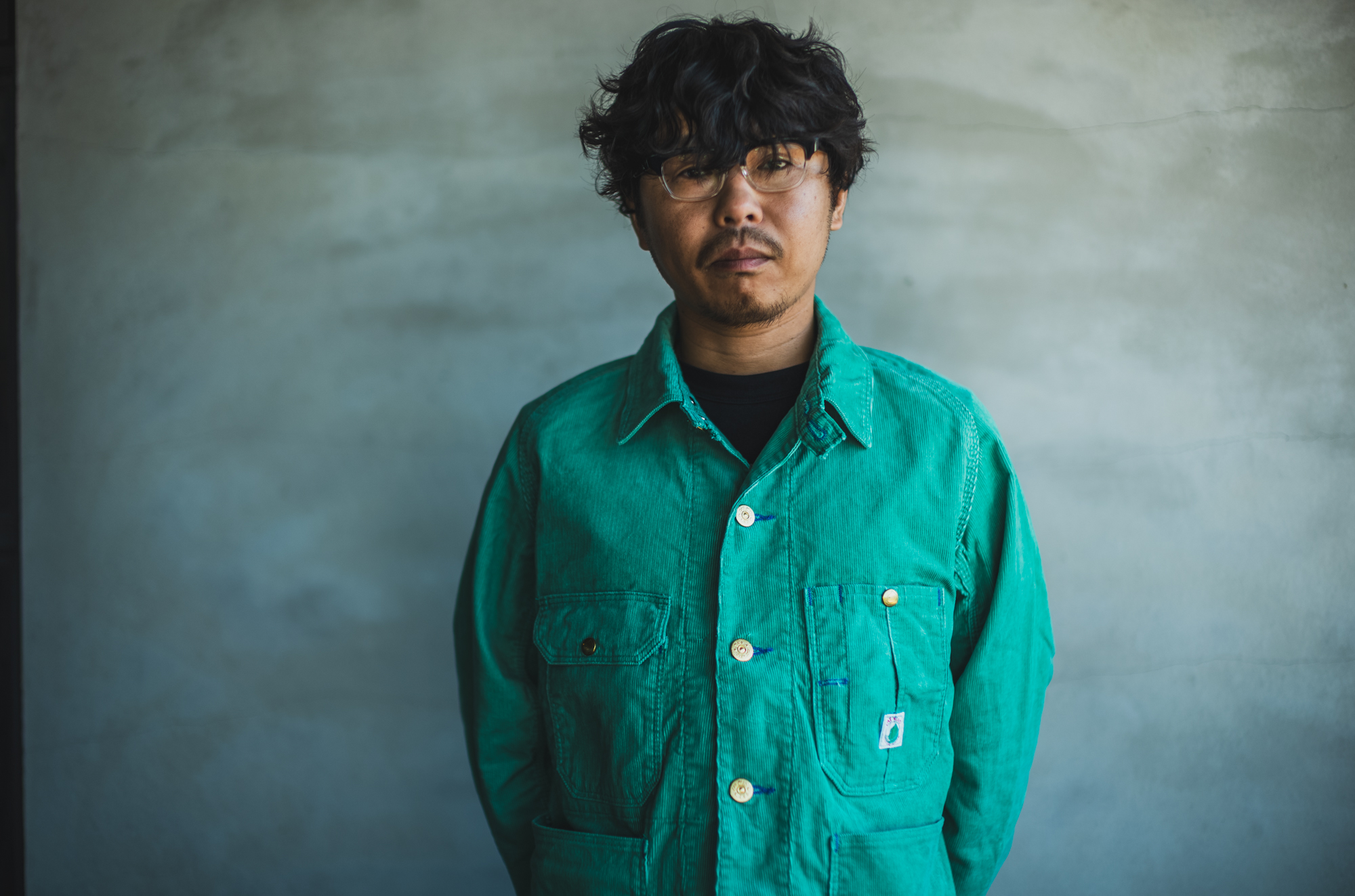
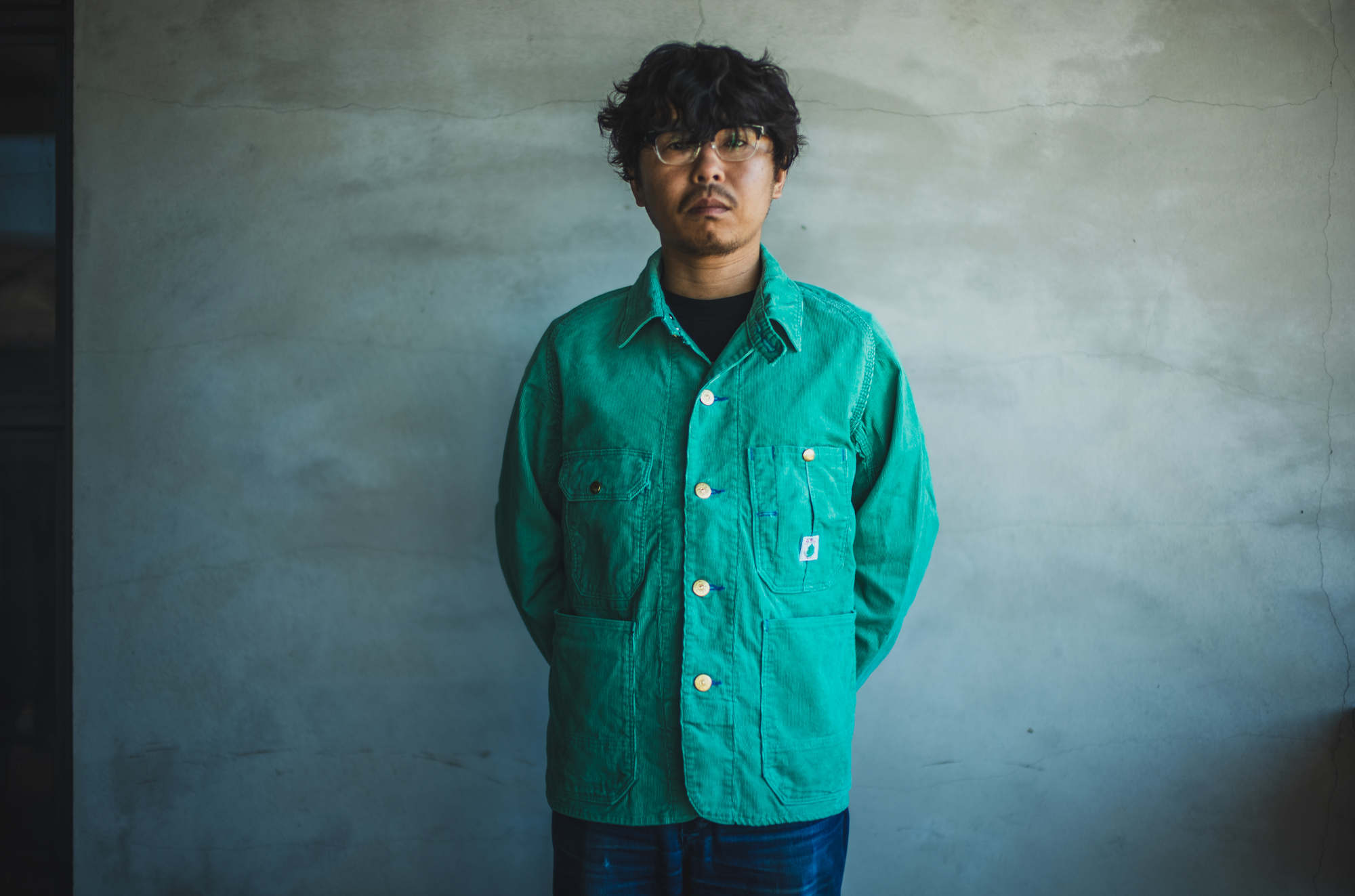
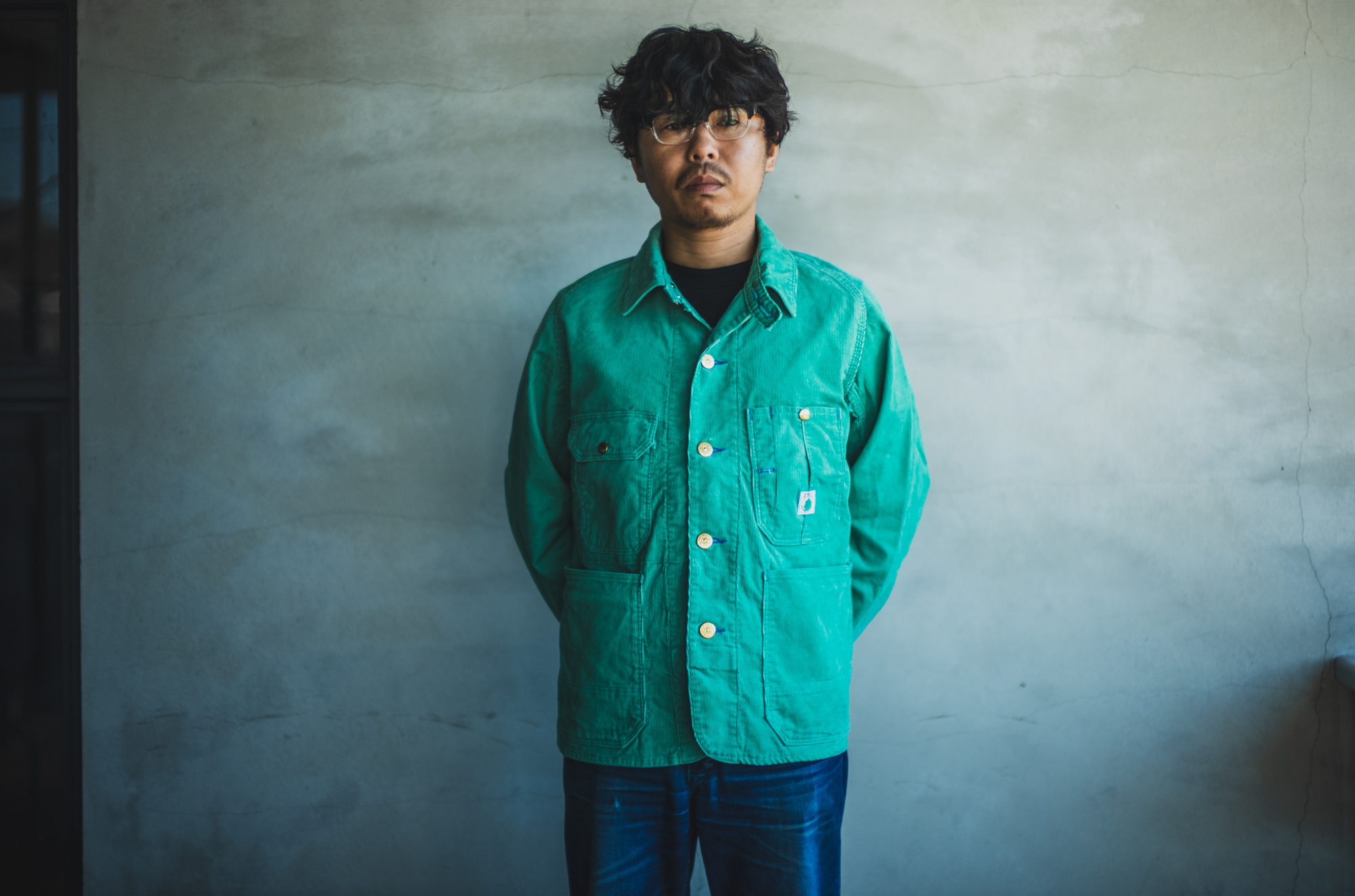
今回はその生地をもう一度作り、Cat Head JKに仕立てました。
私が児島に来たばかりの頃は、いつでも作れると思っていた生地が、気付けば作りづらいものになっていました。
特にWool系やCordsには、Denim以上に、
「あと何年、日本で作れるだろう?」
と感じることがあります。
以前は「リーバイコーズ向け」と呼ばれるような生地もあり、わざわざ一から作る必要がないほど身近な存在でした。
ところが、いざ探してみると、欲しかった生地はすでに廃番。
作るのが大変になってきたと知ると、かえって作りたくなるのが人間なのでしょうか。笑
そんなところから始まった、TCBのCordsでした。
元にしたのは3rdのVintageでしたが、前回はあえて3rdにはせず、
「大戦ベースの方が、みんな合わせやすいんだろうな」
と思い、S40’s Cordsとして発表しました。
そして今回は、もうひとひねり。
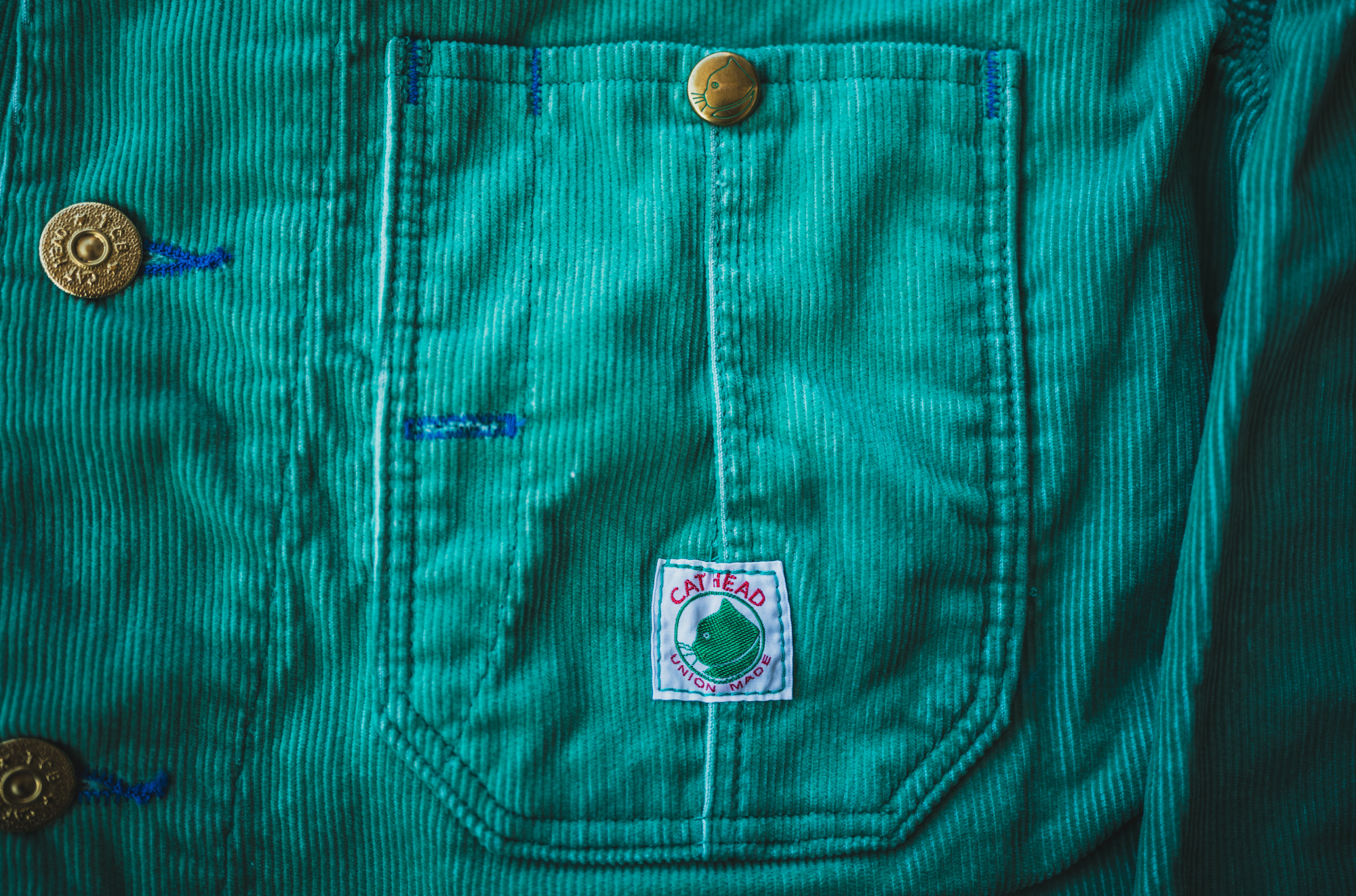
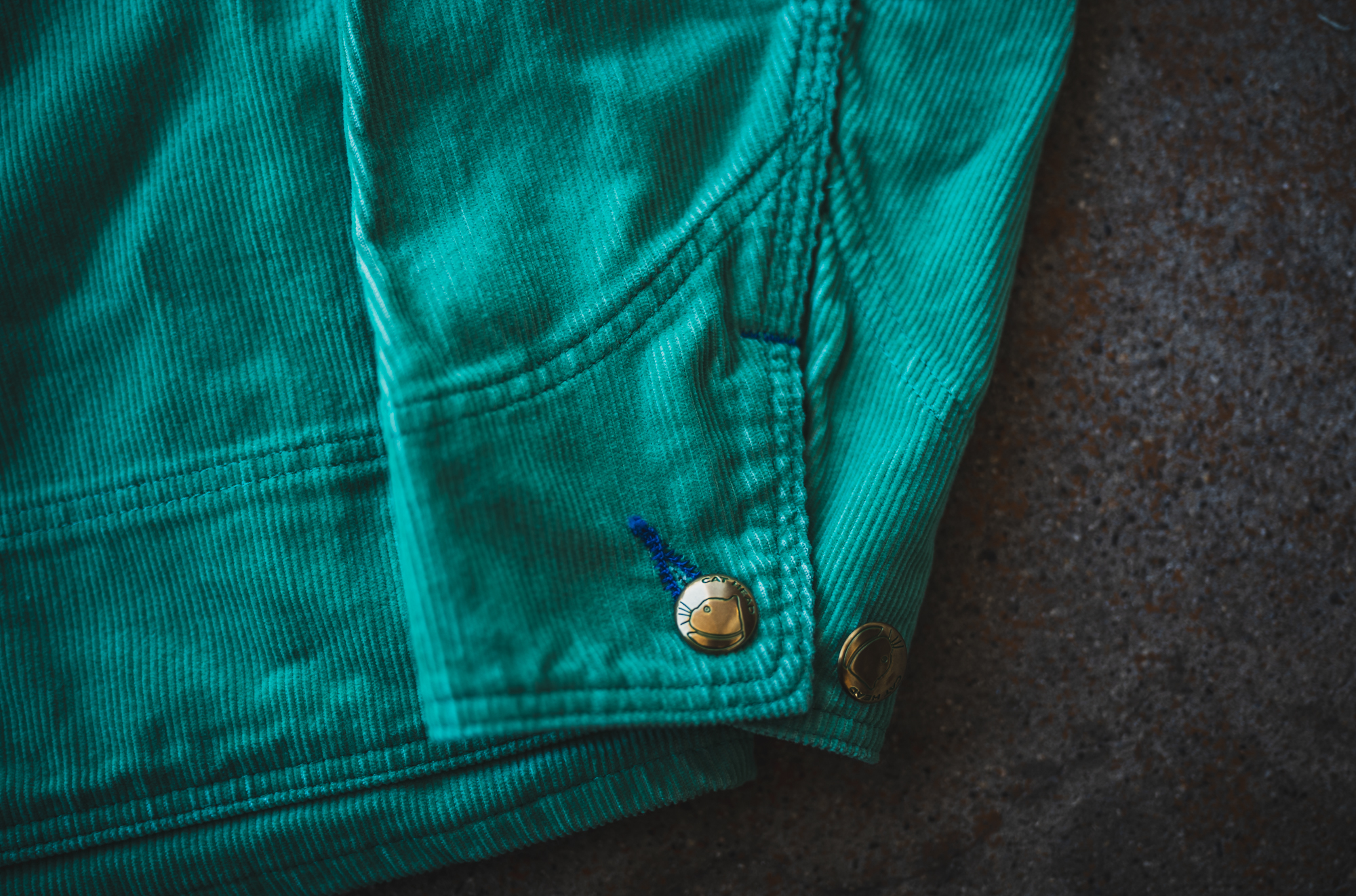
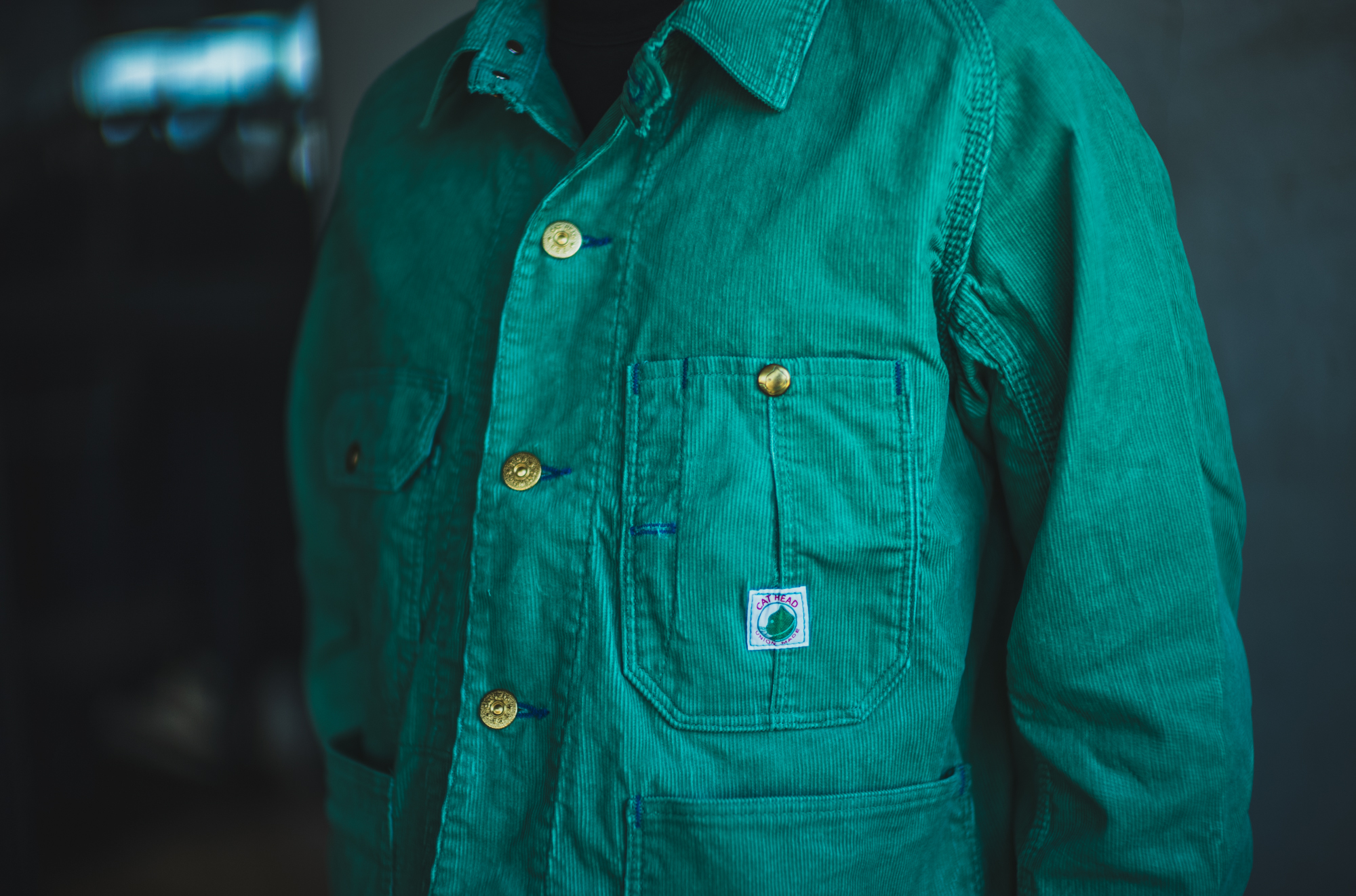
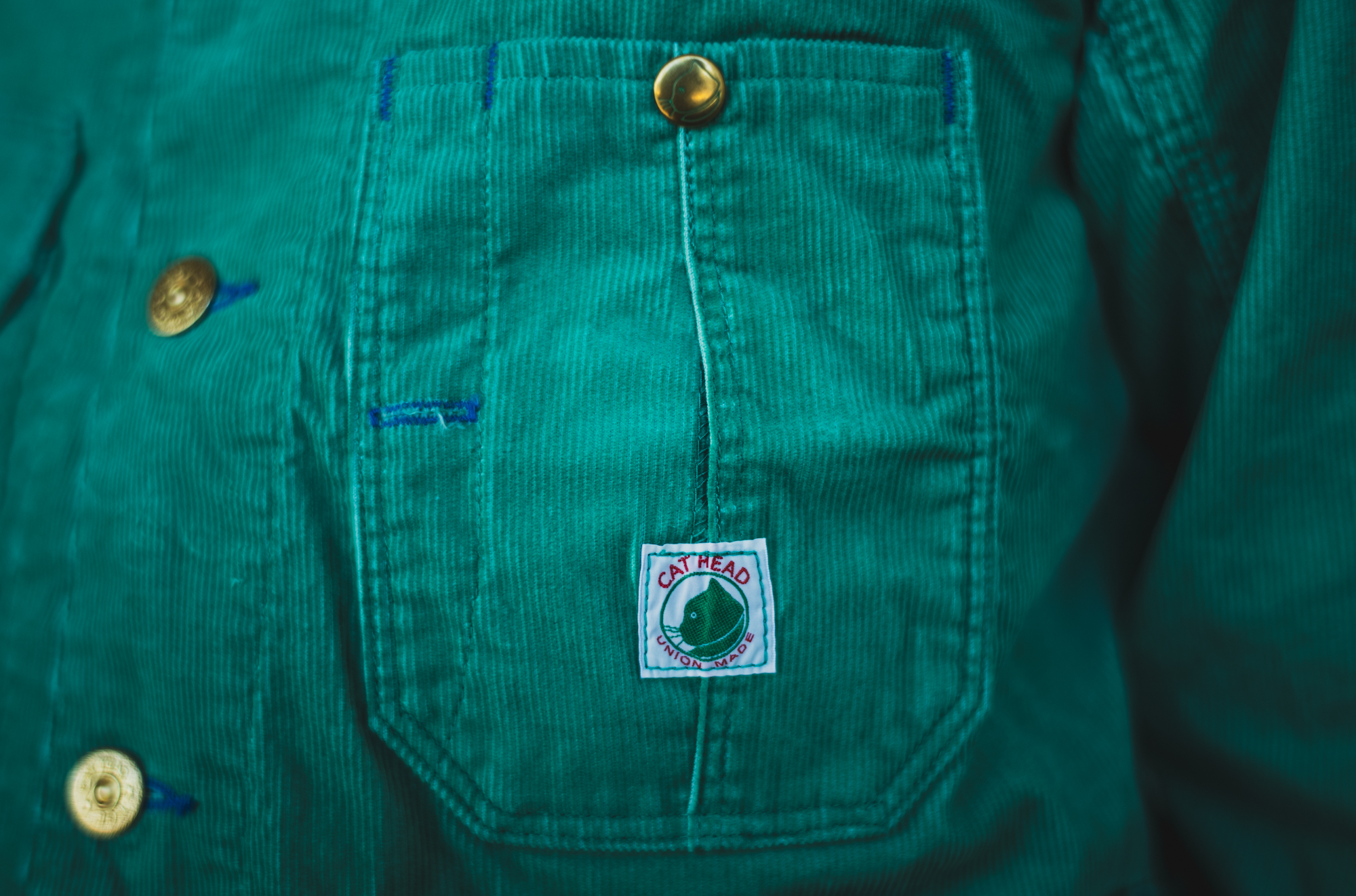
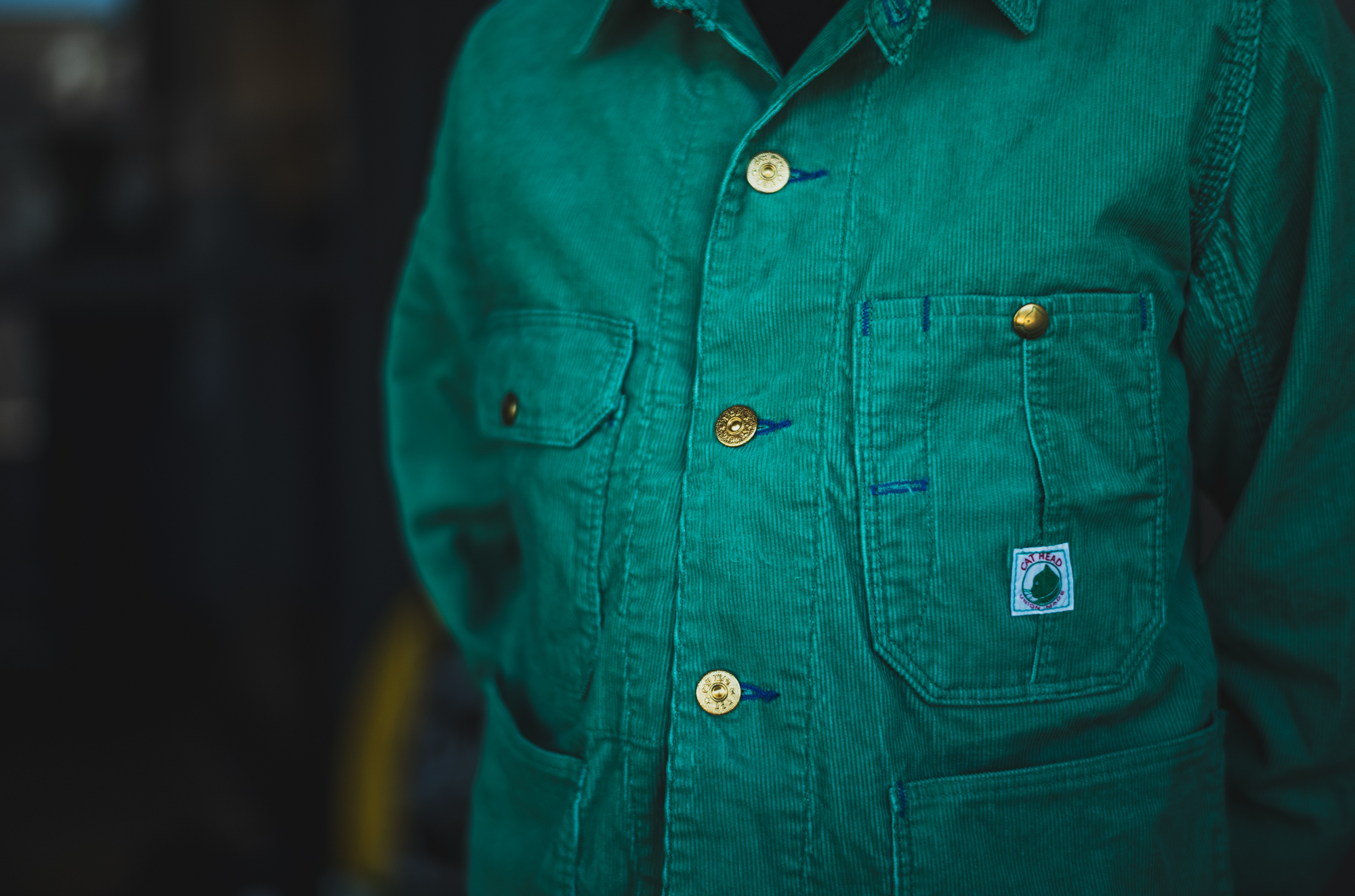
選んだのは、カバーオールのCat Head JKです。
色は、Vintageでもサーモンピンクと人気を争うエメラルドグリーン。
Vintageの3rdを思わせるこの色を、今回はカバーオールで楽しんで頂けたらと思っています。
TCBではあえて青リンゴとでも呼ぶことにしました。
カバーオールはワークウェアですが、着方次第で、どこかスーツのジャケットのような上品さも出せる服だと思っています。
今回はCordsを使うことで、その表情をもう少し引き出せた気がします。
そして、見た目だけではなく、触れたときの温もりもCordsの魅力です。
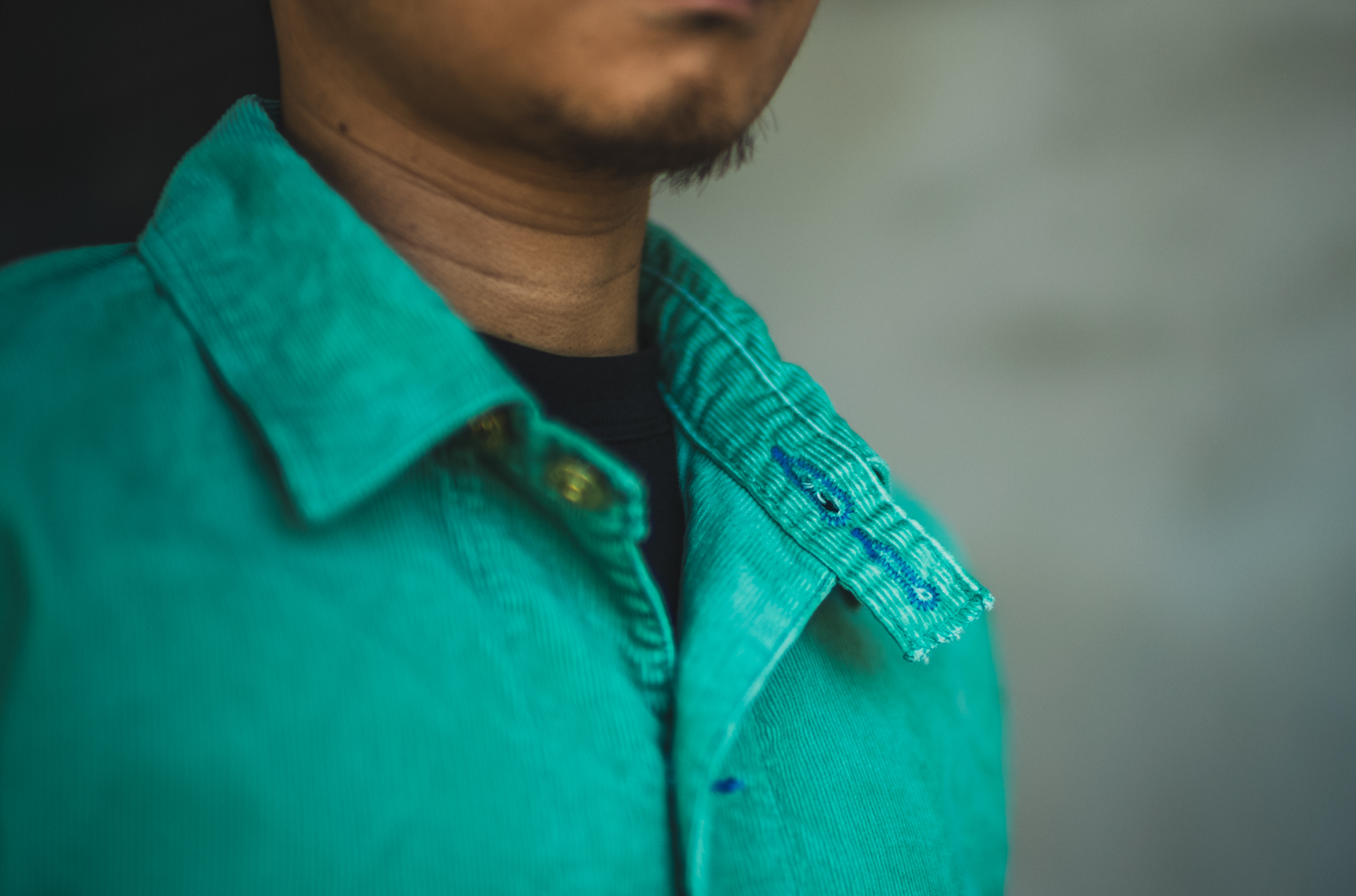
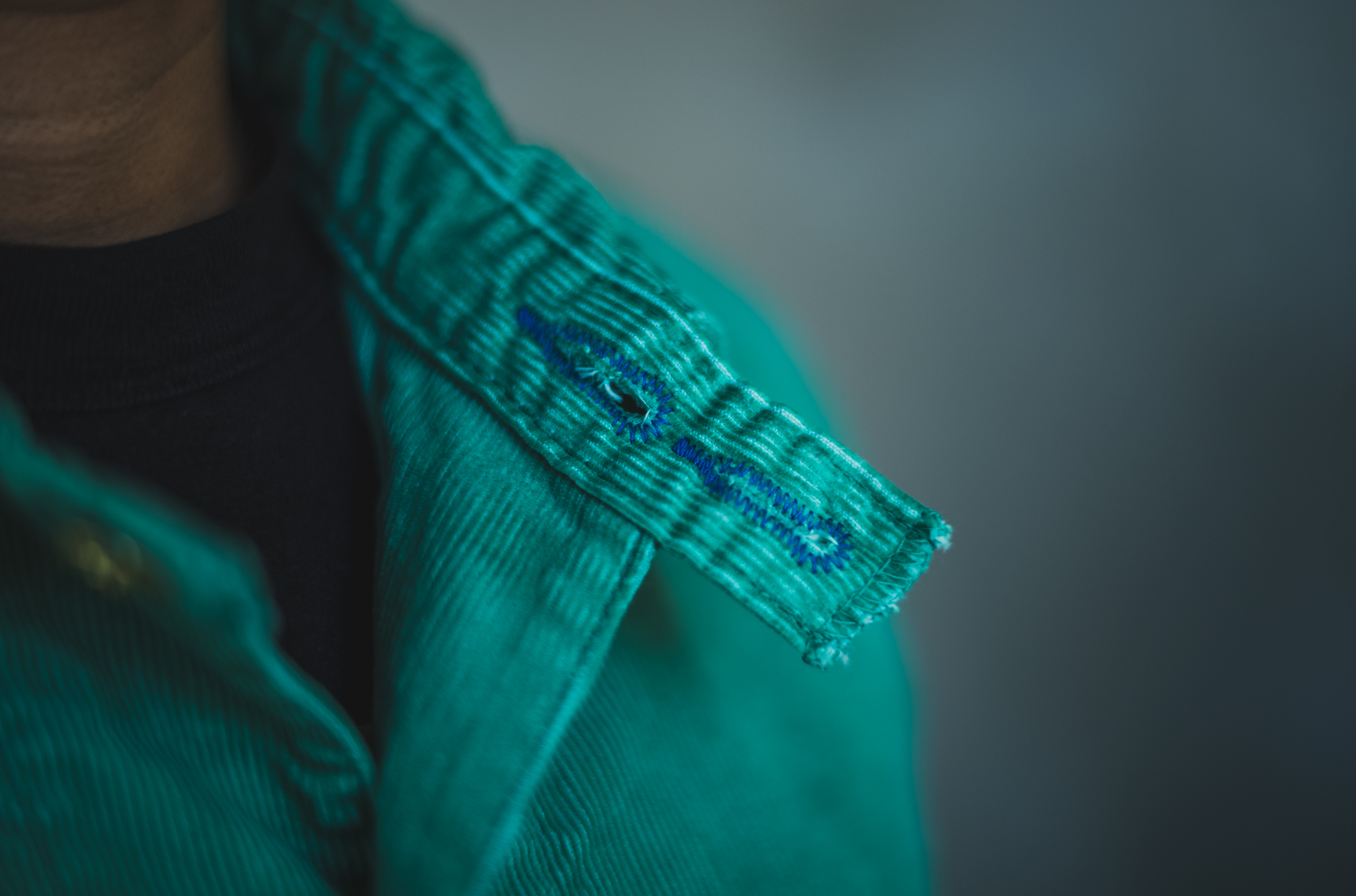
ブランケット付きのカバーオールなどで、襟に使われているCords。
首に触れる、あの柔らかな感触が私は好きです。
今回は、それをジャケット全体に。
冬の朝に羽織ったとき、あのひやっとする感じよりも先に、柔らかな温もりを感じてもらえたらと思っています。
ポケットに手を入れたときにも、きっと少し。
襟元だけで感じていたCordsの良さを、この一着で楽しんで頂けたら嬉しいです。
□ 生地
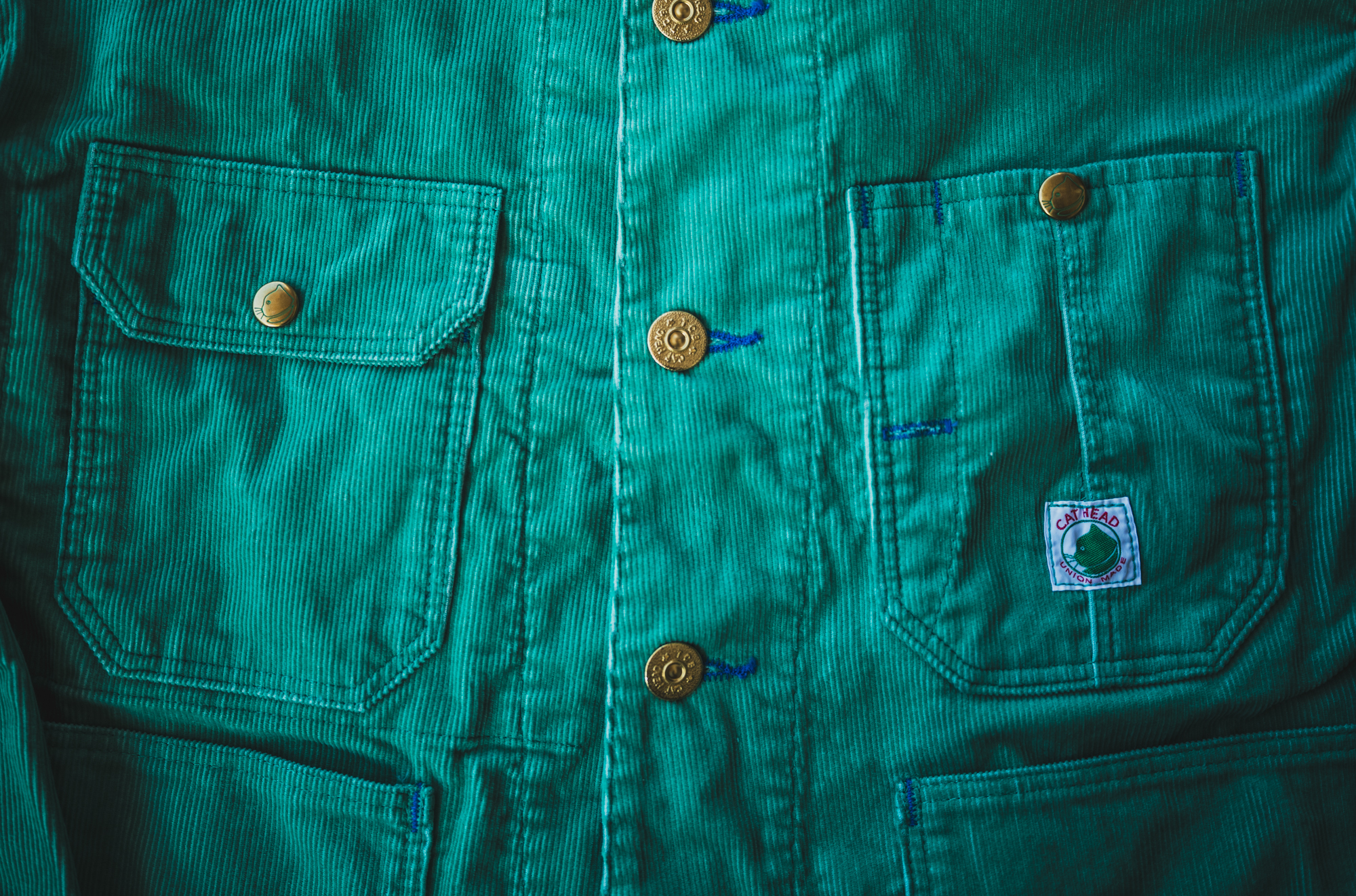
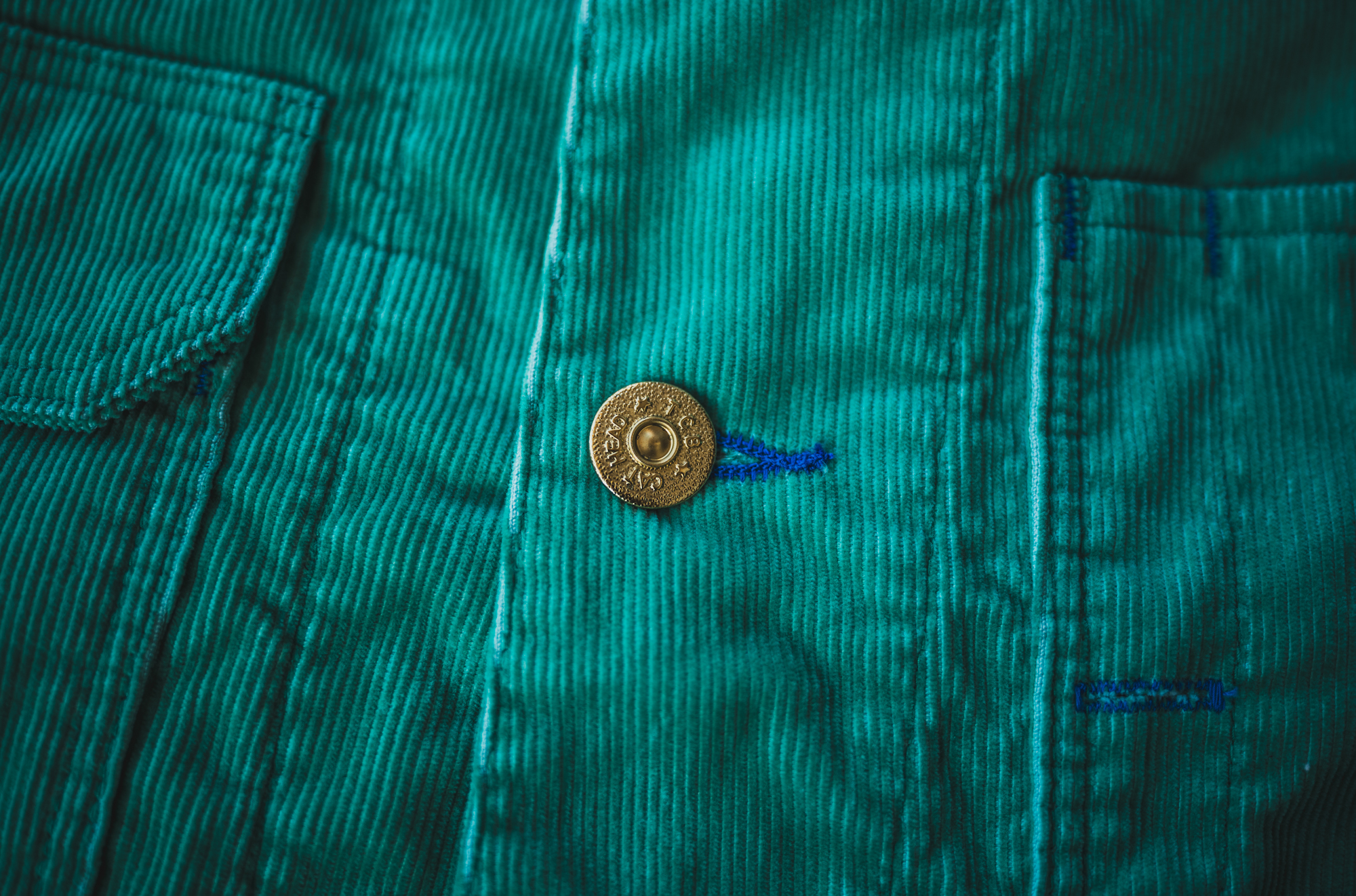
Vintageの畝に近づけるため、糸の太さと打ち込みを調整しました。
畝の数は、Vintageと同じく1インチあたり14本の「14ウェル」です。
混率は綿100%にするか迷いましたが、Vintageの横糸を解き、その構成を参考にして、コットン85%・ポリエステル15%にしました。
□ 染め
染め方は、硫化染めと反応染めで迷いました。
今回狙ったのは、最初からUSED感のある表情ではなく、着て、洗って、時間をかけてVintageに近づいていく生地です。
硫化染めでは、1Washの段階でUSED感が強く出てしまい、元にしたVintageとは違う雰囲気になるのではないか。
そう考え、今回は反応染めを選びました。
じっくりと着込むうちに、縫い目のパッカリングなど、凹凸のある部分が少しずつ白くなっていく。
そんな経年変化を狙っています。
Several years ago, we developed a corduroy fabric based on a vintage Type III jacket.
This time, we’ve reproduced that fabric and made it into our Cat Head JK.
Some of the fabrics I took for granted when I first arrived in Kojima have quietly become much harder to produce.
With wool fabrics and corduroy in particular, even more so than denim, I sometimes find myself wondering:
“How many more years will we be able to make these in Japan?”
There was a time when fabrics described as “for Levi’s cords” were readily available. They were so familiar that there was little reason to develop one from scratch.
But when we actually went looking, the fabric we wanted had already been discontinued.
Perhaps it’s human nature to want to make something even more once you learn how difficult it has become. Haha.
That was how TCB’s corduroy began.
Although the original reference was a vintage Type III, we deliberately chose a different design for our first release.
I thought, “A WWII-era jacket might be easier for everyone to work into their wardrobes.”
And so we introduced the S40’s Cords.
This time, we’ve taken it in another direction.
We chose our Cat Head JK coverall.
The color is emerald green, a shade that rivals salmon pink in popularity among vintage examples.
It’s a color that brings vintage Type III jackets to mind, but this time, we hope you’ll enjoy it in the form of a coverall.
Here at TCB, we’ve decided to give it a name of our own: “Green Apple.”
A coverall is workwear, but depending on how you wear it, I think it can have a certain elegance, almost like a suit jacket.
Using corduroy seems to have brought out a little more of that character.
And corduroy’s appeal isn’t just in how it looks. There’s also the warmth you feel when you touch it.
Think of the corduroy collars often found on blanket-lined coveralls.
I’ve always loved that soft feeling against my neck.
This time, we’ve extended it to the whole jacket.
When you put it on on a winter morning, I hope you’ll notice that gentle warmth before the chill you sometimes feel when slipping into a jacket.
Perhaps you’ll feel a little of it when you put your hands in the pockets, too.
The comfort I’ve always enjoyed around the collar—that’s something I hope you’ll enjoy throughout this jacket.
□ Fabric
To recreate the wales of the vintage fabric, we adjusted both the yarn thickness and the weave density.
Like the original, it is a 14-wale corduroy, with 14 ridges per inch.
We considered making it in 100% cotton, but after unraveling the weft yarn from the vintage fabric and examining its composition, we settled on a blend of 85% cotton and 15% polyester.
□ Dyeing
We considered both sulfur dyeing and reactive dyeing.
What we wanted was a fabric that would gradually develop a vintage character through wear, washing, and time, rather than one that looked worn from the start.
With sulfur dyeing, we felt that even the first wash might give the fabric a more heavily worn appearance than we wanted, taking it away from the character of our vintage reference.
So we chose reactive dyeing.
As the jacket is worn over time, the raised areas—including the puckering along the seams—should gradually fade toward white.
That is the kind of aging we’re aiming for.




 Categolies
 Tag
 Archive