

- About TCB
- Sewing Machines for TCB
- TCB Crews Introduction
- News / Daily
- Shop / Stockists
- Repair & Hem
- Recruit
- Contact


2026/09/22
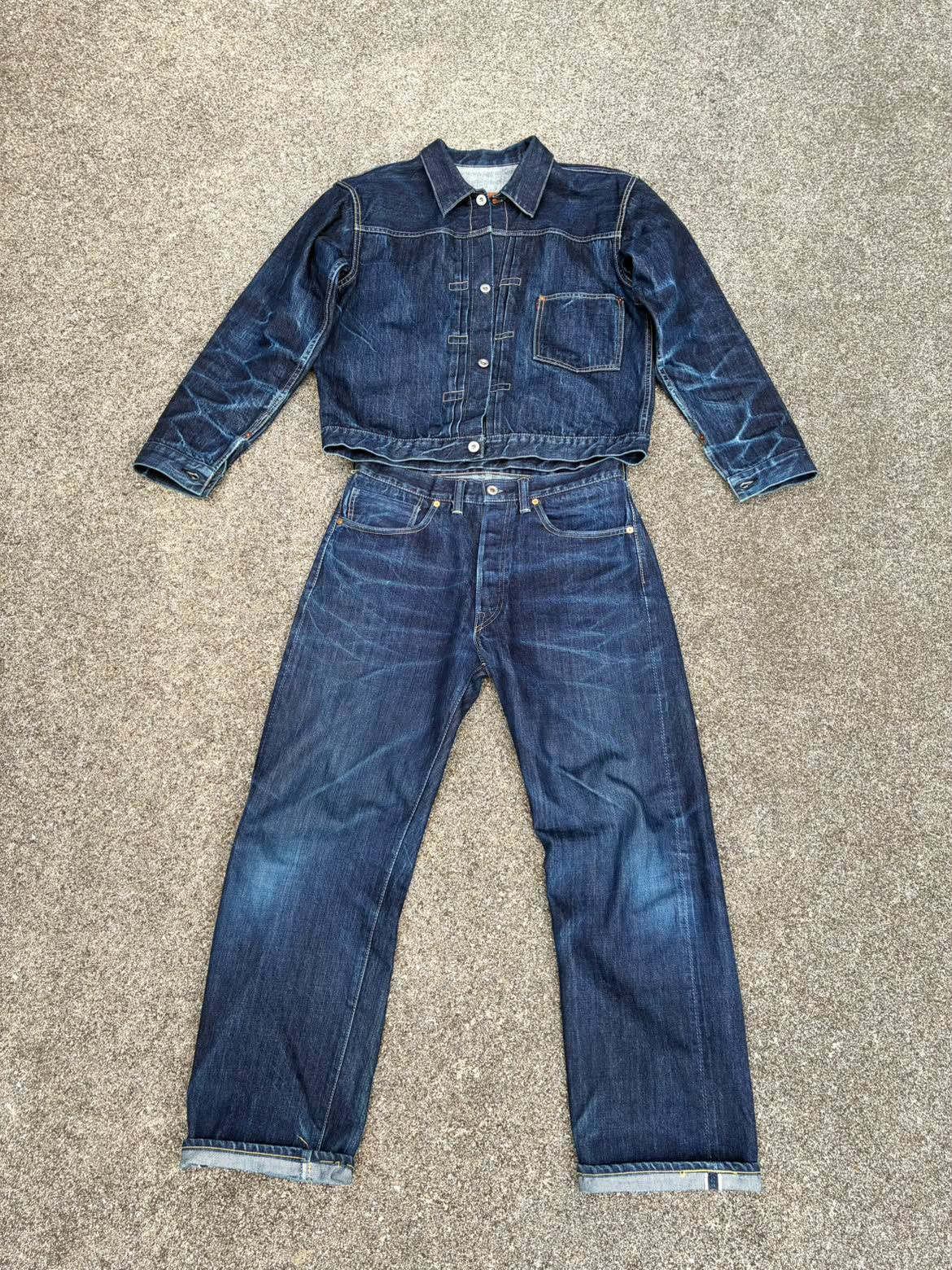
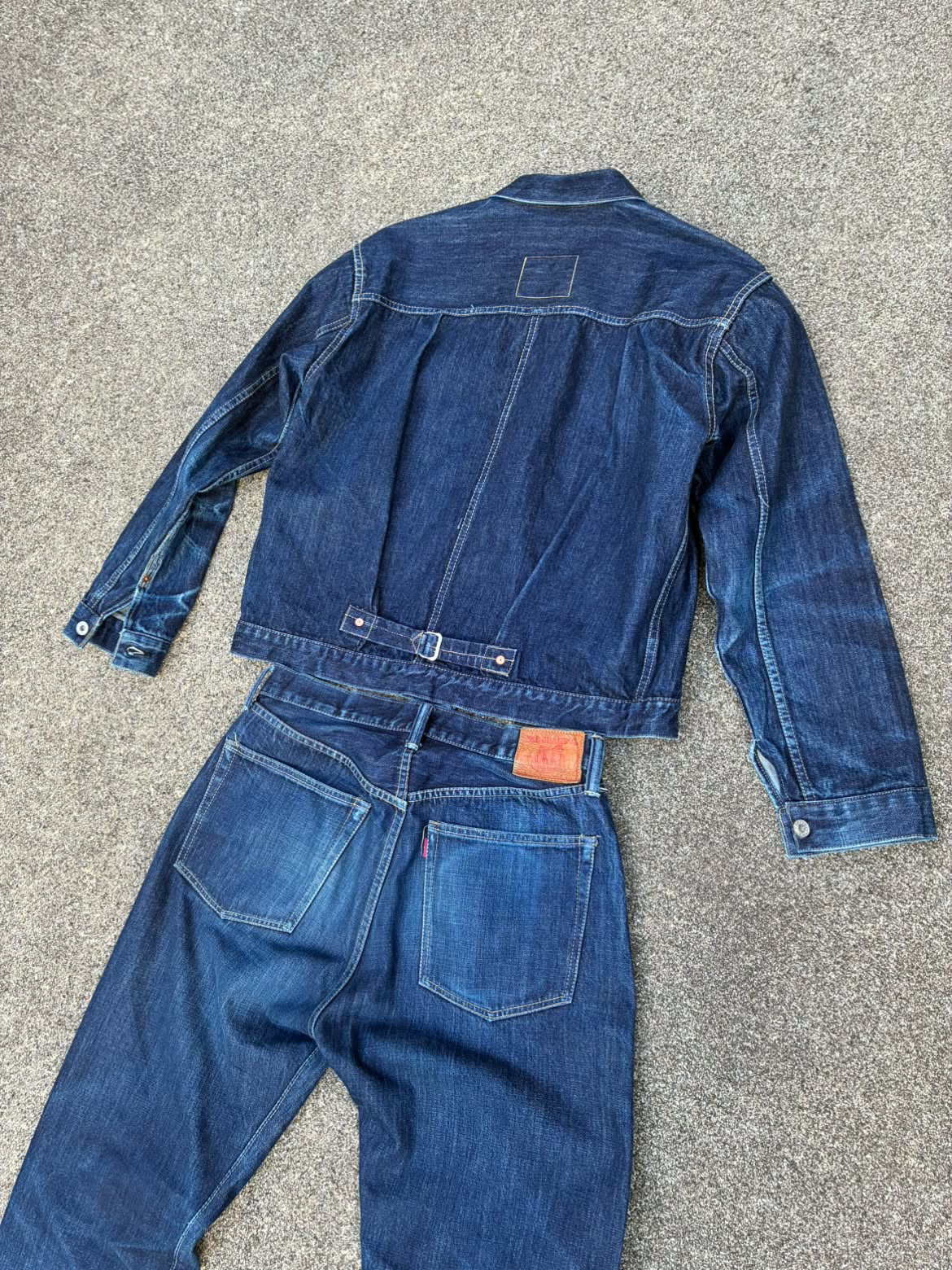
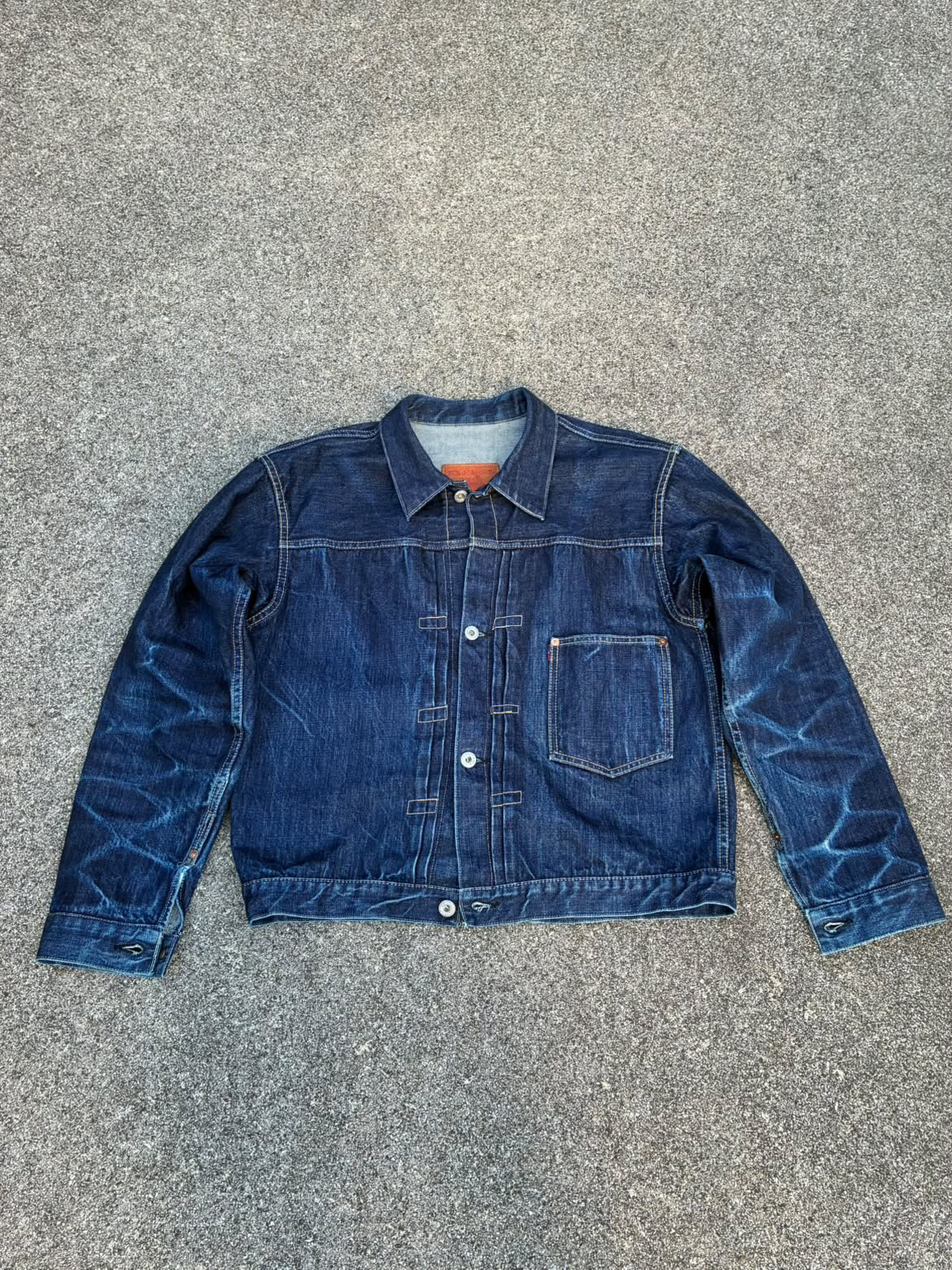
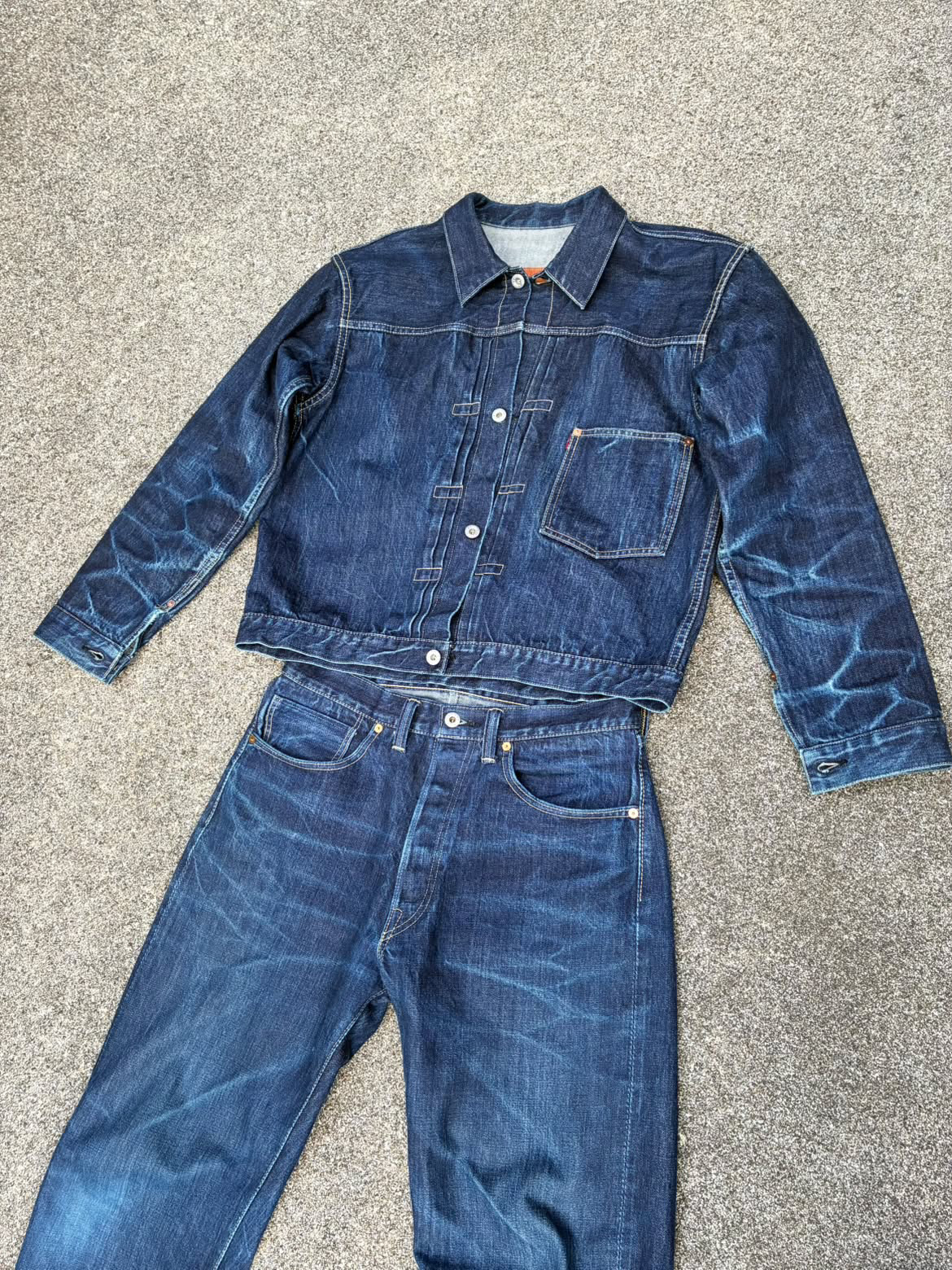
エイジングの記録を、とても丁寧に残しているお客様から、Late S40’sの写真をいただきました。
私自身、着用レポートをしっかり残していかなければならない立場なので、とても参考になる記録です。
これから秋に向けてLate S40’sの着用をスタートしようと考えている方にとっても、ひとつのマイルストーンになれば嬉しく思います。
着用期間は、ジャケット、ジーンズともに1年8カ月。
途中、着用しなかった期間はわずか1週間ほどで、ほぼ600日をこのセットアップとともに過ごされています。
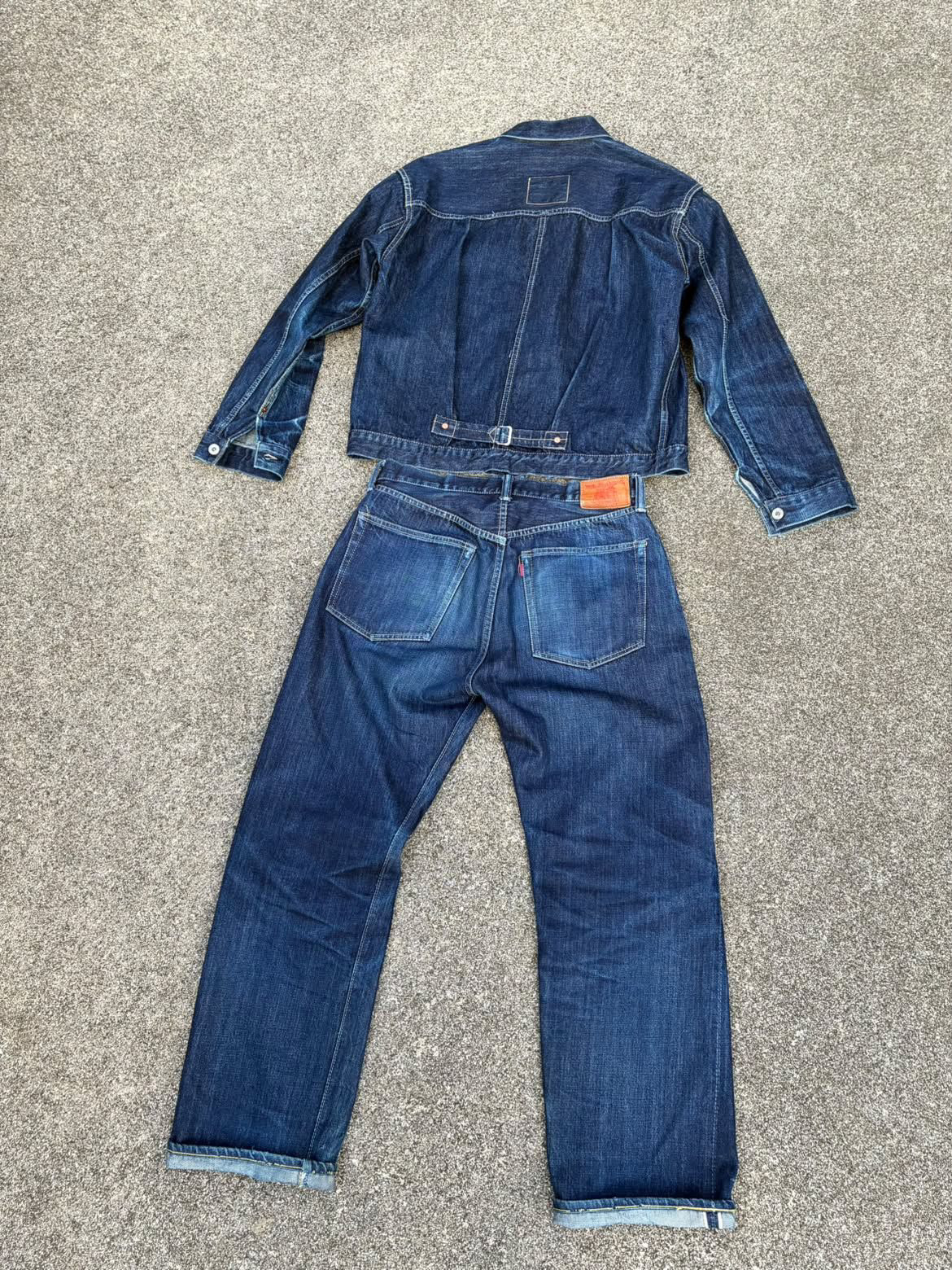
面白いのは、同じ生地のセットアップでありながら、ジャケットとジーンズで異なる色落ちを目指していること。
そのため、サイズ選びと洗濯回数を、あえて変えています。
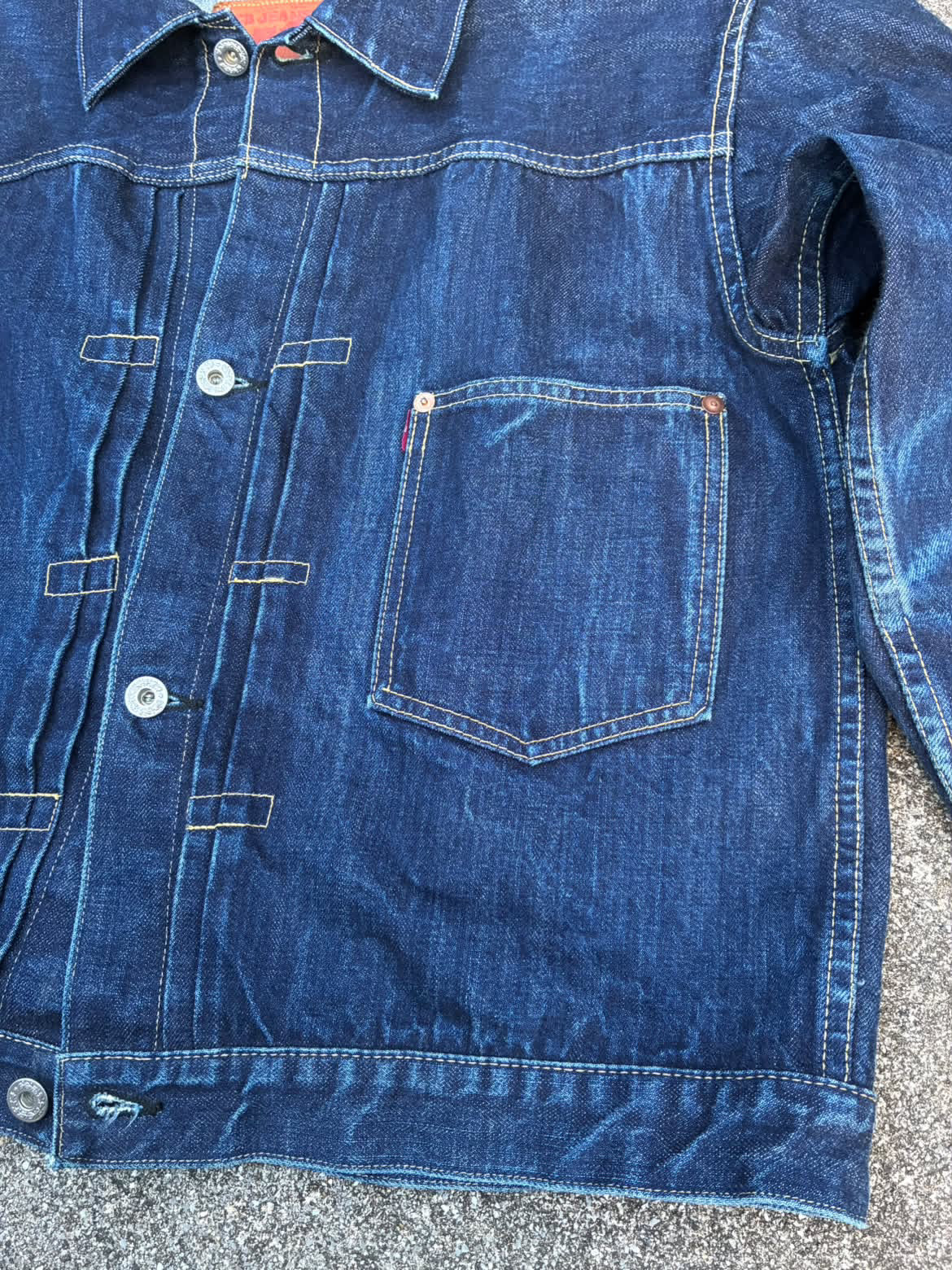
ジャケットはジャストサイズ。
一方、ジーンズはジャストサイズのW30から、思い切って4インチアップ。
Late S40’sのきれいなシルエットをベースに、あえて少しだらしなく見えるほど、ゆったりと穿いています。
狙いは、ハチノスを強く入れすぎず、ヒゲも激しく出しすぎないこと。
ひとつのジーンズを決めたら、ほぼ毎日穿き続ける。
これは私の穿き方も参考にしてくださったようですが、ジャストサイズや1〜2インチアップで1年間洗わずに穿くと、経験上、ヒゲやハチノスが強く入りすぎてしまう。
そこで今回は、あえて4インチアップを選んでいます。
その結果、バキバキになりすぎず、それでも穿き込んだことが分かる程度には、しっかりとヒゲが入っています。
洗濯回数は、ジーンズが5回、ジャケットが2回。
どちらも1年間着用したあとに、初めて洗濯しています。
ファーストウォッシュのみ中性洗剤を使って手洗いし、それ以降は洗剤を使わずに手洗い。
当時の人たちの付き合い方を想像しながら、この方法を選ばれたそうです。
もちろん、霧吹きや糊付けなどは、ジャケットにもジーンズにも行っていません。
ジーンズは、ジャケットよりも洗濯回数が多いため、青みのある色に育っています。
ただし、ゆったりとしたサイズで穿いているので、ヒゲは主張しすぎず、穿き込んだことが伝わる程度。
これからさらに縦落ちが進み、生地にくすみや黄ばみが加わることで、現在見えているヒゲも少しずつ全体になじんでいく。
そこまでをイメージしていたからこそ、最初の1年間は洗わずに穿き続けたそうです。
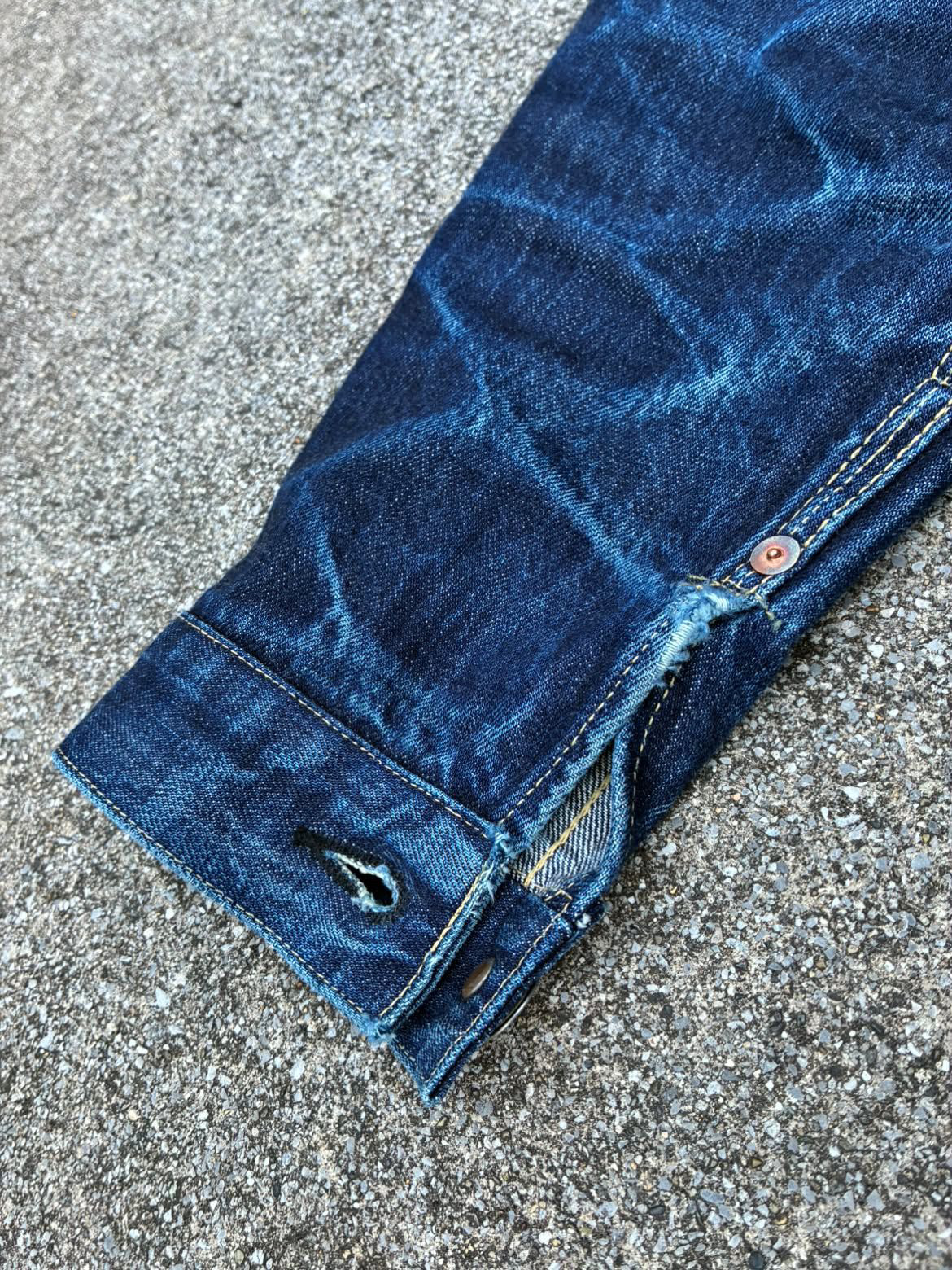
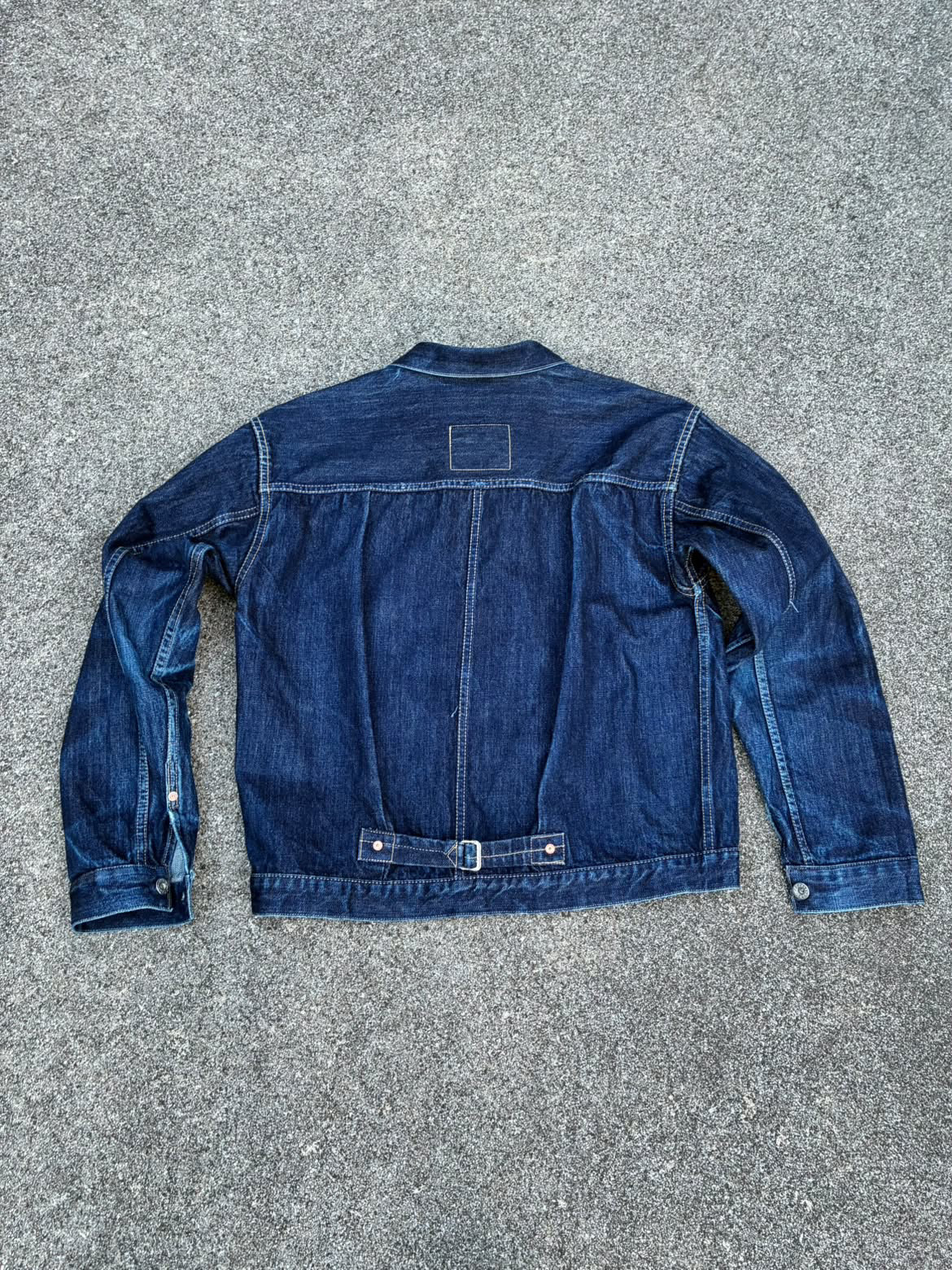
対して、ジャケットは600日間でわずか2回の洗濯。
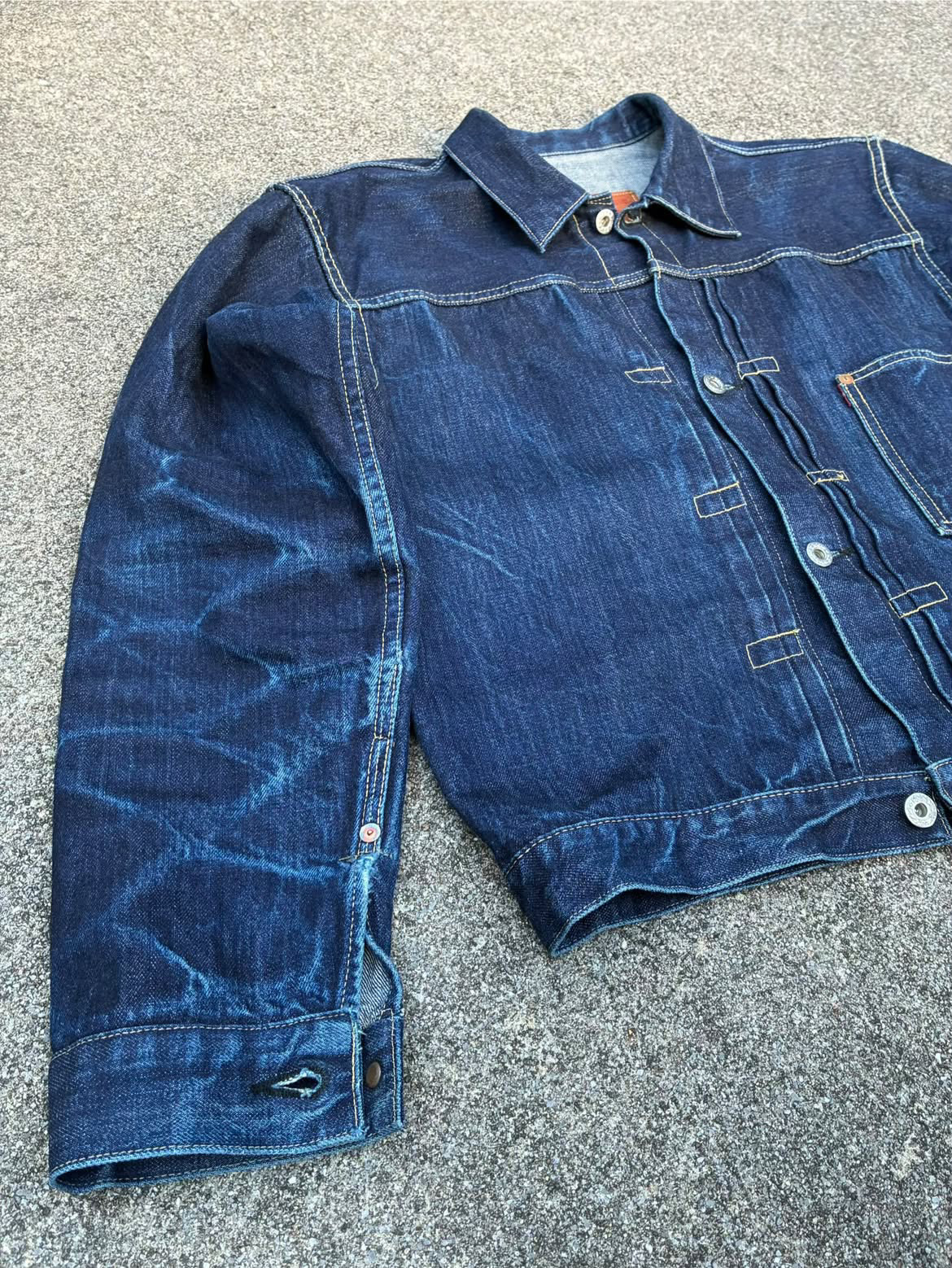
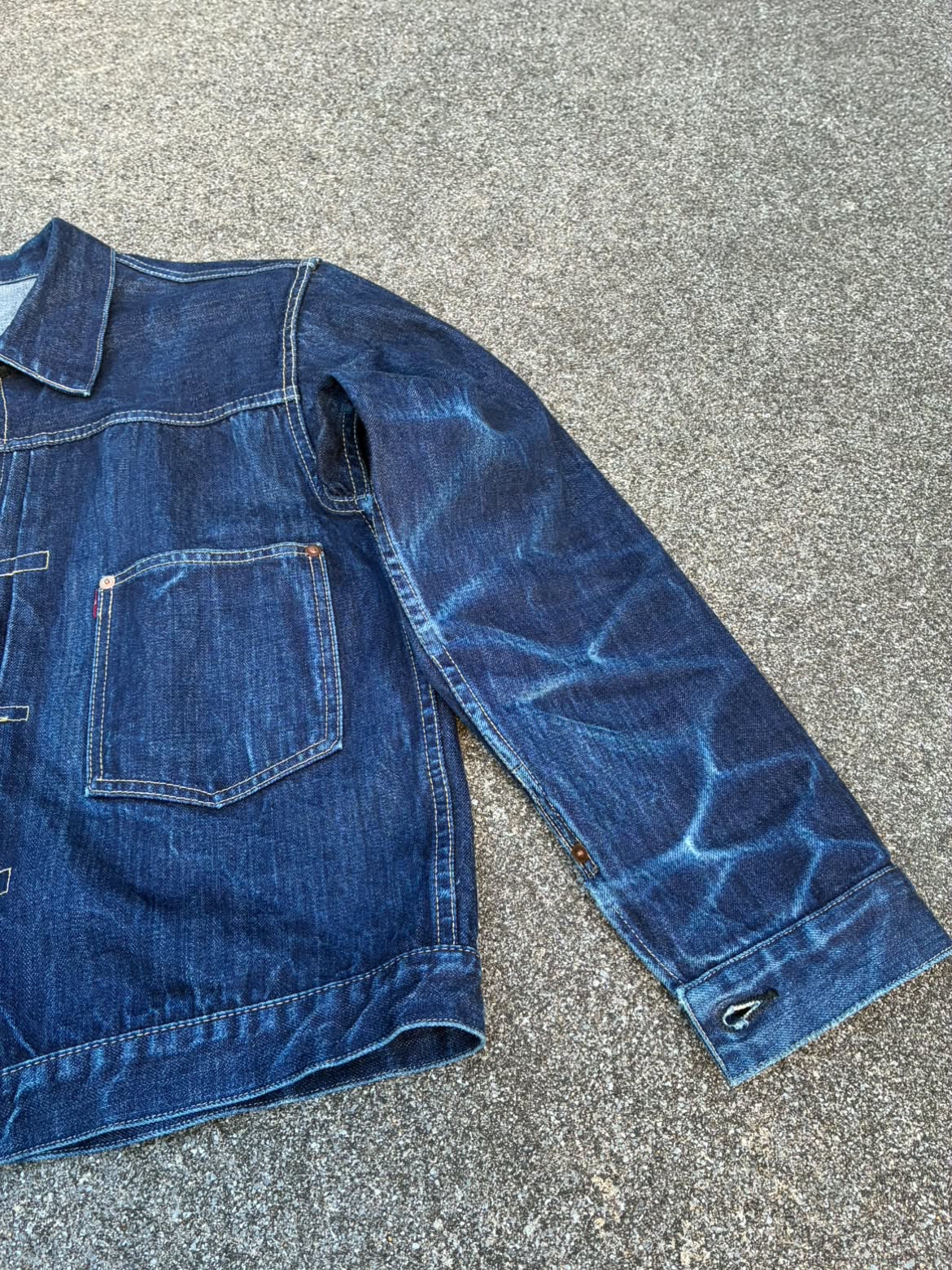
ジャストサイズで着用し、洗濯回数を抑えることで、袖にはしっかりとハチノスが刻まれています。
バキバキの表情は出しながらも、いかにも「レプリカを育てました」という仕上がりにはなりすぎない。
そのギリギリのラインを目指したエイジングです。
同じ生地を使ったセットアップでも、サイズの選び方と洗濯回数を変えることで、これほど異なる表情に育つ。
偶然に任せるのではなく、数年後の姿を想像しながら、サイズと洗い方を決める。
600日という時間だけではなく、その人なりの狙いと付き合い方まで記録された、とても興味深いエイジングレポートだと思います。
これからLate S40’sを着始める方は、ぜひ自分がどんな姿に育てたいのかを想像しながら、サイズや洗濯のタイミングを選んでみてください。
We recently received these photos of a Late S40’s set from a customer who has documented its aging process with incredible care.
As someone who should be keeping a detailed record of how my own denim develops, I also found his report extremely insightful.
I hope it can serve as a milestone for those planning to start wearing their Late S40’s this fall.
Both the jacket and jeans have been worn for one year and eight months.
During that entire period, there was only about one week when they were not worn. In total, he has spent nearly 600 days with this set.
What makes this particularly interesting is that, although the jacket and jeans are made from the same denim, he set out to achieve two different types of fading.
To do so, he deliberately chose different fits and washing schedules for the jacket and jeans.
The jacket was worn true to size.
For the jeans, however, he went four inches up from his usual W30.
Late S40’s has a naturally clean silhouette, but he intentionally sized up enough to wear them with a loose, almost deliberately untidy fit.
His aim was to avoid creating overly pronounced honeycombs and excessively sharp whiskers.
Once he chooses a pair of jeans, he wears them almost every day—something he says was inspired by the way I wear mine.
From his own experience, wearing jeans true to size or only one or two inches larger for a full year without washing can produce whiskers and honeycombs that are too pronounced.
That is why he deliberately chose to go four inches up this time.
The result is a pair of jeans that does not look excessively rigid or sharply contrasted, while still showing enough whiskering to make the long period of wear clearly visible.
The jeans have been washed five times, while the jacket has been washed only twice.
Both received their first wash after one full year of wear.
For the first wash, he hand-washed them using a mild detergent. Every wash since then has been done by hand without detergent.
He chose this method while imagining how people might have cared for their clothes when garments like these were originally worn.
No spray bottle or additional starch was used on either the jacket or the jeans.
Because the jeans have been washed more frequently than the jacket, they have developed a noticeably bluer tone.
However, the relaxed fit has kept the whiskers from becoming too dominant. They are present just enough to show how extensively the jeans have been worn.
As the vertical fading continues and the denim develops more muted, dusty and yellowed tones, he expects the visible whiskers to gradually blend into the overall appearance.
That future image is precisely why he wanted to wear the jeans for a full year before washing them for the first time.
The jacket, by contrast, has been washed only twice in nearly 600 days.
Wearing it true to size and keeping washing to a minimum has created strong honeycombs along the sleeves.
His goal was to achieve a sharply defined, rigid appearance without crossing the line into something that looks too deliberately cultivated—like an obvious example of “I carefully faded this reproduction jacket.”
This aging represents his attempt to find the balance between those two extremes.
Even when a jacket and jeans are made from exactly the same denim, changing the fit and washing frequency can produce remarkably different results.
Rather than leaving everything to chance, he chose the sizing and washing schedule by imagining how he wanted each piece to look several years later.
This is more than a record of 600 days.
It is a fascinating aging report that also documents the intention behind his choices and the way he has lived with the garments.
If you are about to start wearing a new Late S40’s, I hope this inspires you to imagine how you want it to age—and to choose your size and washing schedule accordingly.


 Categolies
 Tag
 Archive