
- About TCB
- Sewing Machines for TCB
- TCB Crews Introduction
- News / Daily
- Shop / Stockists
- Repair & Hem
- Recruit
- Contact


2026/10/10
1920〜30年代のカバーオールに見られる、左右非対称の胸ポケット。
古着の世界では「ガチャポケ」と呼ばれる、あの姿が大好きです。
時計を収めたり、道具を出し入れしたり。
仕事のために考えられた工夫が、今の私たちには魅力的なデザインに見える。
ワークウエアの面白さは、そんなところにもあると思っています。
自分たちで縫製工場を持っていると、左右で同じ形のポケットを付ける方が、効率良く作れることも分かります。
それでも、左右で違う形にする必要があった。
そう考えると、あの少し不思議な姿が、ますます好きになります。
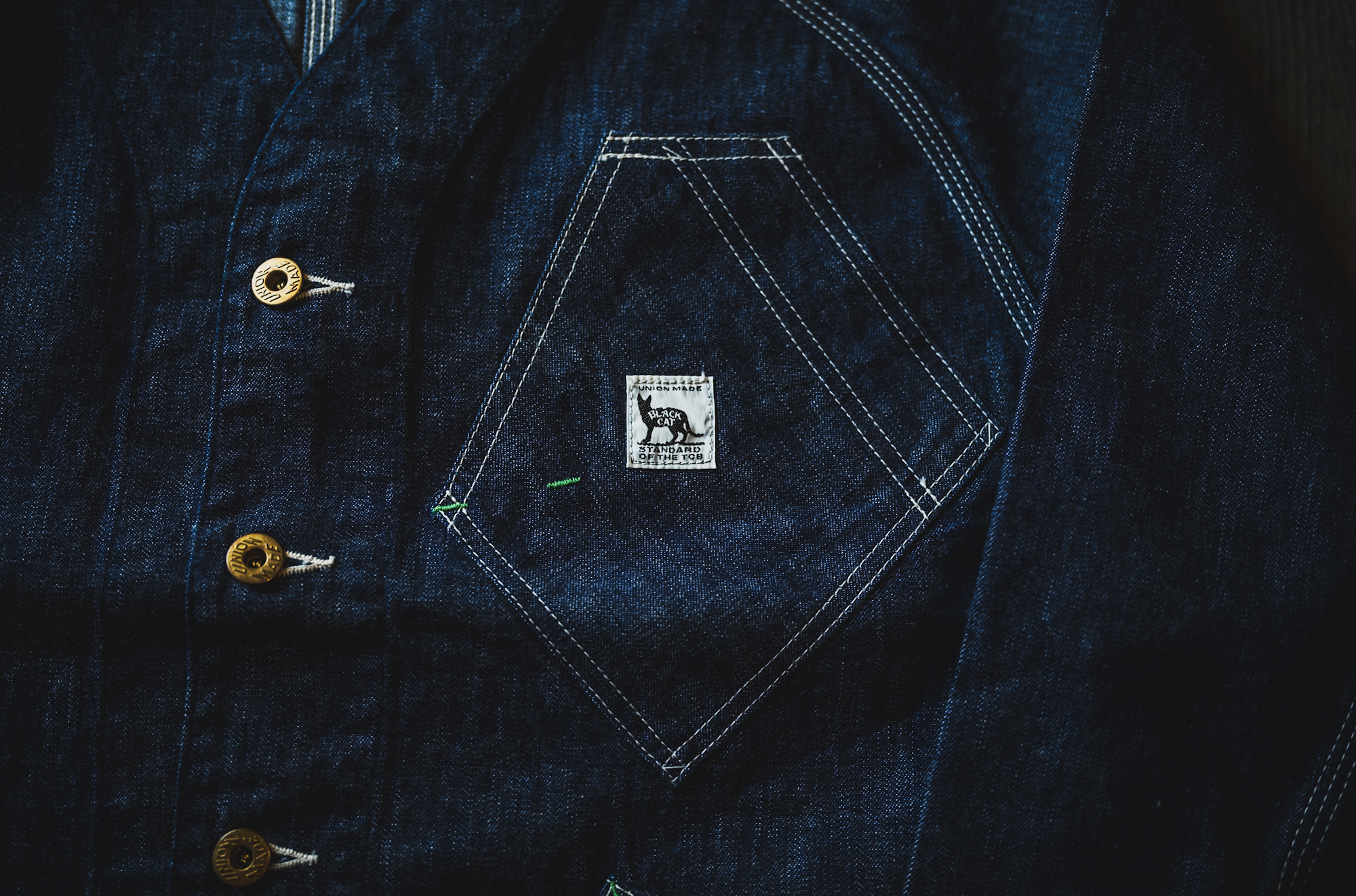
中でも私にとって特別なのが、黒い熊の「転がったポケット」です。
TCBでは既にカバーオールで再現してきました。
そして近年は縁がつながり、シアトルのBlack Bear Brandとのコラボレーションも実現。熊の上に猫が乗ったラベルで、コレクションを発表することもできました。
昔、憧れて眺めていた熊の上に、今は自分たちの猫が乗っている。
改めて考えると、不思議なことです。
そもそも、仕事着に熊や猫のラベルが付いていて、それが格好良く成立する。
そんなワークウエアの懐の深さを教えてくれたのも、このブランドでした。
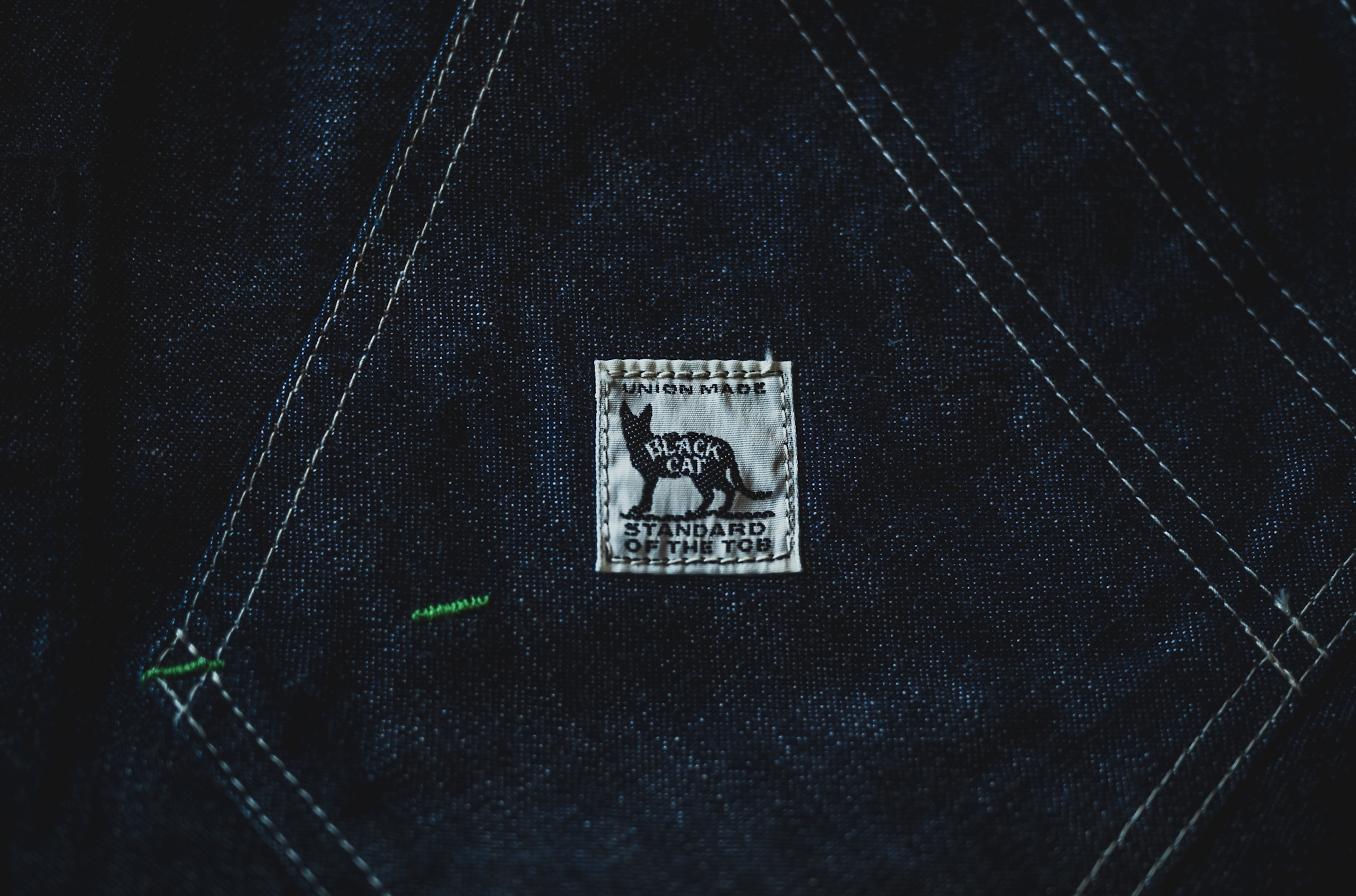
TCBのラベル作りにも、大きな影響を受けています。
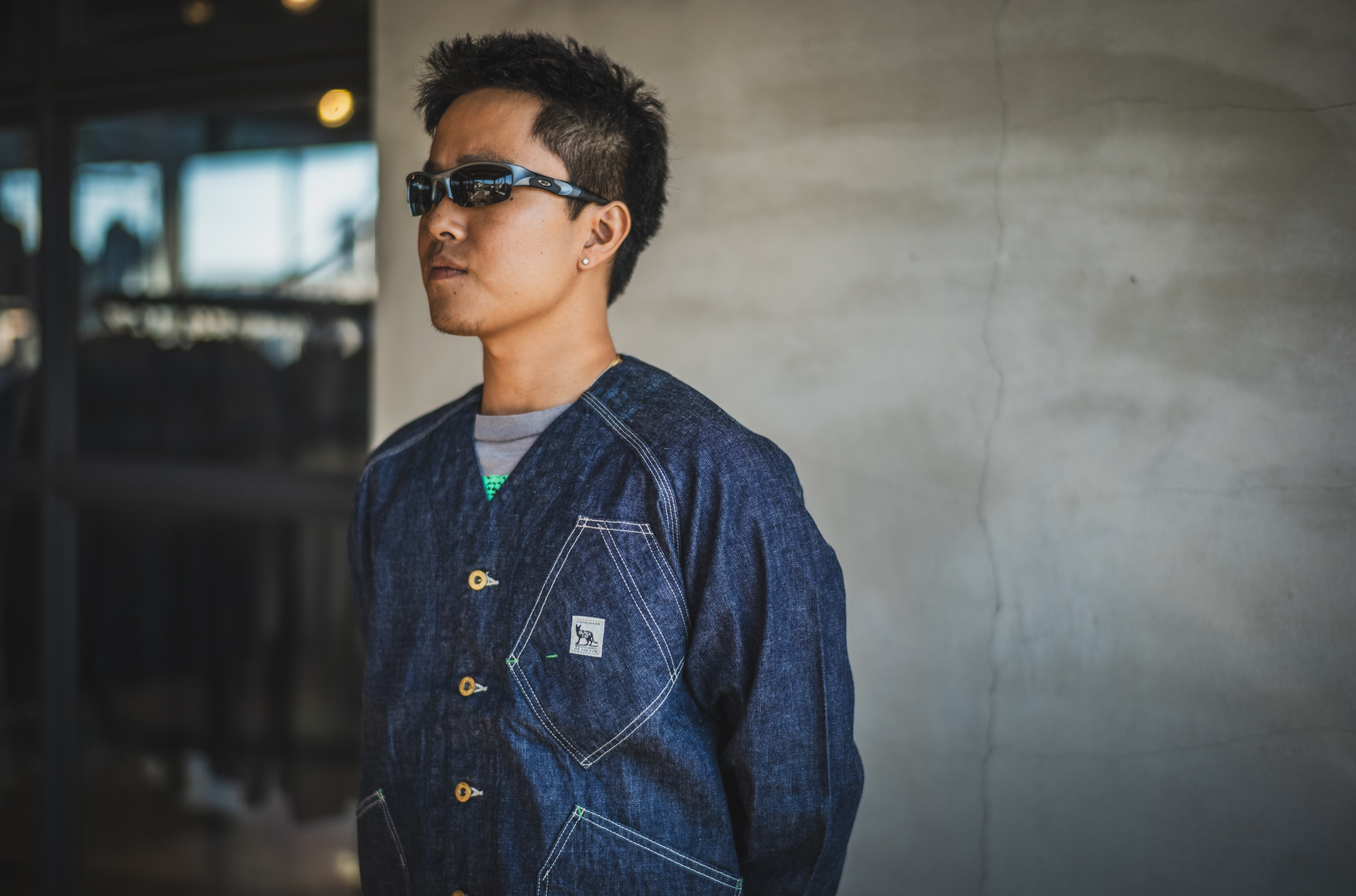
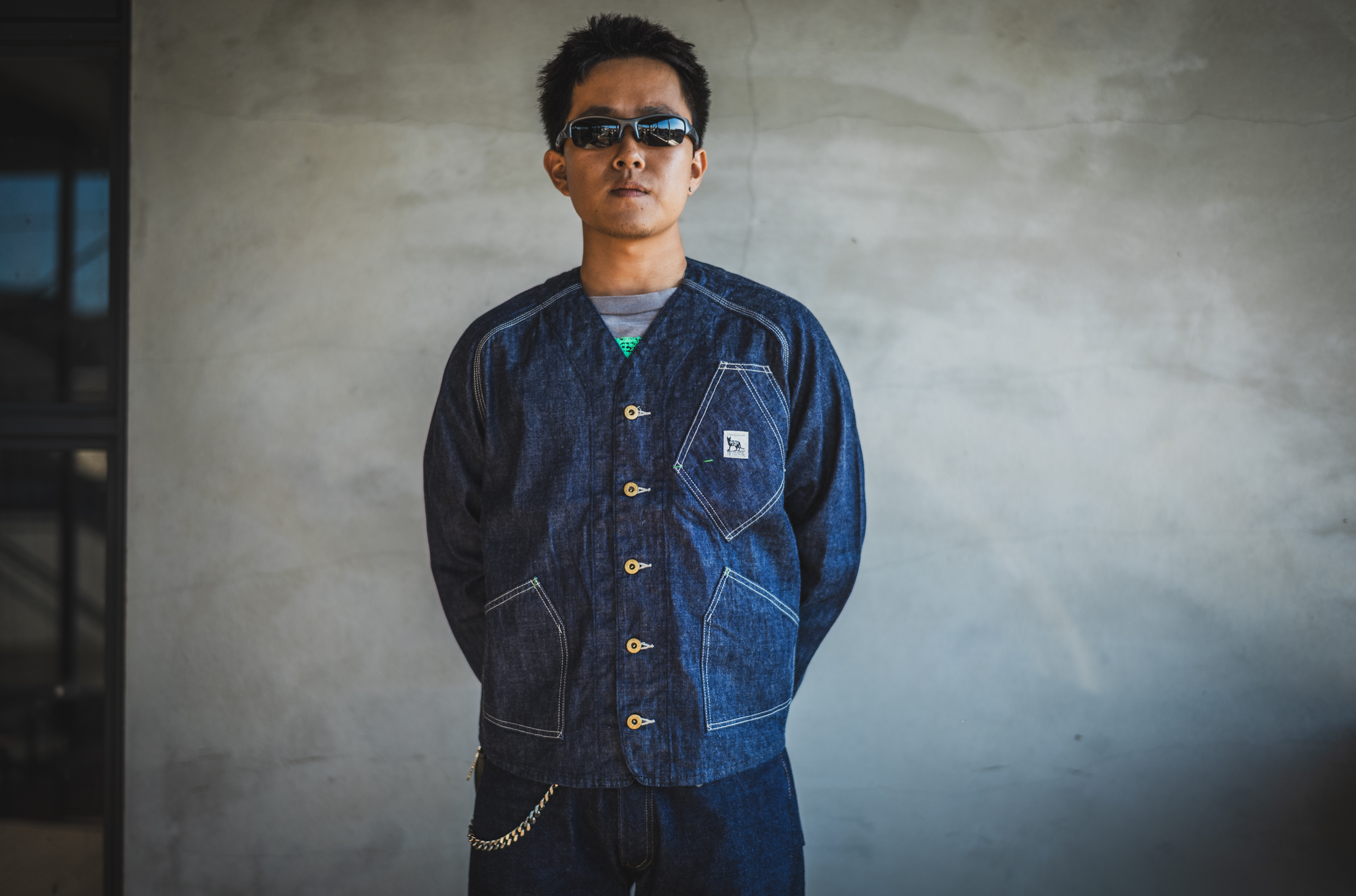
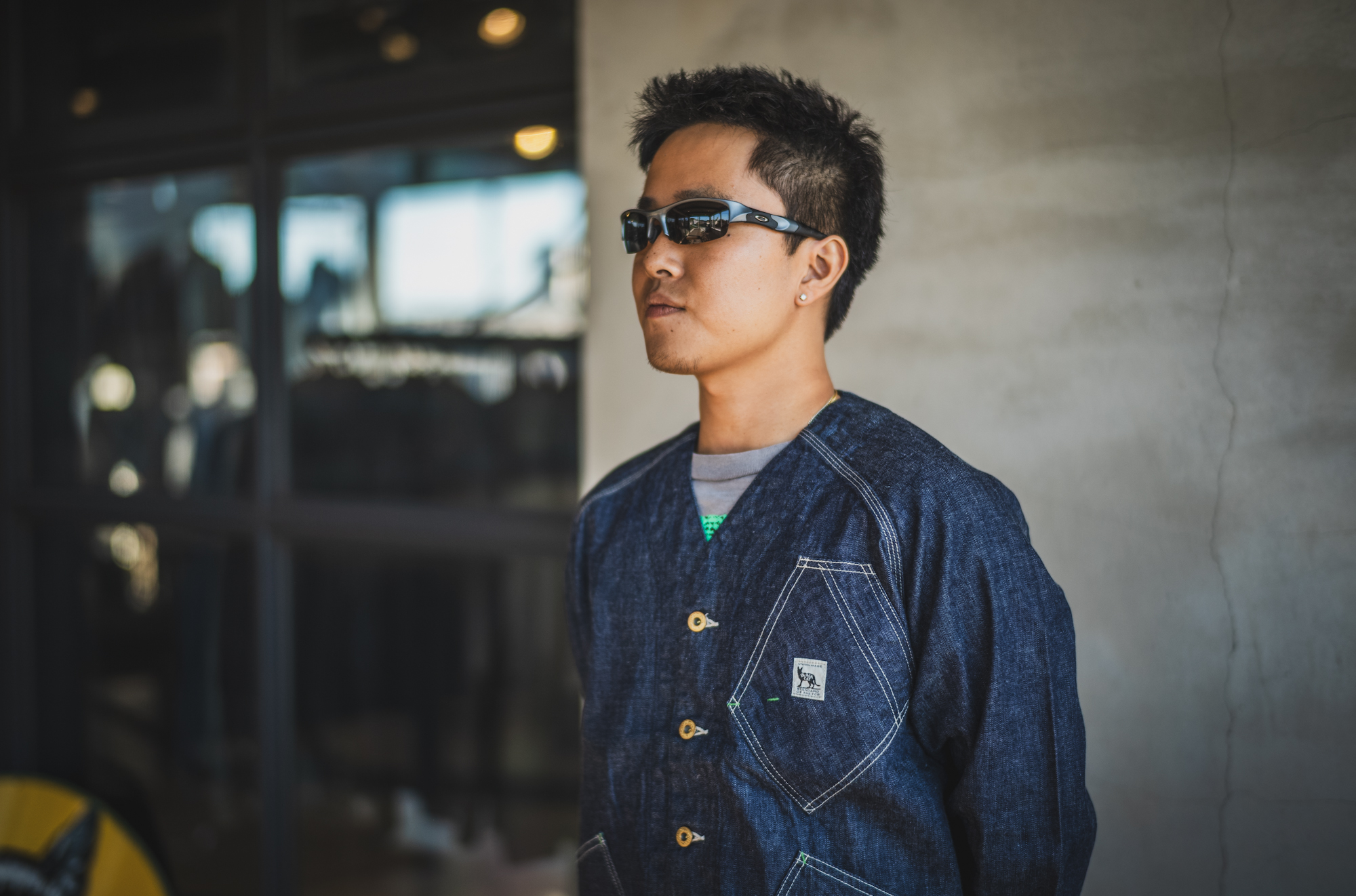
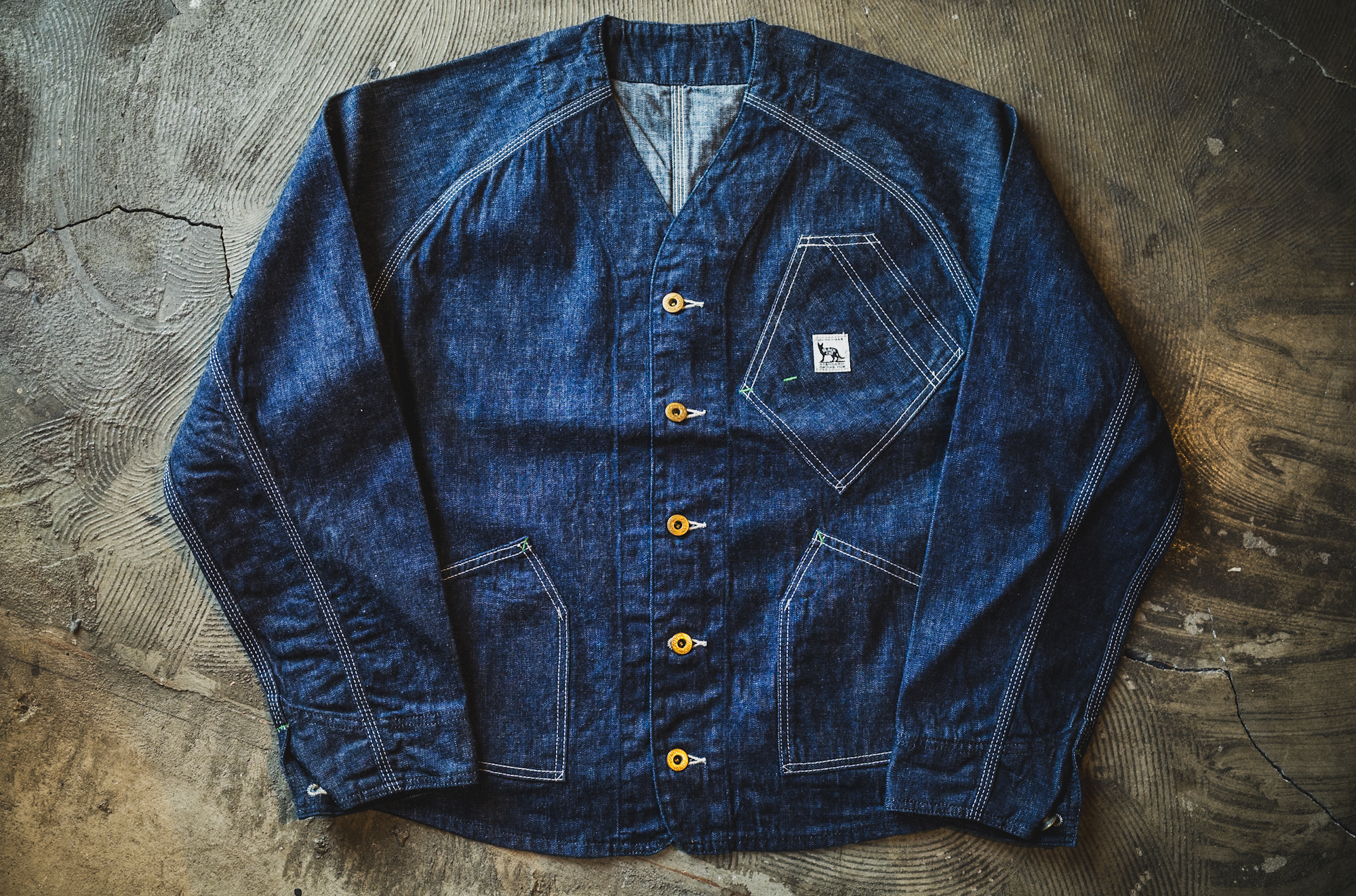
今回のエンジニアJKは、実際にBlack Bearに存在した一着を参考にしました。
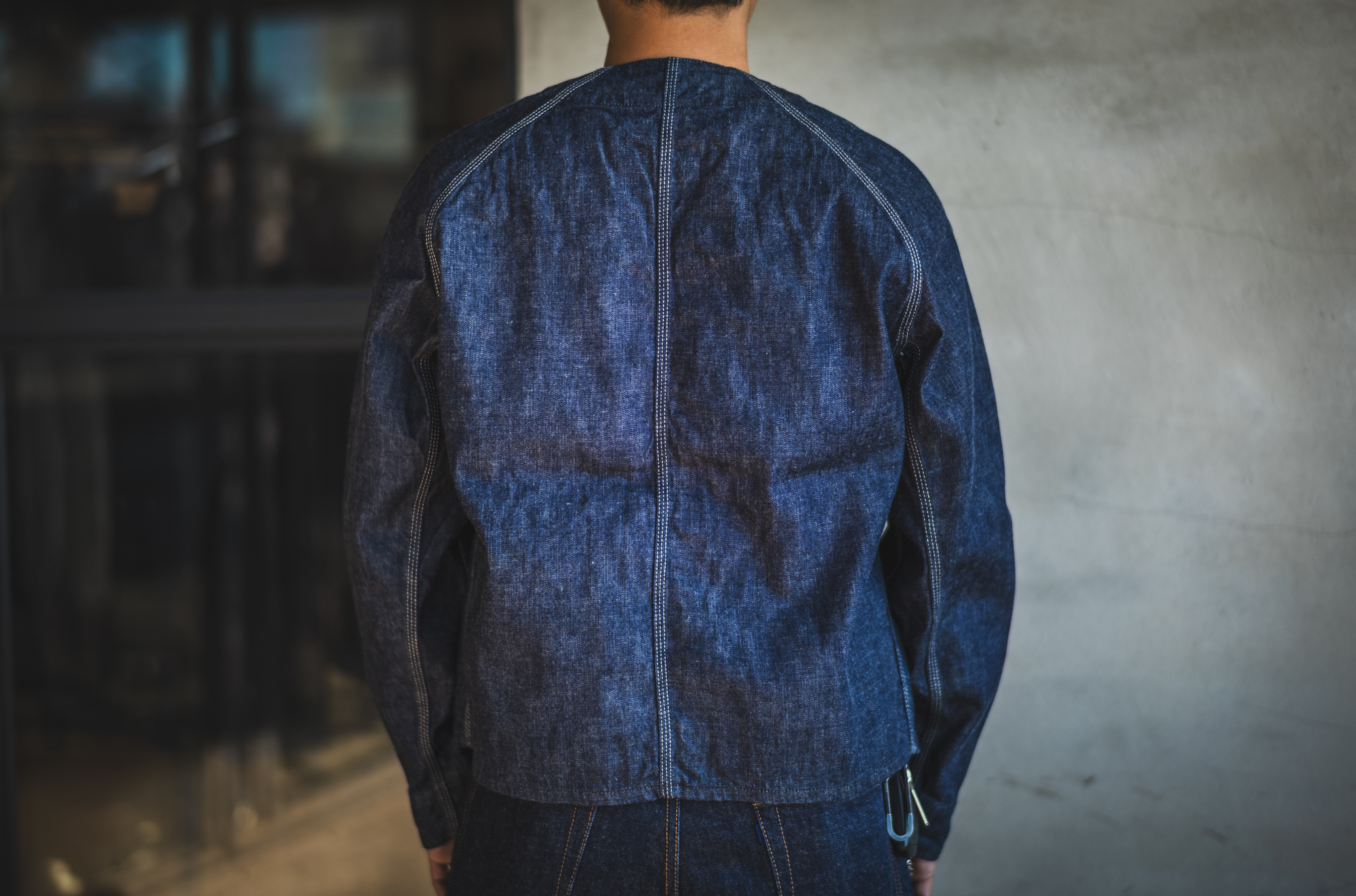
襟がなく、カバーオールよりも短い丈。
作業の邪魔になる部分を減らそうとしたのだろうか、と想像したくなる形です。
その削ぎ落とされた姿に、あの左胸のポケットが付く。
襟がないぶん、いつものカバーオール以上に、ポケットへ目が向きます。
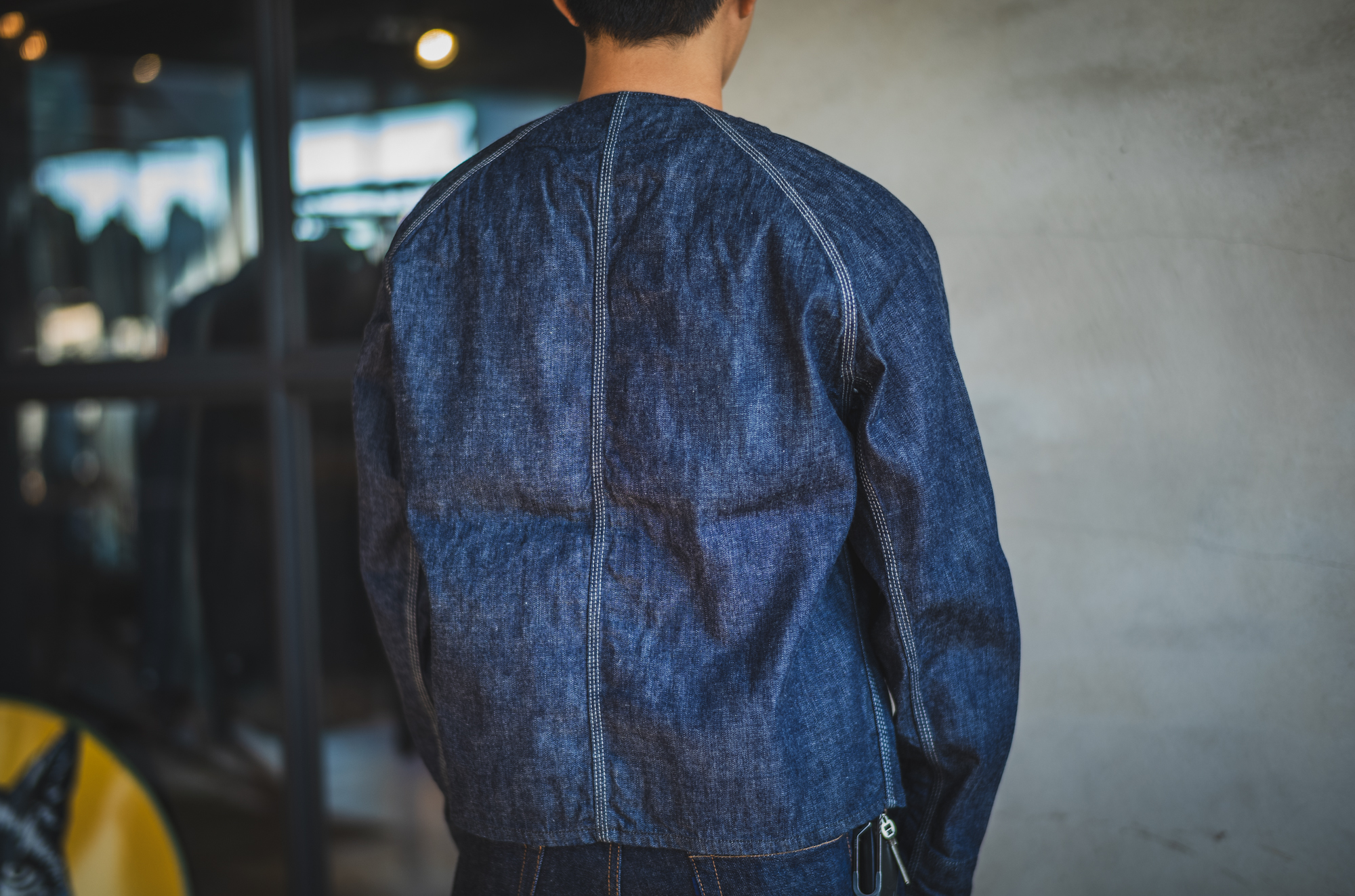
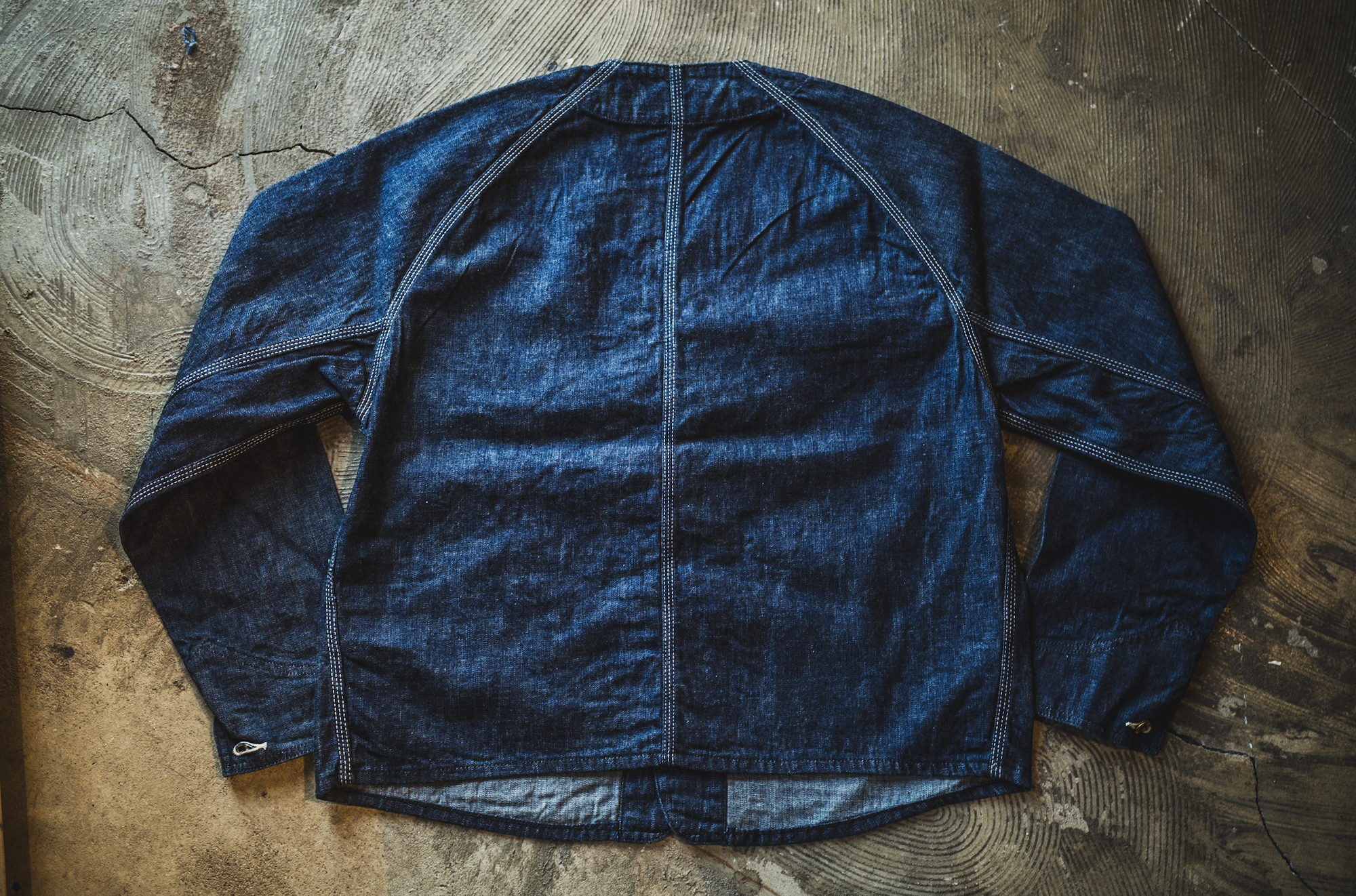
袖は、参考にしたヴィンテージと同じラグランスリーブ。
私なら冬の恒例、フード付きのスウェットの上から羽織りたいと思っています。
襟がない首元からフードが出る姿も、このジャケットを着る楽しみの一つです。
ラグランスリーブは、縫い目の走り方も面白いところ。
生地の地の目に対して、縫い目がさまざまな角度で走ります。
洗って着込んだとき、それぞれの縫い目にどんなパッカリングが現れるのか。
完成したばかりですが、もうその先が気になっています。
そして今回、このジャケットのために生地もオリジナルで作りました。
コードネームは「TCB-003」。
参考にしたのは、デッドストックで残っていたヴィンテージの2×1デニムです。
普段、ヴィンテージから生地を再現するとき、私たちの手元にあるのは、何度も洗われ、着込まれた服であることがほとんどです。
1インチの中に何本の糸があるかを数えても、その生地は既に縮んでいる。
色を見ても、既にインディゴが落ちている。
そこから、織り上がったときの密度や、最初の色を想像していきます。
計測した数字を手掛かりに、最後はどうしても妄想する部分がある。
それもヴィンテージから生地を作る面白さですが、今回は、その出発点が違います。
洗われる前の生地が、残っていました。
糸の太さも、打ち込み本数も、色も。
着込まれて変化した姿からさかのぼるのではなく、残っていた生地そのものを計測し、作るための手掛かりにすることができました。
経糸は10番、緯糸は12番の10oz
打ち込み本数は非公表とさせて頂きますが、計測した数値に合わせて設計しています。
綿にはジンバブエコットンを使用しました。
昔の服を見て、その服が新品だった頃を想像する。
いつもしていることですが、今回はその「新品だった頃」が、目の前にあったわけです。
そこから作った生地を、これから私たちが着て、洗って、それぞれの一着にしていく。
その続きを楽しんで頂けたら嬉しいです。
黒い熊から教わったことを、猫の工場で、もう一度。
まずは私も、フードを出して着てみようと思います。
The asymmetrical chest pockets found on coveralls from the 1920s and 30s—a style known in the vintage world as “Gacha-poke” (mismatched pockets)—are something I absolutely love.
Whether for stowing a pocket watch or easily accessing tools, these features were originally devised for practical work purposes, yet to us today, they appear as compelling design elements.
That is precisely where I find the charm of workwear.
Running our own sewing factory, we deeply know that attaching identical pockets on both sides would be far more efficient. You can cut much faster and the sewing is basically doing the same thing twice.
And yet, there was a need to make them different. More usability for workers than production efficiency. Thinking about that necessity makes me love that slightly unusual look even more.
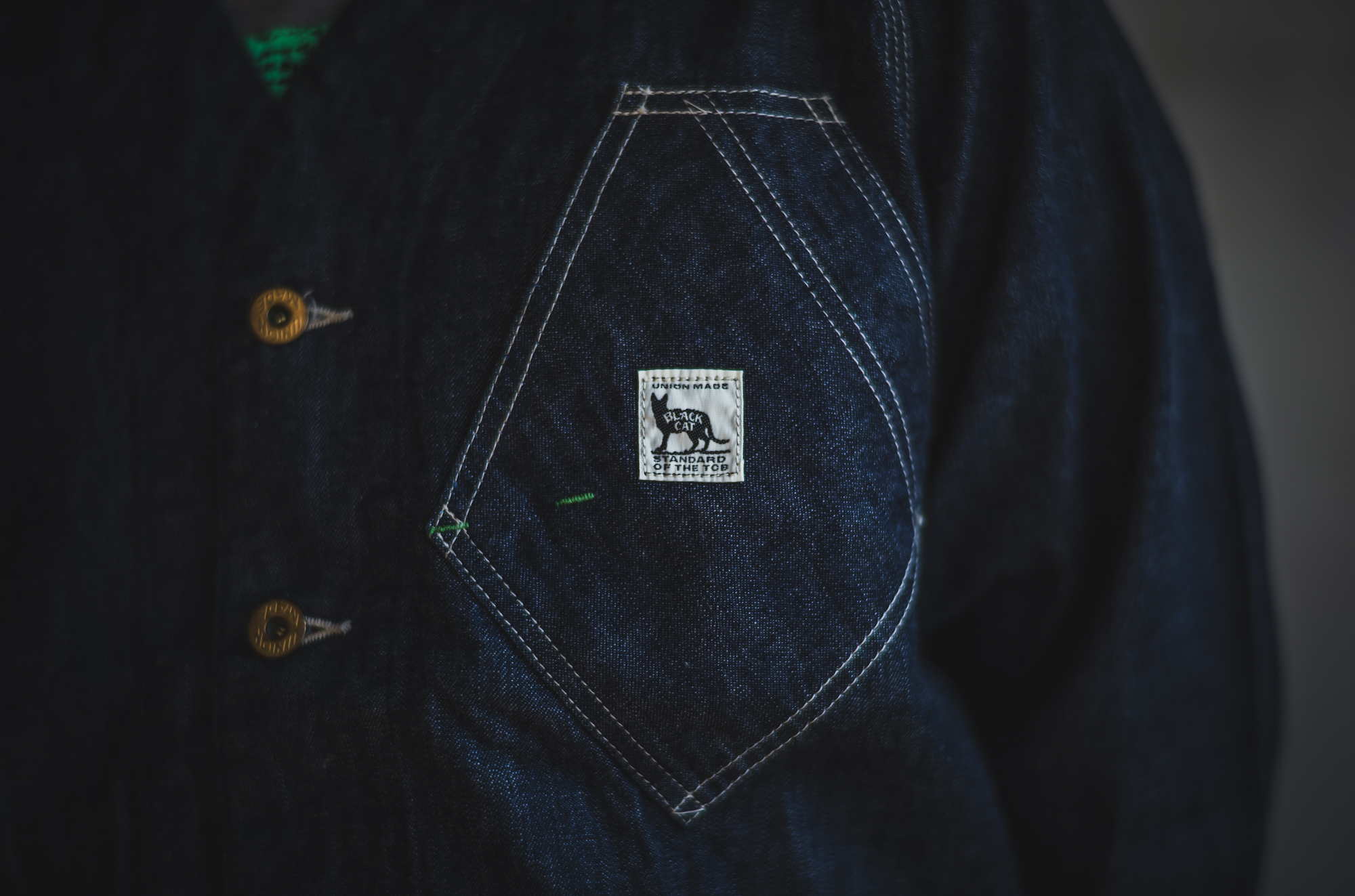
For me, the “Black Bear” pocket, unique pentagon shaped one, holds a special place in my heart.
We have already recreated this style in our own chore coats at TCB before.
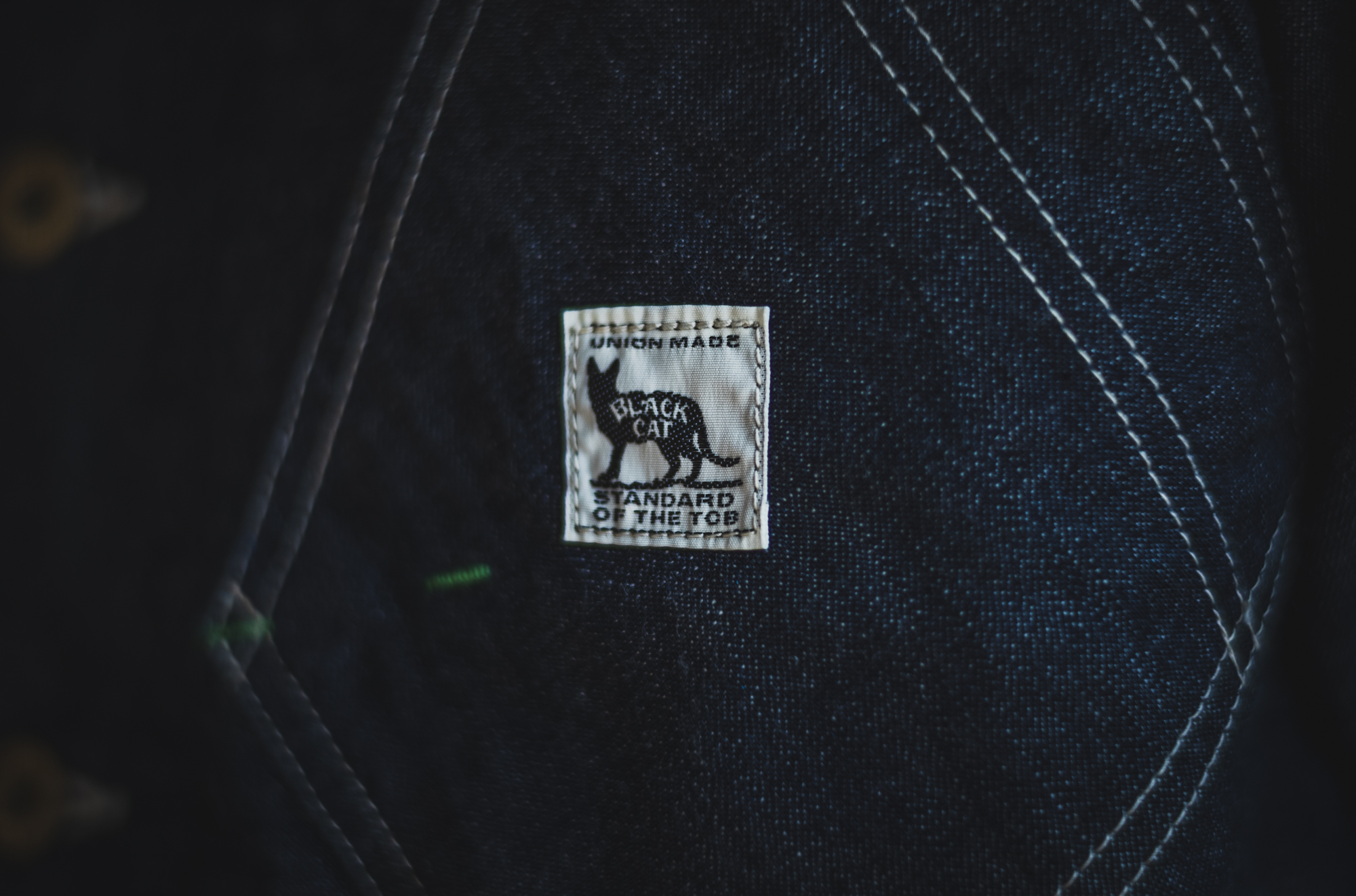
In recent years, we’ve had a connection with Josh, which led to a collaboration with the Black Bear Brand, allowing us to launch a collection featuring a label where a cat rides atop the bear.
The bear I used to admire carries our own cat on its back now. The very fact that a work garment can feature a bear or an animal label and pull it off with such cool style— Black Bear is the brand that taught me about the depth and versatility of workwear. It has had a profound influence on how we create our own cat labels at TCB.
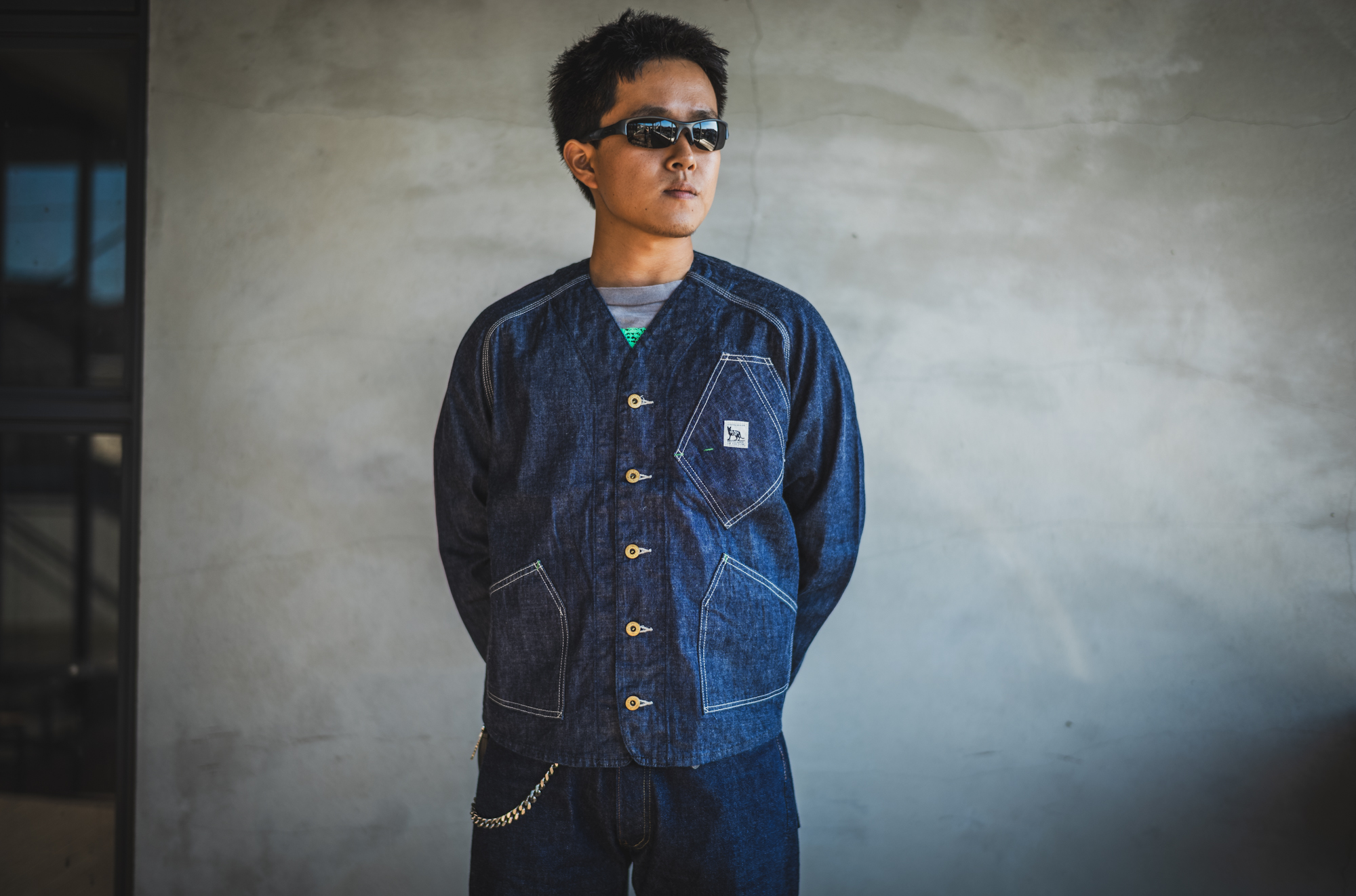
For this “Engineer Jacket,” we based the design on an actual vintage piece from Black Bear.
It features a collarless design and a shorter length than a standard coverall. The shape makes you wonder if the design was intended to eliminate elements that might get in the way of work like when you have to crawl under cars for maintenance or something.
The sleeves are raglan style, just like the vintage original.
Personally, I plan to wear it over a hooded sweatshirt—a winter staple of mine.
The way the hood peeks out from the collarless neckline is one of the joys of wearing this jacket.
The way the seams run on raglan sleeves is another interesting detail. The seams run at various angles relative to the fabric’s grain.
I wonder what kind of puckering will appear along each seam after washing and wearing it in.
Although it has only just been completed, I am already looking forward to seeing how it evolves.
For this jacket, we have also created an original fabric.
Its code name is TCB-003., woven by one of our favorite weaving factories in Okayama called Shinya. If you haven’t heard of the name, please check out the article about it.
We based it on a vintage 2×1 denim fabric that had survived as deadstock.
Usually, when we recreate fabric from vintage pieces, the garments we have on hand have already been washed and worn extensively.
Even if we count the threads per inch, the fabric must have already shrunk much over time.
Even if we look at the color, the indigo must have already faded over time.
From there, we have to imagine the density at the time of weaving and the original color.
Using our own methods as clues, there is inevitably some point where we have to rely on our imagination.
That is part of the fun of making fabric from vintage sources, but this time, our starting point was different.
We actually had access to the original unwashed fabric. So, we know the yarn thickness, the thread count, and the color all in the original condition.
Instead of working backward from a garment aged by wear, we could measure the surviving fabric itself and use that as the basis for production.
It is a 10oz denim using #10 yarn for the warp and #12 for the weft.
We won’t disclose the exact thread count, but the construction is based on our precise measurements.
We’ve also adopted Zimbabwean cotton as it has the closest fibre shapes as the vintage yarns.
We often look at old garments and imagine what they looked like when they were brand new.
This time, however, that “brand-new state” was right there in front of us. Now, we will wear and wash this fabric to make it uniquely our own.
We hope you enjoy seeing how the story unfolds from here.
Revisiting lessons learned from the “Black Bear” at the “Cat’s Factory.”
To start, I think I’ll wear it with the hood out.




 Categolies
 Tag
 Archive